CSIR and IITs Lead India’s Push for Scientific Self-Reliance with Record Funding and Global Collaborations

India’s scientific research establishment is undergoing a period of unprecedented expansion and transformation, with the Council of Scientific and Industrial Research (CSIR) and the Indian Institutes of Technology (IITs) at the forefront of a national push for scientific self-reliance. Record funding allocations, ambitious new research programmes, and deepening international collaborations are collectively reshaping the landscape of Indian science and positioning the country as an increasingly credible contender in the global knowledge economy.
Record Funding for Scientific Research
The Union Budget 2026-27 allocated a record ₹1.24 lakh crore to the science and technology sector — an increase of approximately 17 per cent over the previous fiscal year and the largest year-on-year jump in scientific funding in India’s history. The allocation encompasses the budgets of the Department of Science and Technology (DST), the Department of Biotechnology (DBT), the Council of Scientific and Industrial Research (CSIR), and the Department of Scientific and Industrial Research (DSIR), among other agencies.
The increase reflects a growing recognition at the highest levels of government that scientific research is not a luxury but a strategic necessity for a nation aspiring to become the world’s third-largest economy. Finance Minister Nirmala Sitharaman, presenting the budget, described the allocation as an investment in “India’s ability to solve its own problems, on its own terms, using its own intellectual resources.”
The enhanced funding is being directed towards several priority areas: the National Quantum Mission, the Deep Ocean Mission, the National Green Hydrogen Mission, and a new initiative focused on artificial intelligence for scientific discovery. Each of these programmes addresses a domain where India seeks to develop sovereign technological capabilities that reduce dependence on foreign expertise and technology.
CSIR: Reinventing a Legacy Institution
The Council of Scientific and Industrial Research, India’s largest publicly funded R&D organisation with a network of 37 national laboratories and 39 outreach centres, has embarked on a comprehensive modernisation programme designed to align its capabilities with 21st-century challenges. The initiative, internally designated “CSIR 2.0,” seeks to transform the organisation from a collection of independently operating laboratories into an integrated research enterprise capable of addressing complex, multidisciplinary problems.
Key elements of the CSIR 2.0 agenda include the establishment of five new centres of excellence in priority domains — advanced materials, synthetic biology, clean energy, drug discovery, and waste-to-wealth technology. These centres will operate on a networked model, drawing expertise from multiple CSIR laboratories and collaborating with academic institutions, industry partners, and international research organisations.
CSIR has also intensified its engagement with the private sector, recognising that the translation of laboratory research into commercial products and processes requires partnerships with companies that possess market knowledge, manufacturing capability, and distribution networks. The organisation’s intellectual property portfolio — comprising over 4,800 active patents — is being marketed more aggressively through technology licensing fairs, industry workshops, and a revamped online IP marketplace.
IITs: Expanding the Research Frontier
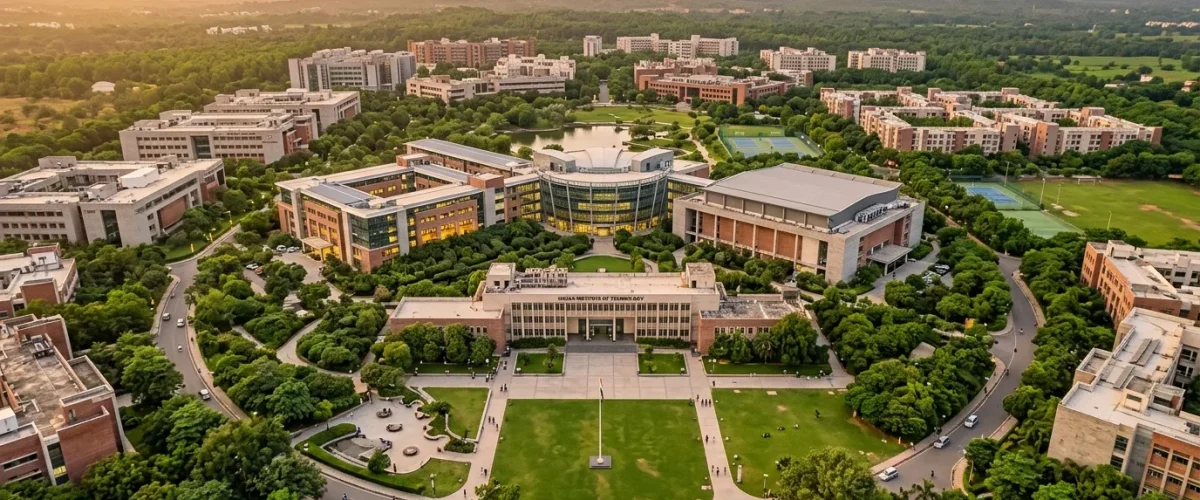
The Indian Institutes of Technology, long recognised as India’s premier engineering and technology institutions, are expanding their research capabilities in response to both domestic needs and global opportunities. The establishment of new IITs over the past decade — bringing the total to 23 — has broadened the geographic and thematic reach of the IIT system, with newer institutes developing specialisations in areas such as artificial intelligence (IIT Jodhpur), sustainable energy (IIT Palakkad), and healthcare technology (IIT Mandi).
Research funding at the IITs has increased substantially, driven by both government grants and a growing volume of industry-sponsored research. IIT Bombay and IIT Delhi each attracted over ₹500 crore in research funding in the 2025-26 fiscal year, while IIT Madras has emerged as a leader in deep technology research with its Research Park serving as a hub for over 200 start-ups and R&D centres.
The IIT system’s research output has also grown significantly in both volume and impact. Indian researchers published over 300,000 scientific papers in 2025, the third-highest national total globally after China and the United States. While citation impact remains an area for improvement — Indian papers are cited less frequently on average than those from Western Europe or North America — the gap has been narrowing steadily, particularly in fields such as computer science, materials science, and chemical engineering.
International Collaborations: Building Bridges
India’s scientific institutions are deepening their international engagement through bilateral and multilateral research collaborations. CSIR has active memoranda of understanding with over 50 foreign research organisations, including the Max Planck Society (Germany), CNRS (France), CSIRO (Australia), and the National Institutes of Health (USA). These partnerships facilitate researcher exchanges, joint publications, shared access to advanced instrumentation, and collaborative grant applications.
The IITs have similarly expanded their international networks, with dual degree programmes, joint research centres, and exchange agreements spanning dozens of countries. IIT Bombay’s partnership with Monash University and IIT Delhi’s collaboration with Imperial College London are among the most prominent examples of institutionalised research cooperation.
India’s international scientific profile was further enhanced by its hosting of the G20 Science and Technology Ministers’ Meeting in 2023, which produced declarations on responsible AI governance, open science, and equitable access to research infrastructure. The same collaborative spirit drives initiatives like ISRO’s partnerships with NASA on the NISAR satellite mission.
Challenges and Structural Reforms
Despite the positive trajectory, India’s scientific research ecosystem faces structural challenges that funding alone cannot resolve. The ratio of research expenditure to GDP remains approximately 0.7 per cent — well below the 2-3 per cent typical of scientifically advanced nations. The government has set a target of reaching 2 per cent by 2030, but achieving this will require not only increased public spending but a significant increase in private sector R&D investment.
The scientific workforce also requires attention. India produces a large number of STEM graduates, but the proportion who pursue research careers remains relatively low, partly due to the limited availability of well-funded research positions and the significant salary differential between academic and industry roles. The Prime Minister’s Research Fellows (PMRF) scheme, which provides enhanced stipends to doctoral students at premier institutions, has helped but covers only a fraction of the eligible population.
Bureaucratic bottlenecks continue to slow research. Procurement of scientific equipment, approval of international collaborations, and processing of research grants involve multiple layers of administrative clearance that can add months or years to project timelines. The proposed National Research Foundation (NRF), which aims to centralise and streamline research funding, is expected to address some of these issues when fully operational.
A Pivotal Moment for Indian Science
The convergence of record funding, institutional reform, and international engagement has created a pivotal moment for Indian science. The country’s ability to convert this momentum into sustained scientific excellence will depend on its capacity to attract and retain top research talent, build world-class infrastructure, and create an environment where scientific inquiry is valued for both its economic utility and its intrinsic contribution to human knowledge.
The results are already visible across multiple domains — from the groundbreaking CRISPR innovations emerging from the Bose Institute to the quantum computing capabilities taking shape at IITs and C-DAC. As India’s research ecosystem matures, the nation is poised to make contributions to global science commensurate with its scale, talent, and ambition.