India Art Fair 2026 Spotlight: Contemporary Indian Art Finds a Global Voice Through New Exhibitions

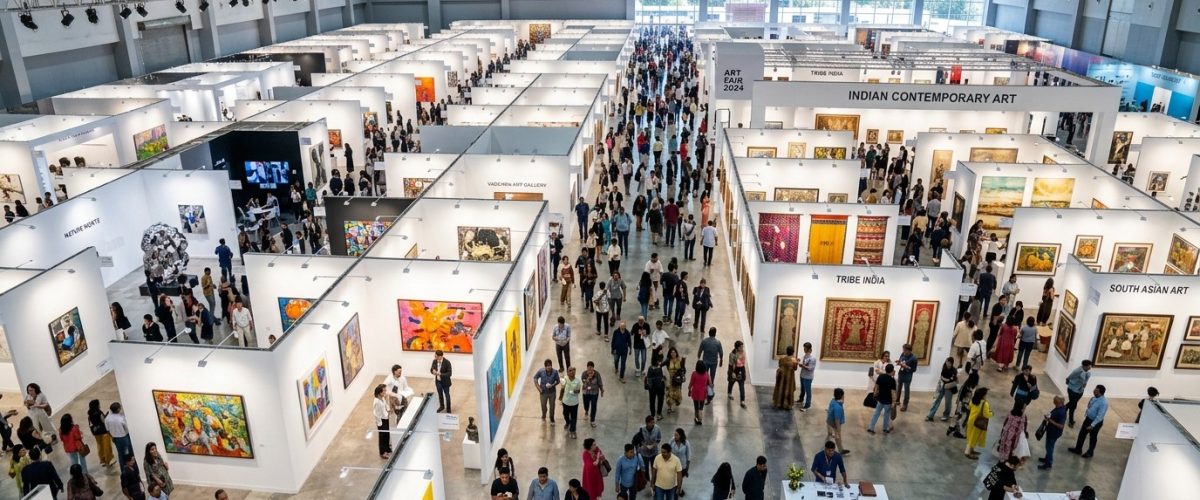
The India Art Fair, the country’s premier platform for contemporary and modern art, has catalysed an extraordinary season of exhibitions across India’s gallery ecosystem in early 2026. While the fair’s main edition concluded in February, its influence has radiated outward through a constellation of satellite exhibitions, gallery openings, and institutional programmes that together constitute the most vibrant period for Indian art in recent memory. From Jodhaiya Bai Baiga’s tribal art retrospective to explorations of feminine identity and material culture, the 2026 season has demonstrated that Indian contemporary art is not only finding its global voice but doing so on its own terms.
Bloom at Dusk: Celebrating India’s Tribal Art Heritage
Ojas Art in New Delhi presents Bloom at Dusk, a celebration of the artistic practice of Jodhaiya Bai Baiga (1938–2024), one of India’s most remarkable contemporary tribal artists. Running through 27 March near Qutub Minar, the exhibition showcases Baiga’s vivid acrylic works on paper, canvas, and papier-mâché — compositions drawn from her desire to imagine a beautiful world alive with divine beings and forest dwellers. Recurring motifs include the sacred natural elements of Baiga tribal cosmology, rendered in a visual language that bridges the ancient and the contemporary.
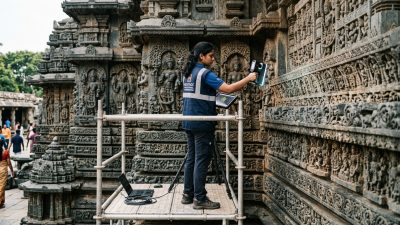
The exhibition is significant not merely for its artistic merit but for what it represents about the evolving relationship between India’s tribal art traditions and the contemporary gallery system. For decades, tribal artists were marginalised within the mainstream art market, their work categorised as “craft” rather than “art.” The India Art Fair ecosystem has been instrumental in challenging this hierarchy, presenting tribal and folk artists alongside their formally trained urban counterparts and asserting their equal claim to artistic significance.
She Who Saw the Deep: Sculptural Practices and Feminine Identity
At Museo Camera in Gurugram (25-29 March), She Who Saw the Deep brings together sculptural works by Yogita Pendharkar, Leena Dewan, and Varsha Singh. Each artist’s practice arises from different interpretations of looking beneath the surface, approaching clay as a site of encounter with the invisible and the unnoticed. The exhibition title, borrowed from the ancient Sumerian epic of Gilgamesh, frames the sculptural works within a broader meditation on knowledge, depth, and the feminine gaze.
The inclusion of sculpture as a primary medium is itself noteworthy. Indian contemporary art has traditionally been dominated by painting, with sculpture occupying a secondary market position. Exhibitions like She Who Saw the Deep, alongside the K.S. Radhakrishnan retrospective, signal a growing appreciation for three-dimensional work that engages the viewer’s spatial awareness and physical presence in ways that painting cannot replicate.
Four Strings (Naaku Tanti): Bridging Traditional and Contemporary
Art Centrix Space in Vasant Kunj presents Naaku Tanti: Four Strings, a solo exhibition by US-based intermedia artist Siri Devi Khandavilli. Known for blending traditional Indian techniques such as Mysore painting with contemporary sculpture, video, and installation, Khandavilli’s work unfolds around the concept of Nāda — not as subject or metaphor but as an underlying condition. The exhibition represents the growing significance of diaspora artists within the Indian art conversation, bringing international perspectives and hybrid aesthetic languages that enrich the domestic scene.
The same venue hosts the continuing exhibition Echoes of Change: Young Contemporaries, which brings together four solo presentations occupying the entire CCA Building at Bikaner House. The multi-artist format has been particularly effective in introducing emerging voices to collectors and critics, functioning as a curated platform for artists who might otherwise struggle to secure solo gallery shows early in their careers.
Diaries, Soliloquies and Stories We Tell
Art Incept presents Diaries, Soliloquies and Stories We Tell at Panchsheel Park in New Delhi (6-26 March), a group exhibition bringing together works that inhabit the fragile threshold between remembrance and loss. Each of the five participating artists navigates a labyrinth of quiet pressures — the social world, cultural inheritance, and personal memory — highlighting the in-betweenness of identity that characterises the contemporary Indian experience. The exhibition’s introspective tone provides a contemplative counterpoint to the more spectacular presentations elsewhere in the city.
Global Ambitions: Mumbai Gallery Method at ARCO Madrid
India’s growing international presence was underscored by Mumbai Gallery Method’s participation in ARCO Madrid, Spain’s premier contemporary art fair, in early March. The gallery presented “Home?”, featuring works by Sajid Wajid Shaikh, Shamir Iqtidar, Ammama Malik, and Syed Ali Sarvat Jafri. The exhibition reflects on the fragile, intimate, and often contested idea of home through sculpture, painting, and installation — themes that resonate universally but are inflected with specific South Asian perspectives on displacement, migration, and belonging.
Indian galleries’ increasing presence at international fairs — from ARCO to Art Basel to Frieze — reflects a structural shift in how Indian contemporary art is positioned globally. No longer content with domestic recognition alone, India’s leading galleries are building international collector relationships, fostering critical engagement with global art discourse, and asserting Indian contemporary art’s place within the worldwide canon. As India’s entertainment content finds global streaming audiences, its visual arts are pursuing a parallel trajectory of international recognition.
The Market and the Mission
Behind the curatorial ambitions and aesthetic achievements lies a growing art market that provides the economic infrastructure for India’s creative ecosystem. Auction houses, both domestic and international, have reported increasing interest from Indian collectors, while art advisory services have proliferated to serve a new generation of high-net-worth individuals seeking to build meaningful collections. The emergence of art investment funds and fractional ownership platforms has further democratised access to the market, enabling a broader base of participants.
Yet for many of the artists exhibited this month, commercial considerations remain secondary to artistic mission. From Jodhaiya Bai Baiga’s spiritual visions to Arpan Sadhukhan’s political critiques, from Shruti Gupta Chandra’s meditative abstractions to the politically charged installations at cultural sites across India, the diversity of artistic expression on display in March 2026 testifies to an art scene that is as intellectually serious as it is commercially dynamic. The India Art Fair season may formally conclude, but the creative energy it has unleashed will continue to reverberate throughout the year.

- Indian Outbound Travel Hits Record 30 Million Trips in 2026 as Japan Thailand and Azerbaijan Emerge Top Destinations - March 29, 2026
- Navratri 2026 Draws Record 50 Lakh Visitors to Gujarat as India’s Festival Economy Touches Rs 4.5 Lakh Crore - March 29, 2026
- Indian Authors Dominate Global Literary Awards as Publishing Industry Crosses Rs 1,000 Crore in 2026 - March 29, 2026