Holi 2026 Across India: From Traditional Celebrations to Eco-Friendly Innovation and Global Recognition

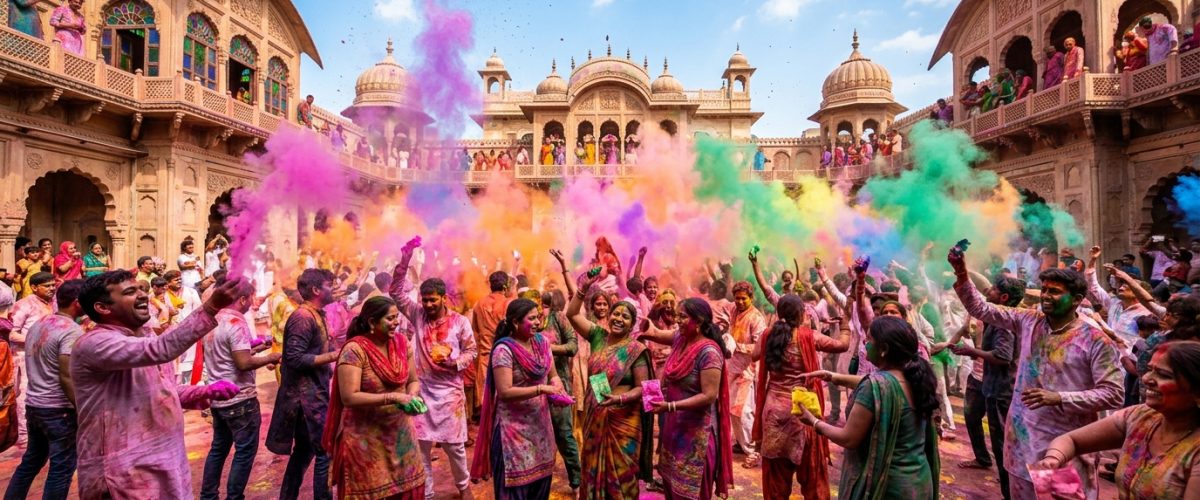
As the spring sun warms the Indian subcontinent, the festival of Holi arrives in March 2026 with its characteristic explosion of colour, community, and cultural significance. Celebrated on 14 March this year, Holi continues to occupy a singular position in India’s festival calendar — a celebration that transcends religious boundaries, bridges social divides, and generates the kind of collective joy that has made it one of the most recognisable Indian festivals globally. Yet beneath the carnival surface, Holi 2026 reveals a festival in evolution — adapting to environmental consciousness, embracing commercial opportunity, and navigating the tension between tradition and modernity that characterises so much of contemporary Indian life.
The Tradition: Colours, Community and Renewal
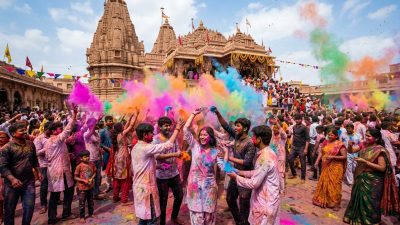
At its heart, Holi remains what it has been for centuries — a celebration of spring’s arrival, the triumph of good over evil, and the dissolution of social boundaries in a shared expression of joy. The ritual framework endures: Holika Dahan on the eve, where bonfires symbolise the destruction of evil; the morning play with colours (gulal and water colours) that transforms streets and courtyards into polychromatic landscapes; the communal sharing of sweets and thandai (a traditional spiced milk drink); and the afternoon visits to friends and family that reinforce social bonds across community lines.
In 2026, the festival’s celebration across India reveals both continuity and regional variation. In Mathura and Vrindavan, the ancient heartland of Holi celebration, the festival stretches across weeks with distinctive traditions — Lathmar Holi, where women playfully strike men with sticks, and Phoolon ki Holi, where flower petals replace coloured powder. In Rajasthan, the celebrations carry their own flavour, with folk music, traditional games, and royal pageantry adding layers of cultural richness. In South India, where Holi is known as Kamadahana in some regions, the celebration connects to local mythological narratives that give the festival distinct regional character.
The Eco-Friendly Revolution
Holi 2026’s most significant evolution is the accelerating shift towards environmentally sustainable celebration. The festival’s traditional colours — once derived from natural sources like turmeric, neem, and flower extracts — had over decades been largely replaced by synthetic alternatives containing chemicals harmful to skin, waterways, and ecosystems. The environmental cost of these synthetic colours, combined with the enormous water consumption associated with Holi celebrations, had made the festival a focus of environmental concern.
In 2026, the pushback against chemical colours has reached a tipping point. Organic colour manufacturers report their strongest-ever sales, with some companies seeing 200 per cent year-on-year growth. Major retailers have dedicated shelf space to eco-friendly Holi products, and consumer awareness campaigns — driven by environmental organisations, social media influencers, and concerned community groups — have made organic colours the default choice for a growing segment of celebrants.
The water conservation dimension of eco-friendly Holi has also gained traction. Dry Holi celebrations — using powdered colours without water — have become popular in water-stressed cities and communities. Some organisers have introduced innovative alternatives: colour-infused foam machines that use minimal water, biodegradable colour-filled balloons, and even digital colour-throwing experiences that provide the visual spectacle of Holi without environmental impact.
Holi as Economic Event
The commercial dimensions of Holi 2026 reflect the festival’s significance as an economic event. The Indian retail sector anticipates Holi-related spending exceeding thirty thousand crore rupees in 2026, encompassing colour purchases, sweets and snacks, beverages, clothing, home cleaning products, skincare and haircare, and event hosting. Fashion brands launch Holi-specific collections — white clothing has become the de facto Holi uniform among younger consumers, creating a reliable seasonal sales spike. Food and beverage companies introduce limited-edition products that capitalise on festival-season demand.
The events industry benefits enormously from Holi, with organised Holi parties and music festivals becoming a significant urban phenomenon. Major cities host dozens of commercial Holi events, ranging from intimate rooftop gatherings to massive outdoor festivals featuring live music, DJs, food vendors, and professional colour-throwing operations. These events, which charge admission fees ranging from hundreds to thousands of rupees, have created a substantial festival economy that employs event managers, caterers, musicians, and support staff.
Holi in the Digital Age
Social media has transformed how Holi is experienced and shared. The festival’s visual spectacle — vivid colours, joyful expressions, and dramatic imagery — makes it exceptionally well-suited to platforms like Instagram, YouTube, and TikTok. In 2026, Holi-related content generates billions of views across platforms, with user-generated celebration videos, professional photography, and brand-sponsored content creating a digital Holi that extends the festival’s reach far beyond physical participation.
The digital dimension has also globalised Holi’s cultural footprint. Holi celebrations now take place in dozens of countries, organised by Indian diaspora communities and embraced by local populations attracted to the festival’s joyful, inclusive spirit. From colour runs in American cities to organised Holi events in European capitals and Southeast Asian towns, the festival’s international adoption represents one of Indian culture’s most successful global exports.
Safety, Consent and the Modern Holi
Holi 2026 reflects an evolving conversation about consent and safety in festival celebration. The tradition of applying colours to anyone regardless of their willingness — once considered an integral part of the festival’s boundary-dissolving spirit — has been increasingly questioned, particularly by women and by communities that have experienced aggressive or disrespectful colour-playing. The emerging consensus, particularly among younger Indians, is that consent should frame all Holi interactions — that the joy of the festival is enhanced, not diminished, when participation is willing.
Safety concerns extend to the physical realm. Skin allergies, respiratory issues caused by powdered colours, and the risks associated with excessive consumption of bhang (cannabis-infused drinks traditionally consumed during Holi) are addressed through public awareness campaigns that have become more sophisticated and widespread in 2026. Dermatologists, paediatricians, and public health officials contribute to a pre-Holi information ecosystem that helps celebrants enjoy the festival while minimising health risks.
The Cultural Significance Endures
Beneath the colour, commerce, and controversy, Holi’s cultural significance endures and arguably deepens in 2026. In a society grappling with divisions — economic, communal, political, generational — Holi’s fundamental proposition remains radical and necessary: that joy is a communal experience, that boundaries between people are artificial constructs that dissolve in shared celebration, and that spring’s renewal offers everyone a fresh beginning. The festival’s ability to bring together people across social boundaries — however imperfectly and temporarily — represents a cultural resource of extraordinary value in contemporary India.
The artistic and cultural expressions associated with Holi — the folk songs, the traditional foods, the specific aesthetics of colour on white — have also received renewed attention from cultural preservationists and creative communities. Contemporary artists draw on Holi’s visual language in work exhibited at forums like the India Art Fair 2026. Musicians sample Holi folk traditions in contemporary compositions. Fashion designers use Holi’s colour palette as inspiration for spring collections. The festival’s cultural DNA permeates Indian creative life in ways that extend far beyond the day of celebration itself.
Looking Beyond the Colours
As the colours of Holi 2026 settle and the cleaning begins, the festival leaves behind more than stained clothes and empty gulal packets. It leaves the residue of human connection — the renewed friendships, the forgiven grievances, the shared laughter that constitutes the festival’s real gift. In a year where Indian cultural life is asserting itself across arenas from Bollywood’s bold creative ambitions to cricket’s national spectacle, Holi reminds us that the most profound cultural experiences require no screen, no ticket, and no subscription — only the willingness to step outside, embrace the colours, and celebrate being alive together.

- Mamaearth, boAt, and Noise: How India’s D2C Champions Are Chasing Profitability in 2026 - March 24, 2026
- India’s D2C Brands Bet Big on Offline Expansion as Quick Commerce Reshapes the Playbook - March 24, 2026
- Himalayan Trekking in 2026: Top Routes and New Trails for Adventure Seekers in India - March 24, 2026