Navratri 2026 Draws Record 50 Lakh Visitors to Gujarat as India’s Festival Economy Touches Rs 4.5 Lakh Crore

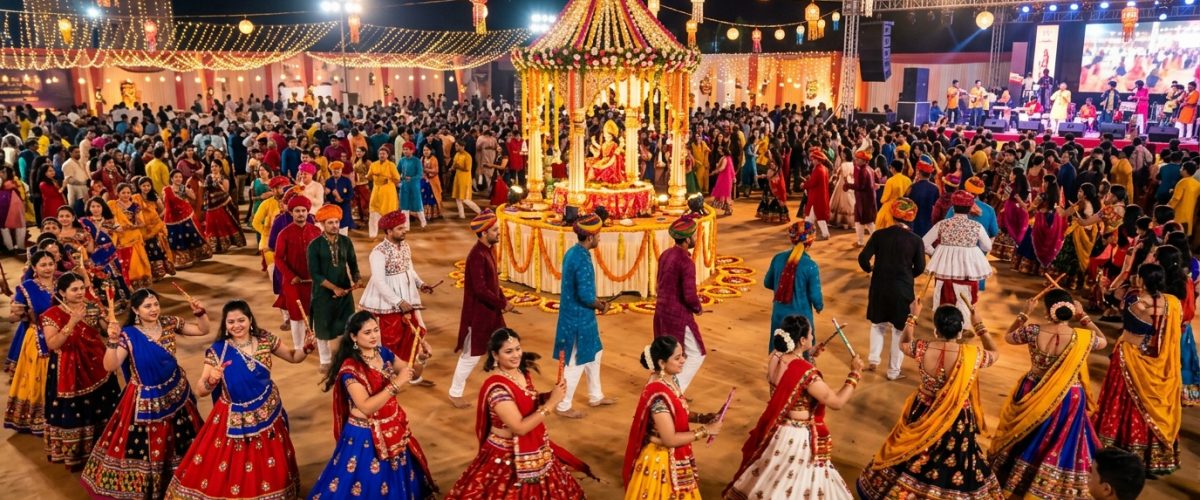
Navratri 2026 has set extraordinary records across Gujarat and the rest of India, with an estimated 50 lakh visitors descending on the state for nine nights of garba, dandiya and spiritual celebration. The festival’s economic impact has been unprecedented, contributing to an overall Indian festival economy that the Confederation of Indian Industry now pegs at Rs 4.5 lakh crore annually — a figure that rivals the GDP of several small nations.
The 2026 edition of Navratri, celebrated from March 22 to March 30, has been marked by three defining trends: the integration of technology into traditional celebrations, a strong push toward environmental sustainability and the emergence of festival tourism as a major driver of India’s hospitality and travel sectors.
Gujarat’s Garba Celebrations Attract Record 50 Lakh Visitors
Gujarat has long been the epicentre of Navratri celebrations, but 2026 has taken the festivities to an entirely new scale. The state government’s “Vibrant Navratri” campaign, launched in partnership with the Gujarat Tourism Development Corporation, attracted domestic and international visitors in record numbers.
Ahmedabad alone hosted over 15 lakh garba participants across 800 organised venues, according to city police estimates. The GMDC Ground, traditionally the city’s largest garba venue, expanded its capacity to 25,000 this year with a concert-grade sound system and LED stage production that rivalled international music festivals. Tickets for premium venues sold out within hours, with VIP packages priced at Rs 15,000 to Rs 50,000 per night.
Vadodara, Surat and Rajkot also reported surge attendance. Vadodara’s United Way garba, which holds the Guinness World Record for the largest garba gathering, attracted 60,000 participants on the final night. The commercial impact of the festival is connecting to the broader success of India’s bridal fashion industry crossing Rs 5,000 crore, as the Indian consumer economy demonstrates its spending power during festive seasons.
Technology Transforms Traditional Celebrations
The most visible change at Navratri 2026 has been the integration of technology. Augmented reality garba experiences, where dancers wear AR glasses that overlay virtual decorations and light effects onto the real-world venue, were piloted at three Ahmedabad locations. The technology, developed by Bengaluru startup ImmersiveAR, attracted long queues of curious participants.
Live streaming has expanded the festival’s reach beyond physical attendees. JioSaavn and YouTube collaborated to live-stream garba from 20 venues across Gujarat, with peak concurrent viewership reaching 8 million. The streams featured multi-camera production with professional commentary in Gujarati, Hindi and English, making high-quality garba accessible to the Indian diaspora worldwide.
Cashless payments have become standard at Navratri venues. UPI transaction volume in Gujarat during the nine-day period crossed Rs 2,000 crore, according to the National Payments Corporation of India. Street food vendors, traditional artisans and even donation boxes at temples now accept QR code payments, reflecting the broader digital transformation seen across Indian culture and lifestyle updates.
Sustainability Takes Centre Stage
Environmental consciousness has become a significant theme at Navratri 2026. The Gujarat Pollution Control Board issued guidelines limiting sound levels at garba venues to 75 decibels after 10 PM and mandating the use of biodegradable decorations. Several prominent venues committed to zero-waste operations, with food served on banana leaves and compostable plates.
Idol immersion, a ritual that has historically caused water pollution, has been addressed through the establishment of 500 artificial immersion ponds across the state. The Ahmedabad Municipal Corporation reported that river pollution levels during Navratri 2026 were 40 per cent lower than the 2023 baseline, a significant improvement attributed to both regulation and public awareness campaigns.
The sustainability push connects to global trends, but is implemented with distinctly Indian characteristics. Rather than opposing tradition, environmental groups have worked with temple committees to find eco-friendly alternatives that preserve the spiritual significance of rituals. This approach has been welcomed by religious leaders who had previously resisted environmental regulation.
Festival Tourism Emerges as Economic Powerhouse
Navratri is the latest example of India’s festivals becoming major tourism products. The Ministry of Tourism’s “Incredible India Festivals” campaign now promotes 25 festivals across 18 states as must-visit cultural experiences. Hotel occupancy in Ahmedabad during Navratri 2026 reached 98 per cent, with average room rates increasing 150 per cent compared to non-festival periods.
The economic impact extends far beyond hospitality. The traditional garba attire market — including chaniya choli, ghagra and accessories — generated estimated sales of Rs 3,500 crore during the Navratri season. Surat’s textile mills, which produce the bulk of garba fabric, operated at full capacity for three months prior to the festival. As Northeast India emerging as 2026’s hottest travel destination continues to reshape domestic tourism patterns, festival-driven travel is emerging as a distinct and lucrative segment.
International festival tourism is also growing. Tour operators report a 35 per cent increase in foreign tourist arrivals specifically for Navratri, with visitors from the UK, US, Australia and Southeast Asia comprising the largest groups. Guided “Navratri experiences” that combine garba participation with temple visits, cooking classes and textile workshops are priced between Rs 50,000 and Rs 2 lakh per person.
The Rs 4.5 Lakh Crore Festival Economy
India’s overall festival economy, encompassing Navratri, Diwali, Durga Puja, Onam, Pongal, Eid and Christmas, has reached Rs 4.5 lakh crore in 2026, according to CII estimates. This represents approximately 2.5 per cent of India’s GDP and employs an estimated 10 million seasonal workers in hospitality, retail, logistics and entertainment.
The festival economy is also driving infrastructure development. Gujarat has invested Rs 1,200 crore in the past two years in upgrading roads, public toilets, parking facilities and public transport connectivity around major Navratri venues. The Ahmedabad Metro extended its operating hours to 1 AM during the festival, carrying 200,000 additional passengers per night.
E-commerce platforms report massive festive-season sales spikes. Amazon India’s “Great Indian Festival” sale, timed to coincide with Navratri and Dussehra, generated estimated gross merchandise value of Rs 35,000 crore in 2025 — and 2026 numbers are expected to be even higher. This digital commerce surge mirrors how India’s street food vendors going digital in 2026 are adopting technology to serve customers during peak festive demand, and ties into the growing South India’s thriving tourism destinations that has brought fresh travel spending to religious and cultural events nationwide.
As India’s middle class expands and disposable incomes rise, the festival economy is poised for sustained growth. Navratri 2026 has demonstrated that tradition and modernity can coexist — and that the celebration of India’s spiritual and cultural heritage is also one of the country’s most powerful economic engines.

- Indian Outbound Travel Hits Record 30 Million Trips in 2026 as Japan Thailand and Azerbaijan Emerge Top Destinations - March 29, 2026
- Navratri 2026 Draws Record 50 Lakh Visitors to Gujarat as India’s Festival Economy Touches Rs 4.5 Lakh Crore - March 29, 2026
- Indian Authors Dominate Global Literary Awards as Publishing Industry Crosses Rs 1,000 Crore in 2026 - March 29, 2026