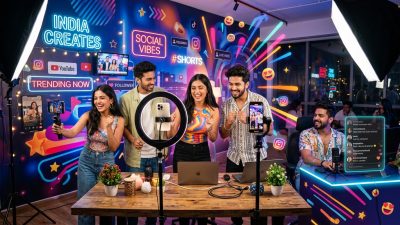
India’s Gen Z Cultural Shift: How Digital-First Lifestyles Are Redefining Identity, Community, and Consumption in 2026

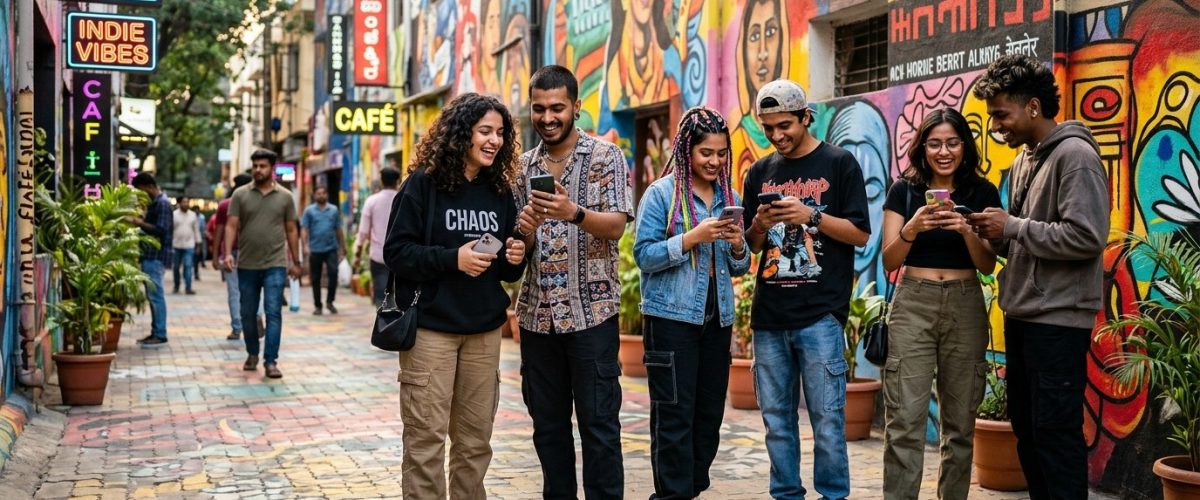
India’s Generation Z — the approximately 375 million Indians born between 1997 and 2012 — is not merely inheriting the culture it was born into but actively reconstructing it. In 2026, this cohort’s influence on consumption patterns, cultural production, social norms, and political discourse has reached a tipping point that industries from entertainment to retail, technology to education, can no longer afford to misunderstand or underestimate. What distinguishes Indian Gen Z from its predecessors is not simply digital fluency but a fundamentally different relationship with identity, community, and meaning-making.
The Digital-First Identity
For Indian Gen Z, the distinction between “online” and “offline” identity is not merely blurred but increasingly meaningless. A 2026 survey by the Internet and Mobile Association of India found that 78 per cent of Indian respondents aged 16-25 consider their social media presence “an important part of who they are” — a figure that rises to 89 per cent in urban areas. This generation curates Instagram grids, manages multiple social media personas, and builds communities around shared interests with a sophistication that reflects a lifetime of digital socialisation.
The implications are profound. Career decisions are influenced by the desire for “content-worthy” experiences. Consumer purchases are evaluated not only for utility but for their “shareability.” Personal relationships are maintained across platforms, with different communication modes (WhatsApp for family, Instagram for friends, Discord for interest communities) serving distinct social functions. This layered digital life creates complexity that earlier generations, for whom the internet was a tool rather than an environment, struggle to fully comprehend.
Conscious Consumption and Value Alignment
Indian Gen Z consumers are redefining what “value” means in purchasing decisions. While price sensitivity remains a factor — particularly given the economic pressures facing young Indians entering the workforce — this generation increasingly evaluates brands on their alignment with personal values. Sustainability, ethical labour practices, inclusivity, and social responsibility are not peripheral considerations but central to purchase decisions, particularly for categories including fashion, food, and personal care.
This shift has created both opportunities and challenges for Indian brands. Companies that authentically integrate social purpose into their business models — from sustainable fashion labels using organic fabrics to food brands with transparent supply chains — have found receptive audiences. Those perceived as engaging in performative social responsibility, however, face swift and merciless backlash. As Indian fashion’s handcraft heritage aligns with sustainability values, brands connecting tradition with conscious consumption are particularly well-positioned to capture Gen Z loyalty.
The Creator Economy and Career Reimagination
Perhaps nowhere is Gen Z’s cultural impact more visible than in the creator economy. India is estimated to have more than 80 million content creators in 2026, with the creator economy valued at approximately ₹25,000 crore. For many young Indians, content creation is not a hobby but a legitimate career aspiration — one that offers the creative freedom, financial potential, and personal branding opportunities that traditional employment cannot match.
This shift has disrupted conventional career narratives in Indian families, where engineering, medicine, and civil services have historically represented the only “respectable” professional paths. The visible success of creators earning substantial incomes through brand partnerships, subscription content, and merchandise has created new aspirational models. Universities and educational institutions are responding by introducing courses in digital marketing, content creation, and social media management — a structural acknowledgement that the creator economy is not a passing trend but a permanent feature of India’s economic landscape.
Regional Pride and Global Aspiration
Indian Gen Z exhibits a fascinating dual consciousness: deep pride in regional identity coupled with global cultural awareness. This generation consumes K-pop, anime, and American streaming content while simultaneously championing regional music, local fashion, and vernacular language content creation. The result is a cultural vocabulary that draws from both global and hyper-local sources, creating hybrid expressions that are uniquely Indian yet internationally legible.
This duality is particularly evident in language use. Indian Gen Z communicates in code-switched registers that blend English with Hindi, Tamil, Telugu, or Kannada depending on context and audience. Social media platforms have responded by improving support for Indian languages, while content creators have found that mixing languages — rather than choosing one — creates the most authentic and engaging communication style. The phenomenon mirrors broader trends in India’s streaming content, where multilingual programming reflects the audience’s comfort with linguistic fluidity.
Mental Health, Well-being, and Digital Boundaries
Alongside its digital enthusiasm, Indian Gen Z has also been at the forefront of destigmatising mental health conversations. Discussions about anxiety, depression, burnout, and therapy that were once taboo in Indian households are now routine on social media platforms and in peer conversations. Mental health content creators have built substantial followings, and brands that integrate wellness messaging into their communications find particular resonance with this demographic.
Simultaneously, a counter-trend has emerged: digital detox culture. Young Indians are increasingly conscious of screen time, algorithmic manipulation, and the attention economy’s impact on well-being. Practices like “phone-free Sundays,” digital sunset routines, and app usage limits reflect a growing sophistication in managing the relationship with technology — a nuance that complicates the narrative of Gen Z as uncritically tech-dependent.
The Future Is Already Here
Indian Gen Z’s cultural influence will only intensify as this cohort moves into its prime earning and decision-making years. By 2030, they will constitute the largest single consumer demographic in the world’s most populous country. The brands, institutions, and cultural producers that thrive will be those that understand this generation not as a market segment to be targeted but as a cultural force to be engaged with — on its own terms, through its own channels, and in its own voice. As India’s art world embraces new forms of expression, Gen Z’s creative energy ensures that the culture of tomorrow is being shaped today.

- Northeast India Emerges as 2026’s Hottest Travel Destination as Jorhat-Majuli Searches Spike - March 25, 2026
- Mamaearth, boAt, and Noise: How India’s D2C Champions Are Chasing Profitability in 2026 - March 24, 2026
- India’s D2C Brands Bet Big on Offline Expansion as Quick Commerce Reshapes the Playbook - March 24, 2026