The Rise of Fermented Foods in Indian Kitchens: Recipes and Health Benefits for 2026

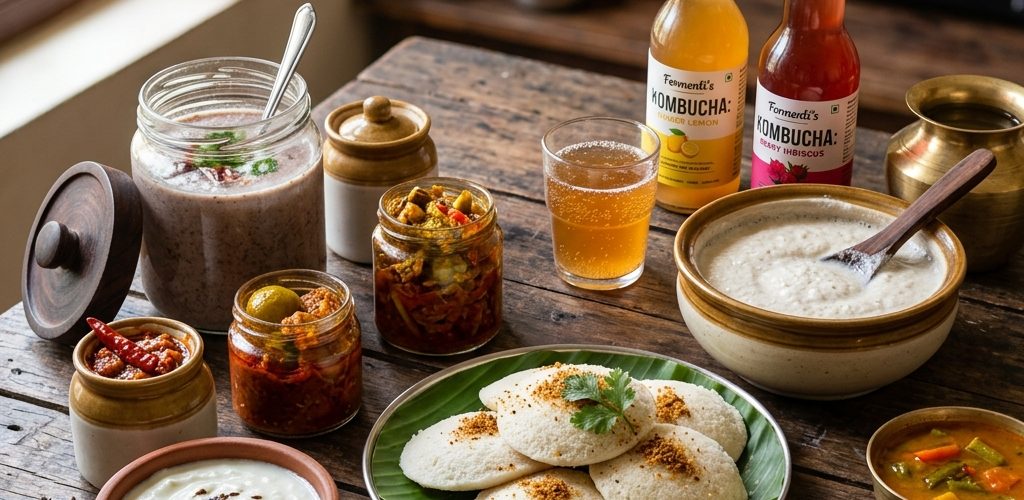
Indian kitchens have always been quietly brilliant at fermentation. The morning idli, the tangy dosa batter left to rise overnight, the pot of homemade curd set before bed, the pungent pickle aging in a ceramic jar on the windowsill — these are not trendy health foods but ancient culinary practices woven into the daily rhythms of millions of Indian households. In 2026, however, these traditions are experiencing a dramatic reappraisal, as modern nutritional science confirms what Indian grandmothers always intuited: fermented foods are among the most powerful dietary tools for gut health, immunity, and overall wellbeing.
The Science Behind the Tradition
Fermentation is a metabolic process in which microorganisms — bacteria, yeasts, and moulds — convert carbohydrates into alcohols, organic acids, and gases, transforming the nutritional profile, flavour, and digestibility of foods. The process generates probiotics — live beneficial bacteria that colonise the gut and support the complex ecosystem of the human microbiome, which modern research has linked to immune function, mental health, nutrient absorption, and even weight regulation.
India’s traditional fermented foods are particularly rich in lactobacillus and bifidobacterium strains, the two bacterial genera most consistently associated with health benefits. A 2025 study published in the Indian Journal of Microbiology found that homemade curd from Indian households contained significantly higher probiotic diversity than commercially produced yoghurt, suggesting that traditional preparation methods — using small amounts of previous-day curd as a starter culture in clay or steel vessels — create conditions uniquely favourable to beneficial bacterial growth.
India’s Fermented Food Heritage: A Regional Tour
South India: The undisputed heartland of Indian fermentation. The idli-dosa batter — a mixture of rice and urad dal ground and left to ferment for 8-12 hours — is consumed daily by hundreds of millions of South Indians and represents one of the most sophisticated examples of grain-legume fermentation in global food culture. The fermentation process increases the batter’s protein bioavailability, enhances its B-vitamin content, and creates the characteristic sour tang and airy texture that distinguishes a perfectly fermented idli from a flat, dense failure.
North India: Kanji, a fermented mustard-seed and carrot drink traditional to Punjab and Uttar Pradesh, is experiencing a commercial revival in 2026. Rich in probiotics and pungent in flavour, kanji was historically consumed during Holi as a digestive tonic and is now being bottled and sold by artisanal food brands as a daily health drink. Fermented radish and turnip preparations — known as singhara and gundruk in different regions — are also gaining recognition beyond their traditional communities.
Northeast India: The region’s fermented food traditions are among the most diverse and least celebrated in the country. Akhuni (fermented soybean cakes from Nagaland), tungrymbai (fermented black soybean from Meghalaya), and hawaijar (fermented soybean from Manipur) are protein-rich staples that are now finding audiences in metropolitan Indian restaurants and health food stores. Bamboo shoot fermentation, practiced across the northeast, produces intensely flavoured condiments that are being rediscovered by chefs exploring India’s indigenous cuisines.
Western India: Sol kadhi, a kokum and coconut milk preparation from Maharashtra and Goa that undergoes light fermentation, serves as both a digestive drink and a cooking medium. The traditional Gujarati practice of making handvo — a fermented rice and lentil cake studded with vegetables — represents another example of how fermentation was integrated into everyday cooking long before the term “gut health” entered popular vocabulary.
Modern Adaptations: Kombucha to Kefir, the Indian Way
While rediscovering indigenous traditions, Indian food enthusiasts are also adapting global fermentation practices to local palates. Kombucha — the fermented tea drink that originated in East Asia — has found a thriving Indian market, with brands like Atmosphere Kombucha, Bhu Kombucha, and Bombucha offering flavours that incorporate Indian ingredients such as tulsi, ginger, turmeric, and hibiscus. The Indian kombucha market is estimated to have grown by 45 per cent in 2025-26, driven by health-conscious urban consumers seeking alternatives to carbonated soft drinks.
Water kefir and milk kefir — fermented grain-based beverages rich in probiotics — are being produced by a growing number of cottage-scale artisans across Indian cities, distributed through WhatsApp groups and farmers’ markets. Sourdough bread baking, which surged during the pandemic lockdowns, has matured into a sustained movement, with Indian bakers incorporating ragi, jowar, and atta into their sourdough starters to create distinctly Indian loaves. This creative fusion of traditional and modern approaches to food resonates with the broader millet recipe movement transforming Indian home cooking.
The Health Benefits: What Research Confirms
The health claims surrounding fermented foods are increasingly supported by rigorous research. Regular consumption of probiotic-rich fermented foods has been associated with improved digestive function, reduced bloating and irritable bowel symptoms, enhanced calcium absorption (particularly relevant for India’s high osteoporosis burden), and strengthened immune response. A landmark 2025 clinical trial conducted at AIIMS Delhi found that daily consumption of homemade curd and traditional fermented vegetables was associated with a 30 per cent reduction in antibiotic-associated diarrhoea among hospitalised patients — a finding with significant implications for India’s healthcare system.
The mental health connection is equally compelling. The gut-brain axis — the bidirectional communication system between the gut microbiome and the central nervous system — has been shown to influence mood, anxiety, and cognitive function. Preliminary research from the National Institute of Mental Health and Neurosciences in Bengaluru suggests that individuals with diverse, fermented-food-rich diets report lower levels of perceived stress and anxiety, though larger studies are needed to establish causality.
Starting Your Fermentation Journey at Home
For those looking to incorporate more fermented foods into their daily diet, the starting point is deceptively simple: make curd at home. Warm whole milk to approximately 40°C, add a tablespoon of existing curd as a starter, cover, and leave undisturbed in a warm place for 6-8 hours. The resulting curd — richer in probiotic diversity than any store-bought yoghurt — can be consumed plain, transformed into chaas (buttermilk) with roasted cumin and salt, or used as a base for raita, kadhi, and lassi.
For the more adventurous, fermenting idli-dosa batter from scratch is a rewarding weekend project. Soak three parts rice and one part urad dal separately for 4-6 hours, grind to a smooth paste, combine, and leave in a warm spot for 12-18 hours until the batter rises and develops a slightly sour aroma. The key variables are temperature (28-32°C is ideal), grinding fineness, and patience — fermentation cannot be rushed. For those interested in how traditional Indian dietary philosophies approach fermentation, exploring Ayurvedic nutrition principles provides deeper context.
A Living Tradition for a Healthier Future
The fermented food renaissance in Indian kitchens in 2026 is neither a fad nor an import — it is a homecoming. In rediscovering the probiotic wisdom embedded in curd, kanji, idli, akhuni, and a hundred other preparations, Indian home cooks are reconnecting with a dietary heritage that sustained the health of communities long before the invention of probiotic supplements and functional foods. The science is now catching up with the tradition, confirming that the most powerful tools for gut health and immunity were never on a pharmacy shelf — they were always in the kitchen. As India’s creative energies surge across every domain in 2026, the country’s most ancient creative act — transforming simple ingredients into nourishing food through the alchemy of fermentation — is enjoying its own well-deserved moment in the spotlight.

- India’s Millet Recipe Revolution Reaches Peak as Government Push Meets Social Media Creativity in 2026 - March 28, 2026
- Regional Indian Cuisine Goes Mainstream: How Forgotten Flavours Are Conquering Urban Menus in 2026 - March 27, 2026
- Street Food Revolution: How India’s Chaat and Momos Vendors Are Going Digital in 2026 - March 26, 2026