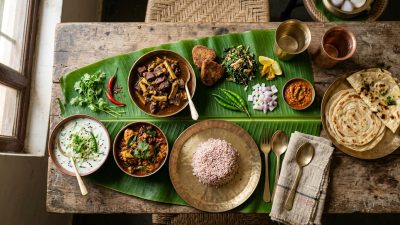
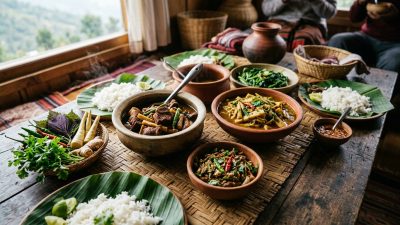
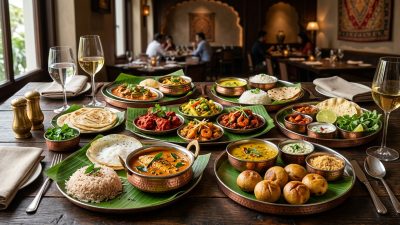
India’s Regional Cuisine Renaissance: How Forgotten Flavours Are Reclaiming the National Palate

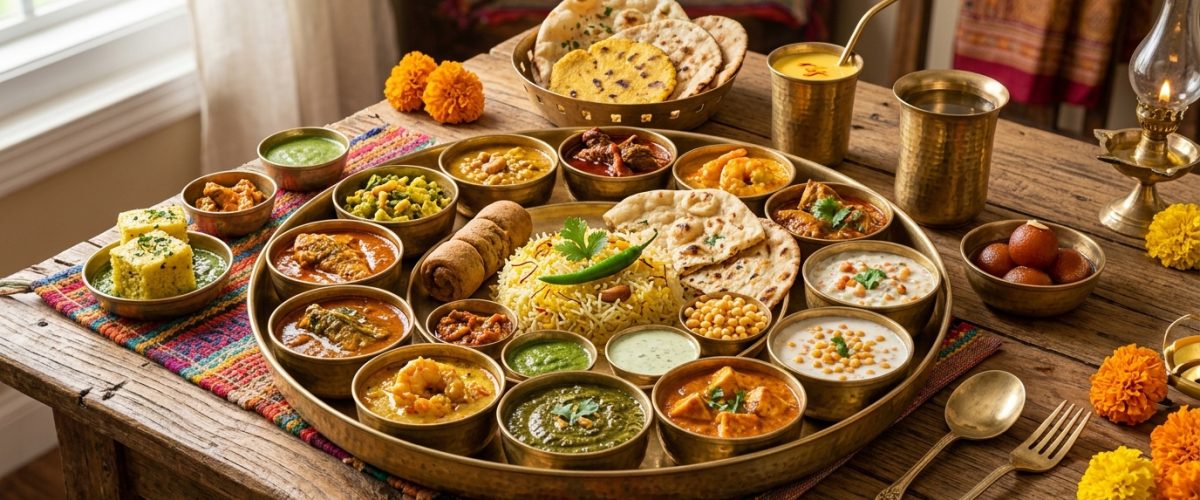
India’s regional cuisine landscape is experiencing a remarkable renaissance in 2026, as chefs, food entrepreneurs, and home cooks across the country embrace hyperlocal ingredients and traditional cooking techniques that had been gradually fading from mainstream culinary consciousness. The movement extends far beyond nostalgia — it represents a fundamental recalibration of how India values, preserves, and shares its extraordinary culinary diversity.
The Revival of Forgotten Ingredients
From the black rice of Manipur to the red amaranth of Kerala, ingredients that were once confined to specific villages and communities are finding their way into urban kitchens, restaurant menus, and e-commerce platforms. This rediscovery has been driven by a convergence of factors: growing awareness of nutritional benefits, the sustainability movement’s emphasis on locally adapted crops, and a new generation of food entrepreneurs who see commercial potential in India’s culinary heritage.
In Rajasthan, the revival of ker sangri — a desert bean preparation that was traditionally a survival food for arid regions — has become a symbol of this broader trend. Restaurants in Jaipur and Jodhpur are now presenting the dish as a premium offering, while packaged versions are being exported to Indian diaspora communities worldwide. Similarly, Meghalaya’s jadoh, a rice and pork preparation using local red rice varieties, has gained recognition through food festivals and social media documentation.
State-Level Culinary Identity Programmes
Several Indian states have launched formal programmes to document, preserve, and promote their distinctive food traditions. Odisha’s initiative to catalogue its 700-plus varieties of traditional rice preparations has gained international attention, while Tamil Nadu’s programme to revive Chettinad cooking techniques — many of which involve complex spice-roasting processes that take years to master — has attracted funding from cultural preservation organisations.
Karnataka has taken a particularly systematic approach, establishing a state-level food heritage council that works with universities, chef associations, and farming communities to identify endangered culinary traditions. The council’s first report identified 45 dishes from the state’s coastal, hill, and plateau regions that are at risk of being lost within a generation without active intervention.
These government-backed efforts complement the work of independent food researchers and writers who have been documenting India’s living heritage traditions for decades but have often struggled to secure institutional support for their work.
Farm-to-Table Supply Chains Transform Regional Access
The logistical challenge of sourcing regional ingredients has historically been one of the biggest barriers to the wider appreciation of India’s culinary diversity. A customer in Mumbai wanting to cook an authentic Naga dish would have had no reliable way to source ingredients like axone (fermented soybean) or raja mircha (king chilli) even five years ago.
That landscape has shifted dramatically. Specialised e-commerce platforms connecting regional producers directly with urban consumers have proliferated in 2025-26, with several achieving significant scale. These platforms have created economic incentives for farmers and foragers to maintain cultivation of traditional varieties that commercial agriculture had been gradually displacing.
The growth of India’s direct-to-consumer brands has been particularly evident in the food sector, where start-ups focusing on single-origin spices, traditional preserves, and region-specific ingredients have attracted venture capital attention. The sector’s growth trajectory suggests that regional cuisine preservation and commercial viability are increasingly aligned rather than in tension.
Culinary Tourism Drives Economic Value
India’s tourism sector has begun to recognise what countries like Thailand, Mexico, and Japan established decades ago: food can be a primary driver of tourist arrivals and spending. Several states have developed dedicated culinary tourism circuits that guide visitors through regional food landscapes, combining cooking experiences, market visits, and meals in homes and restaurants.
Kerala’s spice trail tourism has been particularly successful, generating measurable economic benefits for communities along routes that connect spice plantations with traditional cooking experiences. The model is being studied by other states, including Sikkim, whose organic farming credentials and distinct Himalayan cuisine offer a compelling proposition for food-focused travellers exploring India’s mountain destinations.
The Challenge of Authenticity at Scale
The growing commercial interest in regional cuisine has raised legitimate concerns about authenticity and cultural appropriation. When a traditional Coorgi pandi curry appears on a Delhi restaurant menu, questions arise about who benefits economically, whether the preparation honours the original technique, and whether the cultural context that gives the dish its meaning is preserved or stripped away.
Food historians have called for frameworks that balance the legitimate interest in wider access to regional cuisines with respect for the communities that developed and maintained these traditions over centuries. The debate mirrors similar conversations happening in other domains where traditional knowledge intersects with commercial markets, from textile patterns to medicinal plants.
What Lies Ahead for India’s Regional Cuisines
The trajectory of India’s regional cuisine revival suggests that 2026 will be remembered as a turning point — the year when the movement transitioned from niche interest to mainstream momentum. The combination of consumer demand, entrepreneurial energy, institutional support, and digital connectivity has created conditions that are more favourable for culinary preservation and innovation than at any previous point in modern Indian history.
The ultimate measure of success, however, will not be the number of regional restaurants in metropolitan cities or the volume of specialty ingredients sold online. It will be whether the communities that originated these traditions continue to find value — cultural, economic, and nutritional — in maintaining them for future generations. India’s culinary diversity is not merely a commercial asset or a tourist attraction; it is a living archive of the country’s ecological, agricultural, and cultural history, one that deserves protection not just celebration.

- India’s Fine Dining Revolution Reaches Tier 2 Cities as 12 Indian Restaurants Enter Asia’s 50 Best List in 2026 - March 29, 2026
- India’s Millet Recipe Revolution Reaches Peak as Government Push Meets Social Media Creativity in 2026 - March 28, 2026
- Regional Indian Cuisine Goes Mainstream: How Forgotten Flavours Are Conquering Urban Menus in 2026 - March 27, 2026