India’s Fine Dining Revolution Reaches Tier 2 Cities as 12 Indian Restaurants Enter Asia’s 50 Best List in 2026

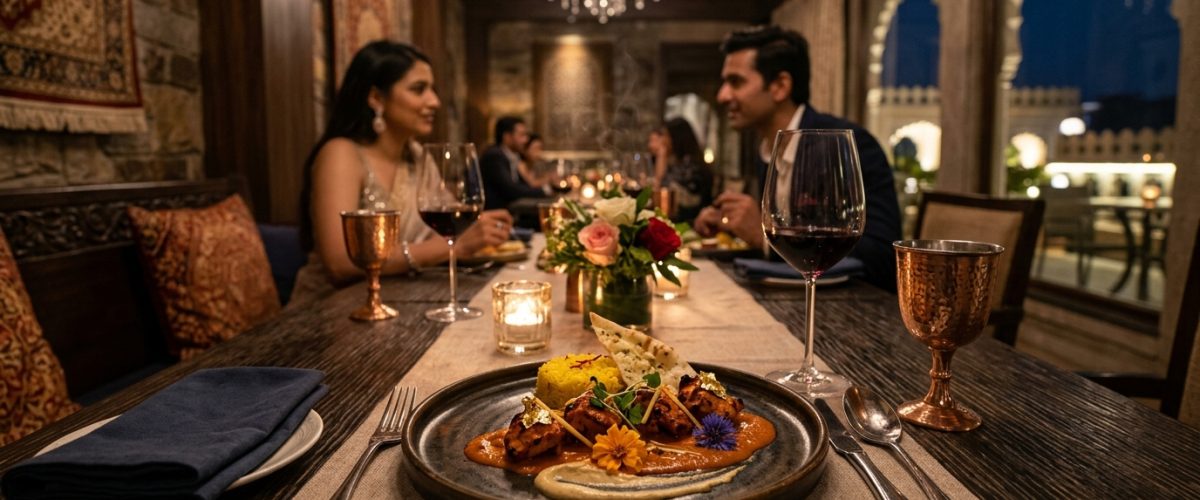
India’s restaurant industry has achieved a historic milestone in 2026 with 12 restaurants making the prestigious Asia’s 50 Best Restaurants list — the highest count ever for the country and a clear signal that Indian fine dining has arrived on the global culinary stage. More significantly, the fine dining revolution is no longer confined to Mumbai and Delhi; tier 2 cities like Jaipur, Chandigarh, Kochi and Hyderabad are emerging as serious gastronomic destinations.
The National Restaurant Association of India estimates the country’s organised restaurant market at Rs 5.5 lakh crore in FY26, growing at 15 per cent annually. Within this, the fine dining segment — defined as restaurants with an average per-person spend exceeding Rs 3,000 — has grown at 25 per cent, making it the fastest-expanding category. The growth connects to the broader culinary renaissance where forgotten regional flavours conquering urban restaurant menus are finding their way onto sophisticated urban menus across the country.
Asia’s 50 Best: India’s Record-Breaking 2026 Showing
The Asia’s 50 Best Restaurants list, announced in March 2026 at a ceremony in Seoul, featured 12 Indian establishments — up from seven in 2024. Indian Accent, Gaggan and Masque have been staples on the list for years, but the 2026 edition introduced newcomers that reflect the evolving depth of India’s culinary scene.
Gaggan Anand’s eponymous Bangkok restaurant (which counts as Thai on the list) was ranked 4th, while Indian Accent in New Delhi climbed to 8th — the highest ranking ever for a restaurant physically located in India. Mumbai’s Masque, helmed by chef Prateek Sadhu, secured the 15th position with its tasting menu featuring ingredients foraged from the Western Ghats and Kashmir.
The new entries included Koko in Mumbai (28th), which serves modern Japanese-Indian fusion; Karavalli in Bengaluru (37th), recognised for its authentic coastal Karnataka cuisine; and Farmlore in Bengaluru (43rd), a farm-to-table restaurant that grows 80 per cent of its produce on-site. The diversity of styles represented demonstrates that India’s restaurant scene has moved beyond a single culinary narrative.
Tier 2 Cities Join the Fine Dining Movement
The most exciting development in India’s restaurant landscape is the expansion of ambitious dining concepts to smaller cities. Jaipur’s Suvarna Mahal, Chandigarh’s The Black Orchid, Kochi’s Oceanos and Hyderabad’s The Farm have all opened since 2024 and are attracting attention from food critics and diners who previously travelled to metros for premium dining experiences.
The expansion is driven by rising disposable incomes in tier 2 cities and the availability of trained culinary talent. India’s hospitality education system, which includes the Institute of Hotel Management chain and private culinary schools like the Culinary Academy of India in Hyderabad, produces approximately 15,000 graduates annually. Many of these graduates, priced out of expensive metro housing, are choosing to build careers in cities where the cost of living is lower and entrepreneurial opportunities are greater.
Real estate costs also favour tier 2 expansion. A 3,000-square-foot restaurant space in Jaipur’s C-Scheme neighbourhood costs approximately Rs 80 per square foot per month, compared to Rs 400 to Rs 600 per square foot in Mumbai’s Bandra-Kurla Complex. The lower overheads allow restaurateurs to invest more in ingredients and kitchen equipment while maintaining accessible pricing.
Chef-Driven Restaurants Redefine Indian Cuisine
The fine dining revolution is fundamentally a chef-driven movement. A new generation of Indian chefs, many trained at international institutions before returning home, is reimagining what Indian cuisine can be. Their approach typically involves sourcing hyper-local ingredients, applying modern culinary techniques and presenting traditional flavours in contemporary formats.
Chef Prateek Sadhu of Masque exemplifies this philosophy. His 12-course tasting menu, priced at Rs 8,500 per person, features ingredients like Himalayan sea buckthorn, Kashmiri morel mushrooms and fermented bamboo shoots from Meghalaya. Each dish tells a story about India’s biodiversity, and the menu changes with the seasons to reflect ingredient availability.
In Goa, chef Avinash Martins of Cavatina has elevated Goan-Portuguese cuisine to fine dining standards. His “Goan Memory Menu” features dishes inspired by his grandmother’s recipes, reinterpreted with contemporary plating and technique. The restaurant, which seats just 24 diners, is booked three months in advance. As India’s street food vendors transforming with digital technology embrace technology, chefs are using Instagram and YouTube to build personal brands that drive reservation demand, reflecting the digital-first consumer behaviour documented in the Indian food and culinary stories.
The Cloud Kitchen and Casual Dining Middle Ground
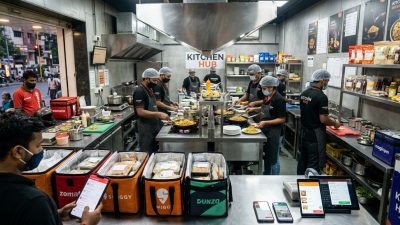
While fine dining captures headlines, the most commercially significant trend in India’s restaurant industry is the explosive growth of cloud kitchens and premium casual dining. Rebel Foods, which operates brands like Faasos, Behrouz Biryani and Oven Story through delivery-only kitchens, now operates over 3,000 cloud kitchens across 40 cities. The company’s FY26 revenue is estimated at Rs 2,500 crore.
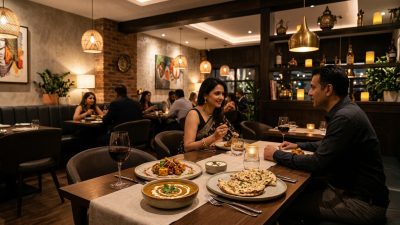
Premium casual dining — restaurants with per-person spends of Rs 800 to Rs 2,000 — is the sweet spot for India’s expanding middle class. Chains like Farzi Café, SodaBottleOpenerWala and Burma Burma have expanded aggressively into tier 2 and tier 3 cities, offering elevated dining experiences at accessible price points. The format resonates with young professionals who want quality food and ambiance without the formality and cost of fine dining.
Food delivery platforms are also driving restaurant experimentation. Zomato and Swiggy’s recommendation algorithms favour highly-rated restaurants, creating incentives for even small establishments to improve food quality and presentation. The platforms report that average order values have increased 18 per cent year-on-year in FY26, suggesting that consumers are willing to pay more for better restaurant food.
Challenges and the Road Ahead
India’s restaurant industry faces significant headwinds despite the growth. Food inflation, which has averaged 7 per cent in FY26, has squeezed margins for restaurants that cannot easily pass costs to consumers. Labour shortages in kitchen and service roles remain a persistent challenge, with many hospitality workers migrating to better-paying sectors like IT and logistics.
Regulatory complexity is another burden. Restaurants in India require an average of 14 licences and permits to operate — from FSSAI food safety certification to local municipal trade licences, fire safety certificates and liquor permits. The compliance cost and bureaucratic delays deter many aspiring restaurateurs and particularly affect smaller operators who lack the resources to navigate complex regulatory environments.
Nevertheless, the trajectory is unmistakable. India’s restaurant scene has evolved from a fragmented market of local eateries and international chain outposts into a sophisticated ecosystem that includes world-class fine dining, innovative casual concepts and technology-driven delivery models. The 12 restaurants on Asia’s 50 Best list are not anomalies — they are the visible tip of a culinary iceberg that is reshaping how the world perceives Indian food. The connection to regional Indian cuisine making a comeback is direct, as the restaurant boom is deeply intertwined with the rediscovery and celebration of India’s diverse regional food traditions. And much like Indian brands building a global presence in 2026, India’s culinary entrepreneurs are proving that homegrown concepts can compete on any global stage.

- India’s Fine Dining Revolution Reaches Tier 2 Cities as 12 Indian Restaurants Enter Asia’s 50 Best List in 2026 - March 29, 2026
- India’s Millet Recipe Revolution Reaches Peak as Government Push Meets Social Media Creativity in 2026 - March 28, 2026
- Regional Indian Cuisine Goes Mainstream: How Forgotten Flavours Are Conquering Urban Menus in 2026 - March 27, 2026