How 10-Minute Delivery Is Transforming India’s Street Food Culture: The Quick Commerce Revolution

When Street Food Meets the Speed Economy
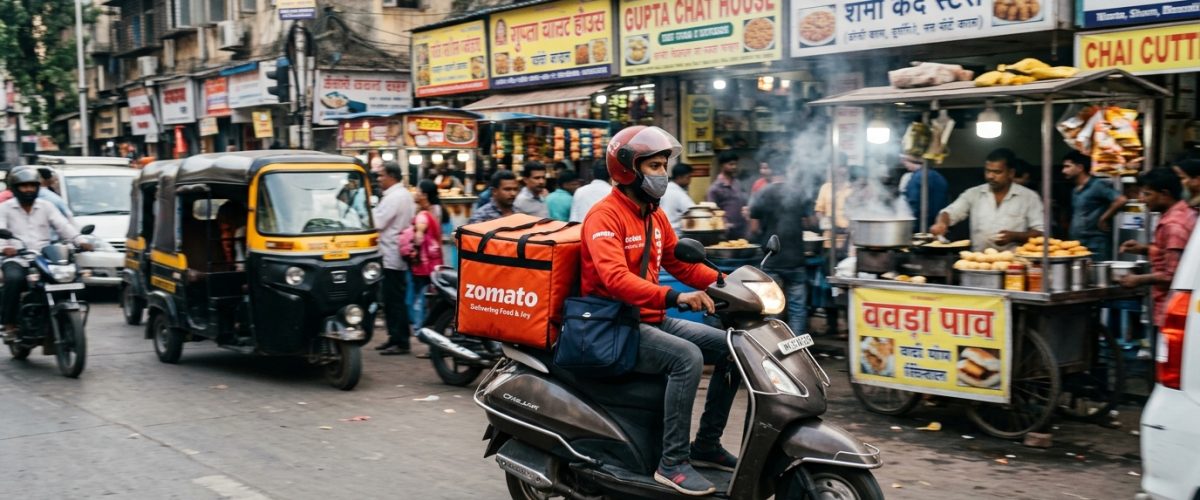
India’s quick commerce revolution — the 10-to-15-minute delivery model pioneered by platforms such as Blinkit, Zepto, and Swiggy Instamart — has found one of its most culturally significant applications in the street food sector. In 2026, consumers in India’s major cities can order frozen samosas, vacuum-sealed chaat kits, ready-to-eat kathi rolls, and artisanal namkeen snacks and receive them at their doorstep before a YouTube video finishes playing. This convergence of India’s $50,000 crore street food market with its $6 billion quick commerce industry is creating new business models, new consumer behaviours, and new questions about what “street food” means when it arrives via an app.
The trend is not merely about convenience. It represents a fundamental reshaping of how Indians access and consume their most beloved casual foods — a transformation powered by the same digital payments infrastructure that made India the world’s leading UPI economy and the logistics networks that India’s technology sector has built at scale.
The Numbers Behind the Trend
Quick commerce platforms in India processed an estimated 1.2 billion orders in 2025, with food and snack categories growing at 60 per cent year-on-year — the fastest-growing segment on these platforms. Blinkit reports that packaged Indian snacks and street food items now constitute 18 per cent of its total order volume, up from 8 per cent in 2024. Zepto’s “Zepto Café” vertical, which delivers freshly prepared snacks from cloud kitchens within 10 minutes, has expanded to 15 cities with plans to reach 30 by December 2026.
The average basket value for street food orders on quick commerce platforms ranges from ₹200 to ₹400 — significantly higher than a typical street stall purchase but comparable to a casual restaurant order. This price positioning suggests that quick commerce is not competing with street vendors but rather capturing demand that would otherwise go to restaurant delivery platforms such as Swiggy and Zomato, where delivery times of 30 to 45 minutes are standard.
Packaged Street Food: The New FMCG Category
The most visible manifestation of the quick commerce-street food convergence is the explosion of packaged street food brands. Companies such as Haldiram’s (which has dominated the traditional namkeen market for decades) are being challenged by new entrants such as Chai Point’s snack line, FreshMenu’s street food kits, and a constellation of direct-to-consumer brands that have built their businesses entirely around quick commerce distribution.
Premium frozen samosa brand Samosa Party, launched in 2024, exemplifies the model. The company sells vacuum-sealed samosas in varieties including classic aloo, keema, paneer tikka, and a seasonal mango-cheese variant. Each samosa is designed to be air-fried in six minutes, producing a result that the company claims is indistinguishable from freshly fried street samosas. At ₹30 to ₹35 per samosa, the pricing is three times the street price but includes the convenience premium that quick commerce consumers are willing to pay.
Chaat kits represent another growing category. These packages include pre-portioned chutneys, crisped papdi, boiled chickpeas, and spice mixtures that consumers assemble at home in under five minutes. The experience is designed to replicate the customisation of street chaat — adjust sweetness, increase spice, add extra sev — while ensuring consistent quality and hygiene. Brands such as Chaatit and Street Bytes have built loyal customer bases through subscription models that deliver weekly chaat variety packs.
Cloud Kitchens: The Hidden Infrastructure
Behind every 10-minute street food delivery is a cloud kitchen — a commercial cooking facility designed exclusively for delivery orders, with no dine-in component. India’s cloud kitchen sector has grown to an estimated ₹8,000 crore market, with companies such as Rebel Foods (which operates brands including Faasos, Behrouz Biryani, and Ovenstory) and Curefoods operating hundreds of kitchens across Indian cities.
The cloud kitchen model is particularly well-suited to street food because the dishes — samosas, rolls, chaat, momos, vada pav — are designed to be prepared and consumed quickly. The compact format of street food eliminates the presentation and plating concerns that make restaurant dishes difficult to deliver without quality loss. A kathi roll tastes essentially the same whether eaten at a roadside stall or from a delivery container — a characteristic that cloud kitchens exploit effectively.
Cloud kitchens are also enabling regional street food to cross geographic boundaries. A cloud kitchen in Delhi can prepare authentic Kolkata-style egg rolls using a recipe and technique guide developed by a specialist chef in Kolkata, allowing consumers in one city to access street food traditions from another without travel. This geographic democratisation of street food flavours is accelerating cultural exchange across India’s diverse culinary landscape.
Impact on Traditional Vendors
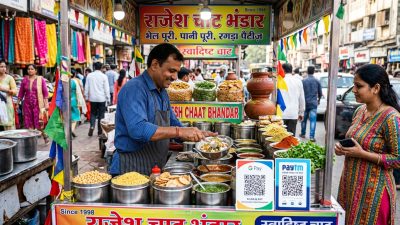
The relationship between quick commerce and traditional street food vendors is complex and evolving. Initially, the platforms were viewed as competitors that would undercut independent vendors. In practice, the dynamics are more nuanced. Several quick commerce platforms have partnered directly with established street food vendors, enabling them to reach customers beyond their physical location.
Swiggy’s Street Food Programme, launched in late 2025, onboards traditional vendors who meet basic food safety standards and provides them with packaging, logistics, and digital presence. The programme has enrolled over 5,000 vendors across 20 cities, with participating vendors reporting average revenue increases of 25 to 40 per cent from delivery orders that supplement their walk-in business.
However, the programme has also exposed the digital divide in India’s informal food economy. Many traditional vendors lack smartphones, bank accounts, or the digital literacy required to manage online orders. The broader shift toward health-conscious eating in India is also creating pressure on traditional vendors to adopt food safety practices — gloves, filtered water, clean utensils — that add cost to their already thin-margin operations.
The Consumer Behaviour Shift
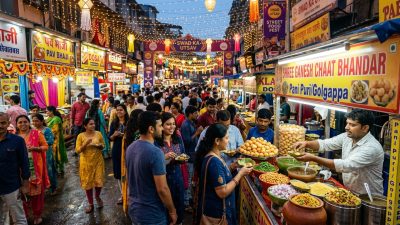
Quick commerce is changing not just how Indians buy street food but when and why. Traditional street food consumption is concentrated in the late afternoon and early evening — the iconic “chai time” window when office workers, students, and families visit their neighbourhood chaat wallah. Quick commerce has disaggregated this pattern. Street food snacks are now ordered for breakfast meetings, as midnight snacks, as accompaniments to office lunch, and as party appetisers.
This temporal expansion has significant implications for the street food industry’s total addressable market. If street food consumption was previously concentrated in a two-to-three-hour daily window, quick commerce has stretched that window across the entire waking day. The premiumisation of India’s street food offerings has further expanded the occasions where street food is considered appropriate — from casual snacking to formal entertaining.
A Market That Refuses to Stand Still
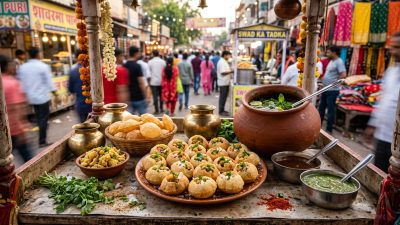
India’s street food culture has survived centuries of social change, economic upheaval, and cultural transformation. Its resilience lies in its ability to adapt — absorbing new ingredients, responding to changing tastes, and finding new distribution channels without losing the essential character that makes a freshly assembled pani puri or a piping hot vada pav one of life’s reliable pleasures.
Quick commerce is the latest adaptation. It will not replace the experience of standing at a street stall, watching a vendor assemble your plate with practised efficiency, and eating while the world rushes past. But it will ensure that when you cannot make it to the stall, a version of that experience — remarkably close, increasingly affordable, and available in minutes — comes to you instead. For India’s street food, this is not a threat but an opportunity. And if history is any guide, street food will seize it with characteristic resourcefulness.

- India’s Millet Recipe Revolution Reaches Peak as Government Push Meets Social Media Creativity in 2026 - March 28, 2026
- Regional Indian Cuisine Goes Mainstream: How Forgotten Flavours Are Conquering Urban Menus in 2026 - March 27, 2026
- Street Food Revolution: How India’s Chaat and Momos Vendors Are Going Digital in 2026 - March 26, 2026