Indian Scientists Discover New Fungal Species: Expanding Frontiers of Biodiversity Research

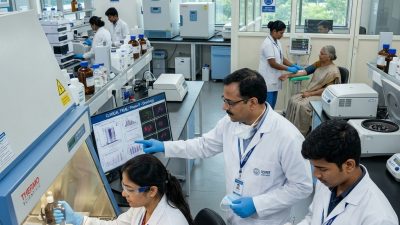
In the quiet laboratories of the MACS-Agharkar Research Institute in Pune, a team of Indian mycologists has achieved something that underscores both the richness of India’s biodiversity and the critical importance of taxonomic research: the identification and formal description of two previously unknown species within the Aspergillus section Nigri, commonly known as the black aspergilli. While fungi rarely capture headlines in the way that charismatic megafauna do, this discovery opens important new avenues in biotechnology, agriculture, and human health — and highlights India’s growing role as a global leader in biodiversity science.
The Discovery in Detail
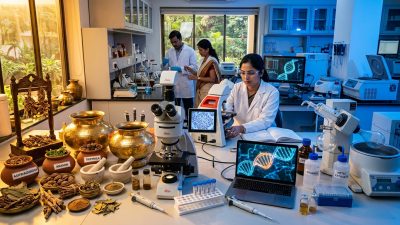
The research team, affiliated with the Department of Science and Technology’s autonomous institute, employed a combination of traditional morphological analysis and advanced molecular techniques to distinguish the new species from the more than 20 existing members of the Aspergillus section Nigri. The section is one of the most industrially significant groups of fungi, with members used in the production of citric acid, enzymes for food processing, and bioremediation applications.
The new species were isolated from soil samples collected across diverse Indian ecosystems — from the Western Ghats’ tropical forests to the semi-arid landscapes of the Deccan Plateau. This geographic breadth is significant: it suggests that India’s fungal diversity is substantially greater than currently catalogued, and that systematic surveys of under-explored habitats could yield many more undescribed species. India is estimated to harbour approximately 27,000 fungal species, but only about 50 per cent have been formally described — a knowledge gap that has both ecological and economic implications.
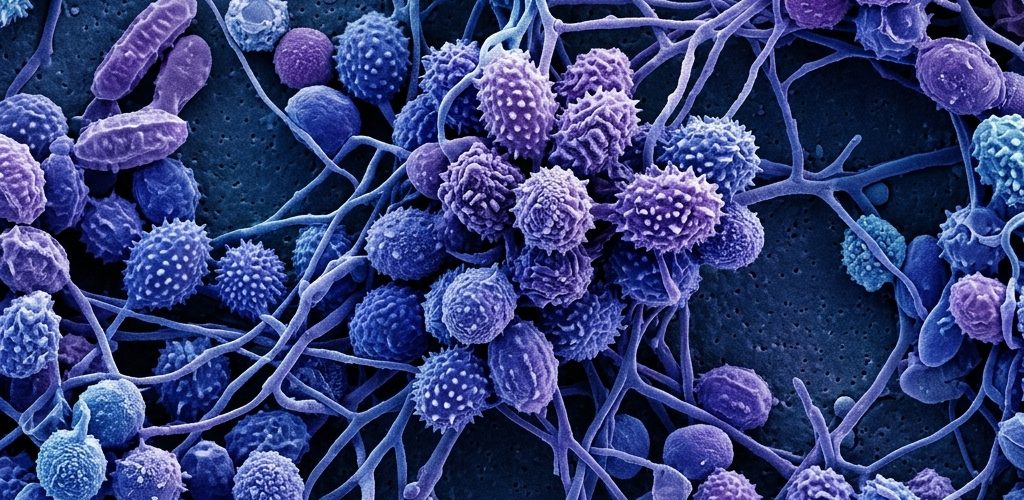
The identification process involved multi-gene phylogenetic analysis, using sequences from the calmodulin, beta-tubulin, and ITS (Internal Transcribed Spacer) regions of the fungal genome. These molecular markers, combined with detailed microscopic examination of spore morphology, colony characteristics, and growth patterns, provided the robust evidence base required by the International Code of Nomenclature for algae, fungi, and plants to formally describe a new species.
Why Fungi Matter: The Hidden Kingdom
Fungi occupy a peculiar position in public consciousness — simultaneously ubiquitous and invisible. They decompose organic matter, cycling nutrients through ecosystems; form symbiotic relationships with plants that enable most terrestrial vegetation to absorb water and minerals; produce antibiotics, including penicillin, that have saved hundreds of millions of lives; and serve as the basis for industries worth billions of dollars annually.
Yet the kingdom Fungi remains vastly understudied relative to plants and animals. Of the estimated 2.2 to 3.8 million fungal species thought to exist globally, only about 150,000 have been formally described. This means that for every known fungal species, there may be 15 to 25 that remain undiscovered. In a country as ecologically diverse as India — spanning tropical rainforests, alpine meadows, deserts, mangroves, and coral reefs — the potential for new discoveries is enormous.
The practical significance of this biodiversity cannot be overstated. Many of the most valuable fungal products — enzymes, antibiotics, metabolites used in pharmaceuticals — were discovered through systematic surveys of wild fungal diversity. Every undescribed species is a potential repository of novel biochemistry that could have applications in medicine, agriculture, industry, or environmental remediation. The discovery of new Aspergillus species by the Pune team thus represents not just a taxonomic contribution but a potential source of future economic value.
India’s Mycological Heritage
India has a distinguished history in mycology, the study of fungi. The country’s first systematic fungal surveys were conducted during the British colonial period, but it was post-independence institutions — particularly the Indian Agricultural Research Institute (IARI), the Forest Research Institute (FRI), and more recently, the MACS-Agharkar Research Institute — that built the taxonomic infrastructure that enables modern discoveries.
The establishment of the National Fungal Culture Collection of India (NFCCI) at the Agharkar Research Institute has been particularly significant. The NFCCI maintains over 4,500 fungal strains, serving as both a research resource and a conservation repository. This collection, which is one of the largest in Asia, enables researchers to compare newly isolated strains against a comprehensive reference library — a capability that was essential to confirming the novelty of the latest Aspergillus discoveries.
Indian mycologists have also been at the forefront of using modern molecular techniques to revise fungal taxonomy. What were once considered single species have, in many cases, been revealed to be complexes of morphologically similar but genetically distinct species. This phenomenon, known as cryptic speciation, is particularly common in groups like the aspergilli, where traditional morphological characters — spore size, colony colour, growth rate — can be highly variable and overlap between species.
Applications in Biotechnology and Agriculture
The Aspergillus section Nigri is already one of the most commercially exploited groups of fungi. Aspergillus niger, the most well-known member, is used globally in the production of citric acid (found in beverages, food preservation, and pharmaceuticals), gluconic acid, and a range of industrial enzymes including amylases, proteases, and cellulases. The global market for citric acid alone exceeds $4 billion annually.
New species within this section are of immediate interest to biotechnologists because they may produce novel enzyme variants or metabolites that differ from those of known species. For example, enzymes from one species may be more thermostable (heat-resistant) than those from another — a property of immense value in industrial processes that operate at high temperatures. Similarly, differences in metabolite profiles could yield new bioactive compounds with pharmaceutical or agricultural applications.
India’s growing biotechnology sector, which generated revenues exceeding $80 billion in 2025, is well-positioned to translate such discoveries into commercial products. The government’s BioE3 (Biotechnology for Economy, Environment, and Employment) policy, announced in 2024, explicitly targets the bioprospecting of indigenous microbial diversity as a priority area, with emphasis on developing value chains that keep intellectual property and manufacturing within the country. This biological research agenda connects to India’s broader push in university-led innovation and research breakthroughs.
Conservation Implications
The discovery of new species inevitably raises questions about conservation. Fungi are rarely included in conservation assessments — the IUCN Red List, which evaluates the conservation status of species globally, includes fewer than 600 fungal species out of a potential 3 million or more. This “fungal blindspot” means that species may be lost to habitat destruction before they are even described.
In India, where deforestation, urbanisation, and agricultural intensification continue to reduce natural habitats, the urgency of cataloguing fungal diversity is acute. The conservation efforts underway for charismatic species like cheetahs attract public attention and funding, but the microbial diversity that underpins ecosystem function receives a fraction of the resources. Advocacy by mycologists and ecologists has led to the inclusion of fungi in India’s updated National Biodiversity Action Plan, but translating policy into practice remains a work in progress.
A Call for Deeper Exploration
The Agharkar Research Institute team has emphasised that their discovery is likely the tip of the iceberg. India’s Northeastern states, the Andaman and Nicobar Islands, and the deep soils of the Indo-Gangetic Plain remain largely unsampled for fungi. Each of these regions harbours unique ecological conditions that could support distinct fungal communities.
As India invests in cutting-edge technologies — from quantum computing to space exploration — there is a compelling case for parallel investment in the fundamental science of biodiversity. The discovery of two new Aspergillus species may seem modest in comparison to a rocket launch or a particle discovery, but it is a reminder that some of the most consequential scientific resources lie not in space or in accelerators but in the soil beneath our feet.

- New Heavy Particle Discovered at CERN in 2026: What It Means for the Future of Physics - March 24, 2026
- Gaganyaan 2026: India’s Human Spaceflight Programme Enters Its Most Critical Phase - March 24, 2026
- India’s Semiconductor and AI Surge: How Research Labs Are Powering a Global Transformation - March 24, 2026