Project Cheetah Enters Phase Two: Can India Sustain Africa’s Big Cats on Its Soil?

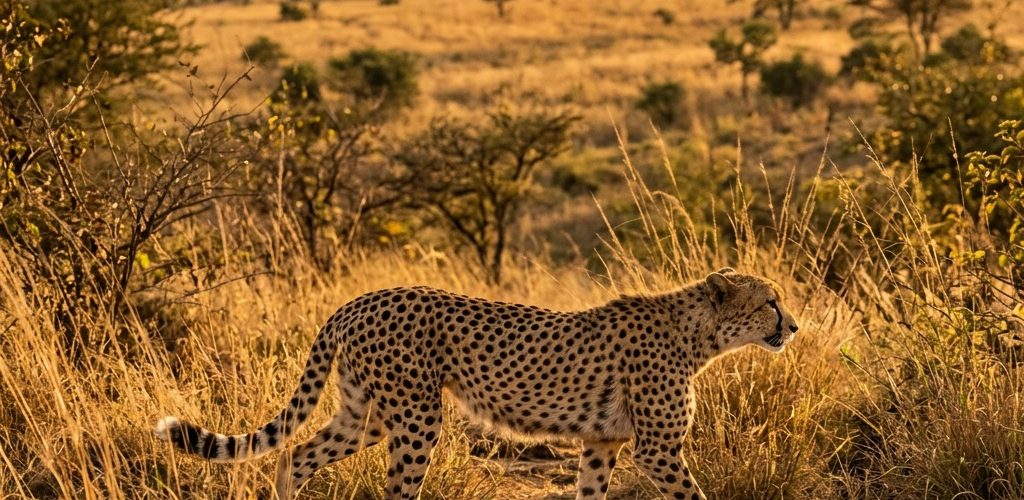
When eight Namibian cheetahs touched down at Kuno National Park in Madhya Pradesh in September 2022, it marked the culmination of a dream seven decades in the making. India had declared the cheetah extinct within its borders in 1952, making it the only large carnivore the country had lost in modern times. The reintroduction, overseen by Prime Minister Narendra Modi himself, was hailed as a landmark conservation achievement. Now, as Project Cheetah enters its critical second phase in 2026, the picture is considerably more complex — marked by both genuine progress and sobering challenges that test the limits of translocation ecology.
The Story So Far: Arrivals, Births, and Deaths
Since that historic first flight, India has received a total of 20 cheetahs from Namibia and South Africa in two batches. As of early 2026, the surviving population stands at approximately 17 adults and several cubs born on Indian soil — a figure that represents both the programme’s greatest success and its vulnerability. The births of cubs at Kuno demonstrated that the translocated cheetahs could reproduce in their new habitat, a crucial biological threshold. However, the deaths of several cheetahs — attributed to septicaemia, renal failure, and inter-animal aggression — exposed gaps in veterinary preparedness and habitat management that the programme has had to address under intense public scrutiny.
The most contentious deaths were those linked to radio collar injuries and infections, which prompted a review of the collaring protocols by an international panel of wildlife experts. The panel recommended changes to collar design, fitting procedures, and monitoring frequency — recommendations that have since been implemented but that highlighted the steep learning curve involved in managing a species with no recent precedent in Indian conditions.
Phase Two: Expansion Beyond Kuno
The defining feature of Project Cheetah’s second phase is the expansion of the cheetah population beyond Kuno National Park. While Kuno, with its 748 square kilometres of grassland and dry deciduous forest, was selected as the initial release site, wildlife biologists have long cautioned that a single location is insufficient for a genetically viable cheetah population. The International Union for Conservation of Nature (IUCN) guidelines recommend a minimum of 40-50 individuals across multiple sites to ensure long-term population viability.
To this end, the National Tiger Conservation Authority (NTCA), which administers Project Cheetah, has identified several potential second-site candidates, including Gandhi Sagar Wildlife Sanctuary in Madhya Pradesh and Mukundara Hills Tiger Reserve in Rajasthan. The selection criteria are stringent: adequate prey base (primarily chital, sambar, and nilgai), suitable grassland habitat, manageable predator density (particularly leopards and feral dogs), and minimal human-wildlife conflict potential.
Gandhi Sagar, located approximately 300 kilometres northwest of Kuno along the Chambal River, has emerged as the front-runner. Recent surveys have documented a robust ungulate population and relatively low leopard density, addressing two of the primary concerns. However, the site requires significant habitat restoration and the relocation of several villages from within its boundaries — a process that involves complex negotiations with local communities and carries its own political sensitivities.
The Prey Base Challenge
One of the most underappreciated challenges facing Project Cheetah is the adequacy of the prey base. Cheetahs are specialists that typically target medium-sized ungulates in open grasslands. While Kuno supports populations of chital, sambar, and nilgai, the density of these species must be sufficient to sustain a growing cheetah population without triggering competitive conflict with other predators. Kuno is also home to leopards, which compete directly with cheetahs for prey and are known to kill cheetah cubs.
NTCA has initiated a prey augmentation programme, reintroducing blackbuck and chinkara (Indian gazelle) to Kuno and the potential second sites. These species, which historically coexisted with cheetahs on the Indian subcontinent, are critical to replicating the ecological conditions under which cheetahs thrived. However, establishing viable prey populations takes years, and the current carrying capacity of Indian sites remains lower than comparable African habitats.
Lessons from International Translocation Science
Project Cheetah represents one of the most ambitious large carnivore translocations ever attempted, and it operates in uncharted territory in several respects. Most previous cheetah translocations have been within Africa — between countries sharing broadly similar ecosystems. The India project involves moving cheetahs across continents to a habitat they have not occupied for 75 years, with different vegetation, climate patterns, prey species, and disease environments.
International experts have drawn comparisons with South Africa’s successful metapopulation management model, in which cheetahs are moved between fenced reserves to maintain genetic diversity. However, India’s approach involves free-ranging cheetahs in unfenced habitats — a model that offers greater ecological authenticity but significantly increases management complexity. The risk of cheetahs straying beyond park boundaries and into human-dominated landscapes is a constant concern, as evidenced by several tracking incidents where individual cheetahs ventured into agricultural areas adjacent to Kuno.
Community Engagement and Human-Wildlife Conflict
The success of Project Cheetah ultimately depends not just on the animals themselves but on the communities living alongside them. The villages surrounding Kuno National Park, many of which were relocated during the original preparation for an Asiatic lion reintroduction that never materialised, have a complex relationship with conservation projects. Compensation for livestock losses, employment opportunities in ecotourism, and genuine participation in decision-making are essential to maintaining local support.
The government has announced a community engagement programme that includes training local guides, developing cheetah-themed ecotourism circuits, and establishing a livestock compensation fund modelled on successful schemes in tiger reserves. However, implementation has been uneven, and community leaders have expressed frustration at the gap between announcements and ground-level delivery. The tourism potential is significant — India’s wildlife tourism sector has been growing steadily, and major sporting events like the IPL have demonstrated India’s capacity to build global attractions around national assets.
The Genetic Bottleneck
Cheetahs are already among the most genetically uniform large mammals on Earth, a consequence of a severe population bottleneck approximately 10,000 years ago. The Indian population, derived from just 20 founders, faces additional genetic constraints. To mitigate this, Project Cheetah includes plans for periodic introduction of new individuals from Africa — a process that requires ongoing diplomatic engagement with source countries and complex quarantine and acclimatisation protocols.
South Africa and Namibia have both signalled willingness to continue providing cheetahs, but the logistics and costs of intercontinental wildlife transfers are substantial. A single translocation operation involves months of preparation, specialised aircraft, veterinary teams, and post-arrival monitoring. The programme’s long-term genetic management plan envisions a self-sustaining population of at least 50 individuals across three or more sites by 2035 — a goal that will require sustained commitment and resources.
A Conservation Experiment of Global Significance
Whatever the eventual outcome, Project Cheetah has already achieved something remarkable: it has placed large-scale wildlife conservation at the centre of India’s national discourse in a way that few environmental issues have managed. The programme has attracted global media attention, generated scientific data of immense value, and forced a reckoning with questions about habitat management, community rights, and the ethics of species reintroduction that have implications far beyond India’s borders.
India’s track record with conservation mega-projects is mixed. Project Tiger, launched in 1973, is widely regarded as a success story that brought the tiger back from the brink of extinction in India. The approach of applying similar institutional frameworks to cheetah conservation reflects both confidence in the model and the reality that India possesses, in its forest departments and wildlife institutes, genuine conservation expertise.
As Phase Two unfolds in 2026, the world will be watching. The cheetahs of Kuno are more than animals — they are ambassadors for an idea: that extinction need not be forever, and that with sufficient will, science, and resources, lost species can reclaim their place in landscapes they once called home. Whether India can deliver on that promise remains the most compelling conservation question of the decade.

- Mamaearth, boAt, and Noise: How India’s D2C Champions Are Chasing Profitability in 2026 - March 24, 2026
- India’s D2C Brands Bet Big on Offline Expansion as Quick Commerce Reshapes the Playbook - March 24, 2026
- Himalayan Trekking in 2026: Top Routes and New Trails for Adventure Seekers in India - March 24, 2026