India’s Full-Stack Semiconductor Strategy: Beyond the Fab-First Fixation to Building a Complete Chip Ecosystem

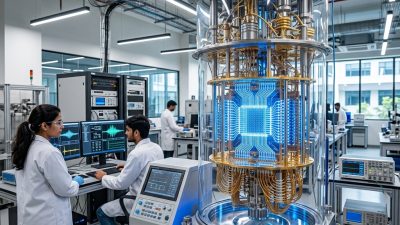
India’s semiconductor strategy is undergoing a fundamental recalibration in 2026, shifting from the initial emphasis on marquee fabrication plant announcements to a more comprehensive, full-stack approach that encompasses chip design, compound semiconductors, advanced packaging, materials development, and equipment manufacturing. This evolution, described by government officials as a move from “fab or bust” thinking to a complete supply chain strategy, reflects a maturing understanding of the semiconductor industry’s complexity and India’s most realistic pathway to becoming a significant player in the global chip ecosystem.
The Fabrication Foundation
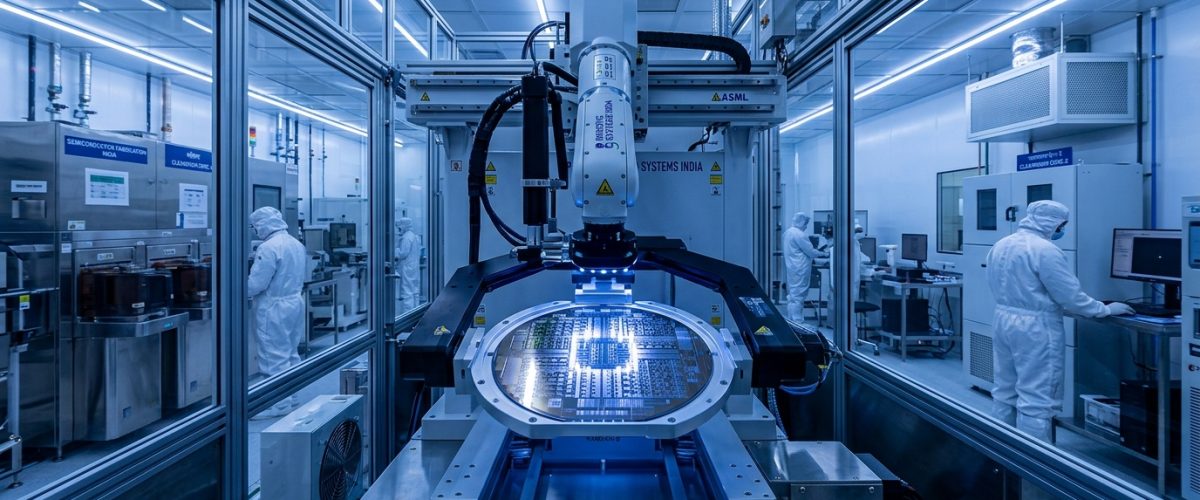
India’s semiconductor fabrication ambitions entered a new phase with the progress on the Tata Electronics facility in Dholera, Gujarat, and the continued development of partnerships with international semiconductor companies. The India Semiconductor Mission (ISM), operating under the Ministry of Electronics and Information Technology, has been the coordinating body for attracting semiconductor investment and managing the government’s incentive programmes.
The reality of semiconductor fabrication, however, has tempered initial expectations. Building a world-class fabrication facility—one capable of producing chips at nodes competitive with the current generation of consumer and automotive processors—requires investment measured in tens of billions of dollars, a timeline of five to seven years from groundbreaking to volume production, and a workforce of thousands of specialised engineers and technicians whose training takes years. These realities have led to a more nuanced national strategy that pursues fabrication as one element of a broader semiconductor ecosystem rather than as an isolated objective.
The emphasis on compound semiconductors—gallium nitride (GaN) and silicon carbide (SiC) chips used in power electronics, electric vehicle charging, 5G base stations, and defence applications—represents a strategically astute adjustment. Compound semiconductor fabrication operates at larger process nodes (typically 150mm to 200mm wafer sizes), requires lower capital investment, and serves rapidly growing market segments where India can achieve competitive positioning more quickly than in advanced logic fabrication. As India’s 5G expansion toward one billion subscribers accelerates and electric vehicle adoption grows, domestic compound semiconductor production serves immediate market demand.
The Design Ecosystem: India’s Hidden Strength
While fabrication attracts headlines, India’s most significant existing semiconductor capability lies in chip design. India employs over 125,000 semiconductor design engineers—the second-largest concentration globally after the United States—working at major international design centres operated by Qualcomm, Intel, AMD, Texas Instruments, Samsung, MediaTek, and Arm, alongside a growing cohort of domestic design companies.
This design ecosystem represents a strategic asset of enormous value that is often underappreciated in public discussion. Every major semiconductor company in the world has design operations in India, and Indian engineers contribute to chips that power everything from smartphones and servers to automobiles and industrial systems. The challenge—and the opportunity—lies in moving up the value chain from providing engineering services to international companies toward developing Indian-originated chip designs for domestic and global markets.
The government’s Design-Linked Incentive (DLI) scheme aims to catalyse this transition by providing financial support to Indian companies developing original semiconductor designs. The scheme covers the costs of electronic design automation (EDA) tools—which can run into millions of dollars annually—prototype fabrication at overseas foundries, and the validation and qualification testing required to bring a chip to market. The first cohort of DLI-supported companies spans application domains including IoT processors, AI accelerators, RISC-V based designs, and analog and mixed-signal chips for industrial applications.
Advanced Packaging: The Middle Ground
Advanced semiconductor packaging—the technology used to connect and integrate multiple chip components into functional modules—has emerged as a strategic priority that India can pursue independently of leading-edge fabrication capability. Technologies such as chip-on-wafer (CoW), wafer-level packaging, and heterogeneous integration are increasingly determining the performance and capability of electronic systems, sometimes contributing more to functional improvement than the underlying chip manufacturing process node.
India’s existing electronics manufacturing infrastructure, expanded significantly through successive production-linked incentive programmes, provides a foundation for advanced packaging operations. The assembly, testing, marking, and packaging (ATMP) segment of the semiconductor value chain is capital-intensive but substantially less so than front-end fabrication, and the technology barriers to entry, while significant, are more accessible for a nation building its capabilities from current levels.
The strategic value of domestic packaging capability extends beyond commercial considerations. In an era of supply chain fragmentation driven by geopolitical tensions, the ability to package and test chips domestically provides India with resilience against disruptions that could affect access to imported packaged devices. This supply chain security dimension has elevated packaging from a secondary consideration to a core strategic objective.
The Equipment and Materials Challenge
The semiconductor industry’s most significant barriers to entry lie not in chip design or even fabrication but in the equipment and materials supply chains that enable manufacturing. The global semiconductor equipment industry is dominated by a handful of companies—ASML, Applied Materials, Tokyo Electron, Lam Research, and KLA—whose technologies are essential for chip production and whose products are subject to export controls that reflect their strategic importance.
India’s semiconductor strategy includes provisions for developing domestic equipment and materials capabilities, though these are understood as long-term investments rather than near-term deliverables. Research institutions including the Indian Institute of Technology network and national laboratories are pursuing programmes in areas including plasma processing, lithographic techniques, and the synthesis of high-purity materials required for semiconductor manufacturing. These efforts, while nascent, plant the seeds for eventual capabilities that could reduce India’s dependence on imported equipment and materials.
The intersection of semiconductor equipment development with India’s broader physics research capability creates synergies worth noting. Advanced semiconductor processes depend on phenomena at the frontiers of materials science, quantum mechanics, and photonics—domains where India’s premier research institutions have established expertise. Translating this academic knowledge into industrial equipment capability is a multi-decade endeavour, but the knowledge base exists. The same physics expertise that drives the ISRO-NASA NISAR satellite mission and other advanced technology programmes provides the intellectual foundation for semiconductor manufacturing technology development.
Workforce Development: The Rate-Limiting Factor
Every element of India’s semiconductor strategy ultimately depends on a trained workforce—and the current gap between demand and supply is the single most critical constraint on the strategy’s implementation. The ISM estimates that India will need an additional 85,000 semiconductor professionals across design, fabrication, packaging, and testing disciplines by 2027—a target that requires dramatic expansion of specialised training programmes beyond current capacity.
The response involves multiple parallel initiatives. New semiconductor-focused undergraduate and postgraduate programmes at engineering institutions, industry-sponsored training centres, and international collaboration agreements for advanced training are all being scaled. The Semiconductor Research Corporation (SRC) model, which connects industry funding with university research and talent development, is being adapted for the Indian context with participation from both domestic and multinational companies.
The workforce challenge also highlights a deeper structural issue in India’s technical education system: the gap between the quantity of engineering graduates produced annually (over one million) and the quality of specialised training required for semiconductor industry roles. Bridging this gap requires not just new programmes but fundamental improvements in laboratory infrastructure, faculty expertise, and industry-academia collaboration at institutions beyond the premier IIT and IISc system.
Global Context and India’s Competitive Position
India’s semiconductor ambitions exist within a global context of intense competition and strategic significance. The United States’ CHIPS and Science Act, the European Chips Act, Japan’s semiconductor revival programme, and China’s massive state-directed investment all reflect the recognition that semiconductor capability is a foundation of economic competitiveness and national security in the twenty-first century.
India’s competitive advantages in this global contest include its large, cost-effective engineering workforce; its growing domestic market for semiconductor devices (currently importing over USD 50 billion worth annually); its democratic governance system, which makes it a preferred partner for Western technology companies seeking supply chain diversification from China; and its established position in the global semiconductor design ecosystem. The evolution of India’s broader technology sector—from the digital payments revolution documented in India’s UPI revolution and digital payments surge to the AI governance frameworks established through India’s 2026 AI content regulation framework—demonstrates the kind of institutional capacity and technological sophistication that semiconductor ecosystem development requires.
The full-stack semiconductor strategy represents India’s recognition that chip capability cannot be achieved through any single initiative—however large—but requires the patient, coordinated development of design, fabrication, packaging, equipment, materials, and human capital capabilities that collectively constitute a semiconductor ecosystem. The journey from strategy to silicon will be measured in decades rather than years, but 2026 marks the year when India’s approach acquired the comprehensiveness and realism that sustainable semiconductor development demands.

- ISRO and AIIMS Sign Landmark MoU for Space Medicine Research Ahead of Gaganyaan Mission - March 25, 2026
- Rising Temperatures Reshape Wildlife Behaviour Across India as Scientists Sound Climate Alarm - March 25, 2026
- UPI Crosses 800 Million Daily Transactions as CRED Gets Payment Aggregator Licence From RBI - March 25, 2026