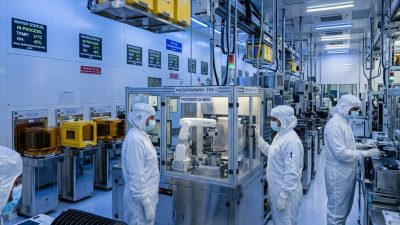
India’s Deep Tech Research Ecosystem in 2026: How Universities, Startups, and Government Labs Are Converging on the Innovation Frontier

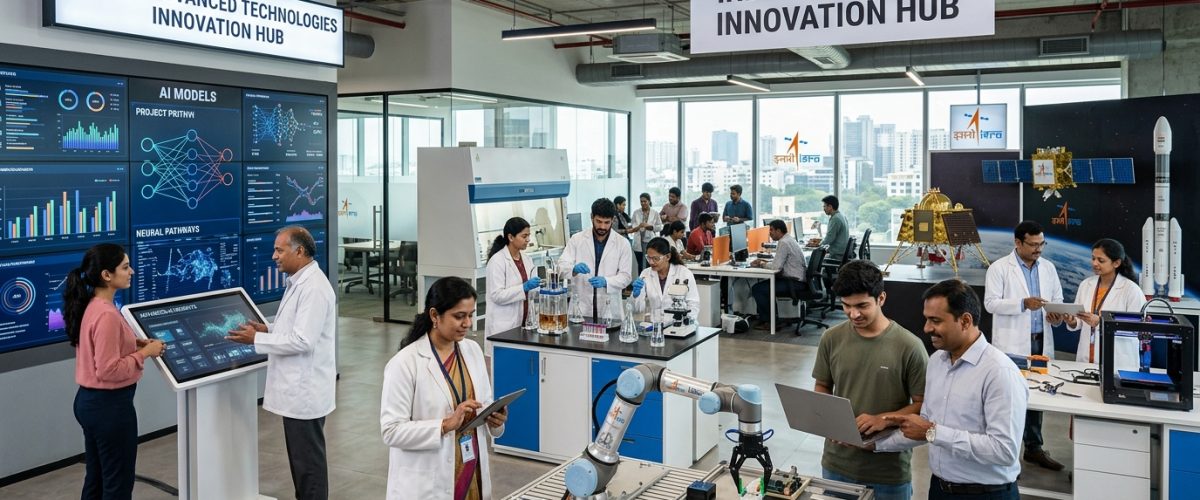
India’s deep technology research ecosystem—the interconnected network of universities, government laboratories, defence research establishments, and an increasingly capable startup sector—is experiencing a convergence of capability, funding, and strategic purpose that is qualitatively different from any previous period in the country’s science and technology history. In 2026, the traditional boundaries between academic research, government-directed technology development, and commercial innovation are dissolving, creating hybrid institutional forms and collaborative models that are accelerating the translation of frontier science into deployable technology. From quantum computing and semiconductor design to space systems and biotechnology, India’s deep tech landscape is maturing in ways that position the country as a significant contributor to global technological progress.
The Convergence of Three Ecosystems
India’s deep tech capability has historically been distributed across three largely separate ecosystems. Government laboratories—including the network of CSIR, DRDO, ISRO, and DAE institutions—have conducted mission-oriented research with substantial budgets but limited commercial translation. Universities, particularly the IIT and IISc system, have produced world-class fundamental research and trained the engineers who power India’s technology sector, but with limited institutional support for commercialisation. The startup ecosystem, while extraordinarily dynamic in software and services, has been less developed in hardware-intensive deep technology domains where capital requirements are higher and development timelines are longer.
The convergence underway in 2026 is breaking down these silos. Government laboratories are establishing formal technology transfer mechanisms and incubation facilities that enable their innovations to reach the market through startup vehicles. Universities are building technology commercialisation offices, patenting infrastructures, and academic entrepreneurship programmes that encourage faculty and students to translate research into ventures. And the startup ecosystem is developing the specialised financing, technical talent, and patient capital structures that deep technology ventures require.
The institutional innovations driving this convergence include the Technology Development Board’s partnership programmes, which fund collaborative projects between government labs and private companies; the Atal Innovation Mission’s Atal Incubation Centres, several of which specialise in deep tech domains; and the recently operationalised NRF’s industry-academia partnership grants, which create structured pathways for collaborative research and technology development. As ISRO’s 2026 mission calendar demonstrates with the increasing integration of private space companies into India’s launch programme, the public-private research convergence is moving from aspiration to operational reality.
Deep Tech Startups: India’s New Innovation Vector
India’s deep tech startup ecosystem has expanded dramatically over the past three years, with venture capital investment in hardware, advanced materials, quantum computing, space technology, and biotechnology startups reaching levels that were unimaginable a decade ago. Companies like Skyroot Aerospace (launch vehicles), Pixxel (satellite imagery), Agnikul Cosmos (3D-printed rocket engines), String Bio (gas fermentation biotechnology), and Tonbo Imaging (defence optoelectronics) exemplify a new generation of Indian startups that are technology-led rather than business model-led.
These companies share several distinguishing characteristics. They are typically founded by researchers with deep domain expertise—often from IIT, IISc, or international research institutions—rather than by generalist entrepreneurs. They pursue technological capabilities that have significant barriers to entry, creating defensible competitive positions that software startups rarely achieve. And they address market needs—defence, space, energy, healthcare—where India has both strategic requirements and the economic scale to support domestic technology development.
The financing landscape for deep tech startups has evolved to match their distinct needs. Specialised venture capital funds focused on deep tech, defence tech, and climate tech have emerged, providing capital from investors who understand the longer development timelines and different risk profiles of hardware-intensive ventures. Government co-investment through mechanisms such as the SIDBI Fund of Funds for Startups and defence procurement preferences for indigenous technology provide additional financial support and demand signals that validate deep tech business models.
Government Laboratories: Opening the Innovation Pipeline
India’s government research laboratory system—one of the largest in the world, employing tens of thousands of scientists across hundreds of institutions—has traditionally operated in relative isolation from the commercial economy. The laboratories have produced remarkable technological achievements, from nuclear weapons and space launch vehicles to advanced materials and biological agents, but the translation of these capabilities into commercial products and services has been limited by institutional culture, intellectual property policies, and the absence of effective technology transfer mechanisms.
The reform of this system is proceeding on multiple fronts. CSIR, which operates 37 national laboratories spanning chemistry, biology, engineering, and information technology, has restructured its technology transfer policies to facilitate licensing arrangements with private companies and support the creation of spin-off ventures. DRDO, historically the most insular of India’s research organisations, has begun opening selected technology domains to private sector participation through its Technology Development Fund and iDEX (Innovations for Defence Excellence) programme.
ISRO’s liberalisation has been perhaps the most dramatic. The establishment of IN-SPACe as a regulatory body for private space activities, combined with the transfer of operational launch services to NewSpace India Limited (NSIL), has created an institutional framework that enables private space companies to access ISRO’s technology, facilities, and expertise while developing their own independent capabilities. This opening has catalysed the emergence of India’s private space sector as one of the fastest-growing in the world. The broader technology policy evolution—from India’s 2026 AI content regulation framework to semiconductor incentives—reflects a government increasingly comfortable with private sector participation in domains traditionally reserved for state institutions.
University Research Commercialisation: Breaking the Translation Barrier
India’s premier universities have traditionally excelled at fundamental research and talent development while struggling to translate research outcomes into commercial applications. The technology transfer gap—between laboratory demonstration and market-ready product—has been a persistent weakness in India’s innovation system, resulting in high-quality research that generates publications and patents but limited economic impact.
Institutional reforms are beginning to address this gap. IIT Madras’s Research Park, which has grown into one of Asia’s largest university-linked incubation ecosystems, hosts over 300 companies and has facilitated the creation of several deep tech startups that have achieved commercial scale. IISc’s Society for Innovation and Development (SID) provides structured support for faculty and student ventures, including prototype development facilities, business mentoring, and connections to industrial partners.
The cultural shift toward academic entrepreneurship is equally important. A decade ago, faculty members at India’s elite institutions who pursued commercial applications of their research risked being perceived as insufficiently academic. Today, entrepreneurship is increasingly celebrated as a legitimate and valued dimension of academic contribution. This cultural shift, supported by institutional policies that allow faculty to hold equity in ventures based on their research, is gradually creating the incentive alignment necessary for effective research commercialisation.
International Research Partnerships
India’s deep tech ecosystem is increasingly integrated into global research networks through bilateral partnerships, multilateral collaborations, and institutional agreements that facilitate researcher mobility, shared infrastructure access, and joint intellectual property development. Key partnerships include those with the United States (spanning defence technology, semiconductor research, and space science through frameworks such as iCET—the Initiative on Critical and Emerging Technology), the European Union (through Horizon Europe programme participation), Japan (in advanced manufacturing and robotics), and Israel (in defence technology and agriculture).
The the ISRO-NASA NISAR satellite mission exemplifies the potential of deep international research partnerships to generate capabilities that neither partner could achieve alone. Similar collaborative models are being developed across domains including quantum technology, where India’s NQM includes provisions for international research partnerships; advanced materials, where Indo-European collaboration on lightweight alloys and composite materials is advancing; and biotechnology, where partnerships with US and European research institutions are accelerating India’s genomic medicine and drug discovery capabilities.
These international partnerships serve multiple strategic purposes beyond their immediate scientific value. They provide Indian researchers with access to infrastructure and expertise that supplements domestic capabilities. They create relationship networks that facilitate technology transfer and commercial partnerships. And they position India as a trusted partner in the global research enterprise—a diplomatic asset that complements the country’s broader strategic engagement with technology-leading nations.
The Path to a Knowledge Economy
India’s deep tech research ecosystem in 2026 is at an inflection point. The convergence of university research, government laboratory capability, and startup dynamism is creating an innovation pipeline of unprecedented capacity. Government policy, through the NRF, semiconductor mission, quantum mission, space liberalisation, and defence indigenisation programmes, is providing the institutional framework and financial resources to sustain this momentum.
The challenges remain significant. The translation gap between research and commercialisation, while narrowing, still constrains the economic impact of India’s scientific output. The talent pipeline, while large in absolute terms, faces quality and specialisation gaps that limit the pace of capability development. And the bureaucratic and regulatory environment, despite notable improvements, still imposes friction that can slow the pace of innovation—a challenge not unlike the governance complexities that India’s new climate statecraft navigates in India’s energy transition.
Yet the trajectory is unmistakably positive. India’s deep tech ecosystem is producing capabilities, companies, and scientific contributions that would have been considered improbable a decade ago. The convergence of talent, capital, institutional reform, and strategic purpose is creating the conditions for a research and innovation ecosystem that can serve India’s developmental ambitions while contributing meaningfully to global technological progress. The knowledge economy that India has long aspired to become is, in 2026, beginning to take recognisable shape.

- ISRO and AIIMS Sign Landmark MoU for Space Medicine Research Ahead of Gaganyaan Mission - March 25, 2026
- Rising Temperatures Reshape Wildlife Behaviour Across India as Scientists Sound Climate Alarm - March 25, 2026
- UPI Crosses 800 Million Daily Transactions as CRED Gets Payment Aggregator Licence From RBI - March 25, 2026