Neeraj Chopra and India’s Athletics Revolution: Aiming Higher in 2026

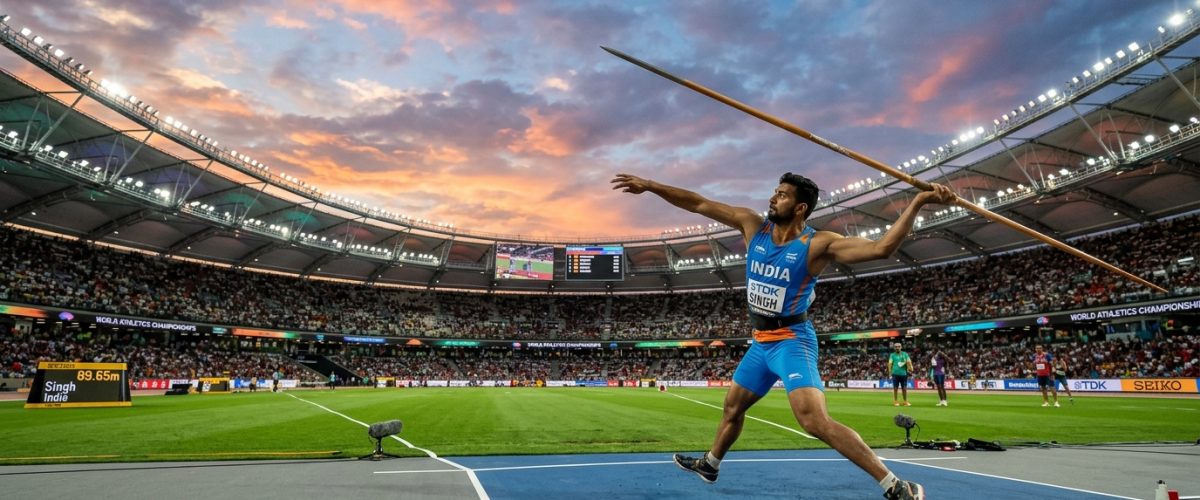
Indian athletics stands at an inflection point in 2026. The sport, long considered a domain of underachievement on the global stage, has been transformed by the exploits of Neeraj Chopra — the Olympic champion, World Champion, and Diamond League winner whose javelin has pierced through decades of mediocrity. But as Chopra manages his fitness and prepares for the next chapter, the bigger question is whether Indian athletics can build a sustainable culture of excellence beyond a single extraordinary individual.
Neeraj Chopra: Managing a Champion’s Body
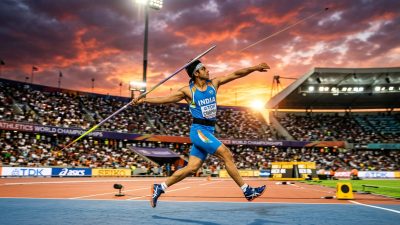
Lieutenant Colonel Neeraj Chopra’s journey since his historic Olympic gold at Tokyo 2020 has been one of sustained excellence punctuated by the physical toll of elite javelin throwing. The 28-year-old’s body has been through the rigours of consecutive world championships, Diamond League seasons, and the Paris Olympics, where his silver medal added another chapter to his remarkable career.
In 2026, managing Chopra’s fitness has become a primary concern for his coaching team and the Athletics Federation of India. The javelin throw places extraordinary stress on the shoulder, elbow, and core, and Chopra’s competition schedule has been carefully calibrated to ensure peak performance at the year’s most important events while avoiding the injuries that could derail his career. The approach mirrors the workload management strategies seen across Indian sport, including the cricket team’s gruelling 2026 schedule.
AFI’s Asian Games 2026 Qualification Standards
The Athletics Federation of India has set ambitious qualification standards for the 2026 Asian Games in Aichi–Nagoya, Japan. Announced in January 2026, these standards are designed to ensure that India sends its strongest possible athletics contingent to the Games while also pushing domestic athletes to raise their performance levels.
The qualification standards cover all track and field events, with benchmarks calibrated against Asian-level competition. The AFI’s approach — setting standards that are challenging but achievable — reflects a strategic balance between aspirational targets and realistic assessment of Indian athletics’ current capabilities. National championships, federation cup events, and international competitions throughout 2026 will serve as qualifying opportunities.
Track Events: Building Depth
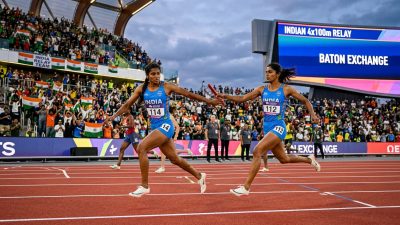
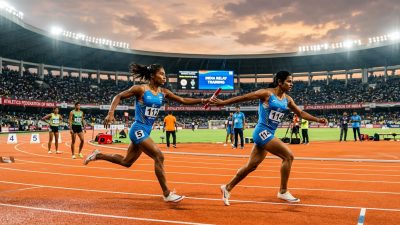
In track events, India’s competitiveness at the Asian level has improved across several disciplines. The 400 metres, the 4×400 metre relay, and the 3000-metre steeplechase have emerged as events where Indian athletes can realistically challenge for medals at the Asian Games and even make an impact at World Championships.
The women’s 100 metres and 200 metres have seen encouraging performances from young sprinters who are pushing towards times that would be competitive at the Asian level. While the gap to global sprinting powers remains significant, the improvement trajectory is positive, and the AFI’s investment in sprint-specific coaching and biomechanical analysis is beginning to show results.
Field Events: Beyond Javelin
While Chopra has put javelin on the map, other field events have also shown promise. Indian athletes in the shot put, discus throw, and high jump have been recording personal bests and national records that suggest a broader elevation of field event standards. The long jump and triple jump, traditionally areas of Indian strength at the Asian level, continue to produce competitive performances.
The development of field events requires specialised coaching, facilities, and competitive exposure — areas where the AFI has been actively investing. The appointment of foreign coaches with expertise in specific technical events has brought fresh perspectives to Indian field event training, while international training stints have given athletes the experience of competing against world-class opponents.
The Role of Sports Science
The integration of sports science into Indian athletics has been transformative. Biomechanical analysis, GPS-based training monitoring, nutritional science, and mental conditioning are now standard components of elite athlete preparation. The National Institute of Sports in Patiala and SAI high-performance centres across the country have invested significantly in sports science infrastructure, providing athletes with the data-driven insights necessary for performance optimisation.
This scientific approach extends to injury prevention and rehabilitation — critical areas for a sport where the physical demands are extreme. The availability of world-class physiotherapy, rehabilitation protocols, and recovery facilities has improved athletes’ ability to maintain peak fitness across demanding competition calendars.
Grassroots Athletics and Talent Identification
The AFI’s grassroots development programme aims to identify and nurture athletic talent from across India’s vast and diverse population. School-level athletics competitions, state championships, and inter-university events serve as the primary talent identification platforms, with the most promising athletes channelled into state-level and national-level training programmes.
India’s demographic advantage — a young, large population with significant untapped athletic potential — represents the sport’s greatest long-term opportunity. The challenge is to build systems that can identify talent in remote and underserved areas and provide pathways for development that lead to international competitiveness. Several of India’s most successful athletes have emerged from rural backgrounds, demonstrating the potential that exists outside traditional sporting centres.
The Diamond League and International Presence
India’s growing presence on the Diamond League circuit, driven primarily by Chopra’s participation, has raised the profile of Indian athletics internationally. The aspiration is for multiple Indian athletes to become regular Diamond League competitors — a benchmark that would signal genuine depth of talent at the global level.
The 2026 Diamond League season offers opportunities for Indian athletes to test themselves against the world’s best in competitive environments that simulate the pressure of major championships. These experiences, combined with the upcoming Asian Games and World Championships, will define the trajectory of Indian athletics for the remainder of the decade.
A Sport Transformed
Indian athletics in 2026 is unrecognisable from the sport of a decade ago. Chopra’s achievements have been the catalyst, but the transformation runs deeper — encompassing governance reforms, infrastructure investment, coaching upgrades, and a cultural shift that now views athletics as a viable and respected career path for Indian youth. The foundations have been laid; the task now is to build upon them consistently and ambitiously.

- ESFI Opens National Esports Championships 2026 to Select India’s Squad for Asian Games - March 25, 2026
- IPL 2026 Preview: Virat Kohli Fires Warning as League Kicks Off With New Rules and Record Ticket Prices - March 25, 2026
- India’s Fantasy Sports Market Marches Toward ₹50,000 Crore Valuation as Regulation Brings Clarity - March 24, 2026