Indian Boxing’s 2026 Qualification Maze: Navigating Pathways to the Asian Games, Commonwealth Games, and Beyond

The year 2026 presents Indian boxing with a complex web of qualification pathways, selection dilemmas, and strategic decisions that will determine the sport’s representation at the biggest stages of international competition. With the Asian Games in Aichi-Nagoya, the Commonwealth Games, and the ongoing process of qualifying for the 2028 Los Angeles Olympics all converging in the calendar, the Boxing Federation of India (BFI) faces a puzzle that requires careful navigation and, at times, difficult choices.
The upcoming Asian Boxing Championships in Mongolia, starting 28 March, represent the first major piece of this qualification puzzle. However, they are far from the last. The months ahead will see Indian boxers competing in continental championships, World Championships, and Olympic qualifying events — each carrying different points, rankings implications, and selection consequences. For boxers, coaches, and administrators alike, understanding and optimising performance across this qualification matrix is as important as the boxing itself.
The Asian Games Qualification: India’s Primary Target
The 2026 Asian Games in Aichi-Nagoya, Japan, represent the most significant multi-sport event on India’s boxing calendar. Boxing has historically been one of India’s strongest sports at the Asian Games, with Indian boxers regularly featuring on the medal podium across multiple weight categories. Maintaining and improving on previous Asian Games medal tallies is a stated objective of the BFI.
Qualification for the Asian Games boxing competition is determined through a combination of continental championship results, world rankings, and host country allocation. India’s strong performances in recent Asian Championships and the depth of their ranking across weight categories mean that securing the maximum number of quota places is a realistic objective. However, the competition for these places — from nations like Kazakhstan, Uzbekistan, China, and the Philippines — ensures that nothing can be taken for granted.
The BFI’s strategy for Asian Games qualification involves prioritising the Asian Boxing Championships as the primary qualifying event while using subsequent competitions as secondary pathways for weight categories where initial qualification is not secured. This strategic clarity — knowing which events matter most and allocating preparation resources accordingly — represents a maturation of Indian boxing’s administrative approach.
Commonwealth Games: A Platform for Medal Harvesting
The Commonwealth Games presents a different competitive landscape than the Asian Games. While the quality of boxing is high, the absence of nations like China, Japan, and Kazakhstan from the Commonwealth framework means that Indian boxers face a field where they are typically among the favourites. Historical results support this assessment, with India consistently ranking among the top boxing nations at the Commonwealth Games.
The qualification pathway for Commonwealth boxing, which runs through continental qualifiers and invitation-based selections, is less complex than the Asian or Olympic pathways. However, the BFI’s approach to Commonwealth Games selection has implications for squad management more broadly. The balance between sending established stars who are likely to medal and providing opportunities for developing boxers who would benefit from multi-sport event experience is a nuanced decision that the BFI must navigate.
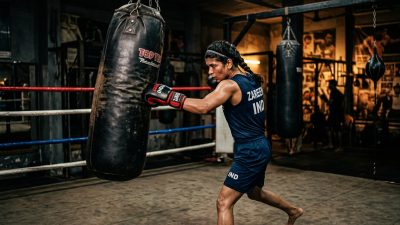
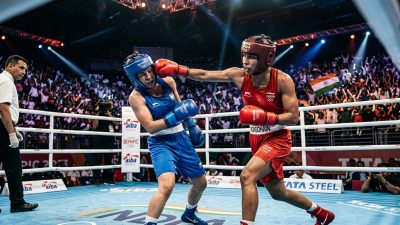
India’s female boxers, in particular, have been outstanding at the Commonwealth Games, with Nikhat Zareen, Lovlina Borgohain, and their predecessors delivering medal performances that have elevated Indian women’s boxing to global prominence. The 2026 Commonwealth Games present another opportunity for India’s women to showcase their dominance and inspire the next generation of female boxers.
The 2028 Olympics: The Long-Term Qualification Horizon
While the Asian and Commonwealth Games dominate the immediate calendar, the shadow of the 2028 Los Angeles Olympics looms over every decision the BFI makes. Olympic qualification in boxing is a complex process that unfolds over several years, with continental qualifying events, World Championships, and a final qualifying tournament all contributing quota places.
India’s Olympic boxing history — featuring medals from Mary Kom, Vijender Singh, and Lovlina Borgohain — demonstrates the sport’s potential at the highest level. However, securing quota places is only the first step; developing boxers who can medal at the Olympics requires years of systematic preparation, international exposure, and peak performance management.
The BFI’s long-term planning for Los Angeles 2028 has already begun, with the identification of potential Olympic medallists and the development of tailored training programmes for these athletes. The 2026 competitive season serves as a crucial data point in this planning process — performances at the Asian Championships, World Championships, and multi-sport events will inform decisions about resource allocation, coaching assignments, and international competition calendars for the Olympic cycle.
The Selection Dilemma: Managing Competing Claims
One of the most challenging aspects of Indian boxing’s qualification navigation is managing the competing claims of boxers in the same weight category. India’s depth of talent — particularly in certain women’s weight categories — means that selection decisions inevitably disappoint some highly capable athletes.
The BFI’s selection process, which involves national trials, performance analysis, and input from the coaching staff, has been refined over recent years to increase transparency and meritocracy. However, the inherently subjective nature of comparing boxers’ respective claims — form versus experience, international ranking versus trial performance — ensures that selection controversies remain a feature of Indian boxing’s landscape.
The management of these selection dynamics has broader implications for squad morale and development. Boxers who miss selection need to be kept motivated and engaged in the development programme, while selected athletes need to be insulated from the distractions of selection debates. The BFI’s support staff, including sports psychologists and athlete welfare officers, play important roles in managing these dynamics.
International Competition Calendar: The Logistical Challenge
The 2026 international boxing calendar presents significant logistical challenges. The concentration of major events — Asian Championships in March, Continental qualifiers in the summer, World Championships later in the year, and multi-sport events interspersed — requires careful travel planning, recovery management, and strategic periodisation of training.
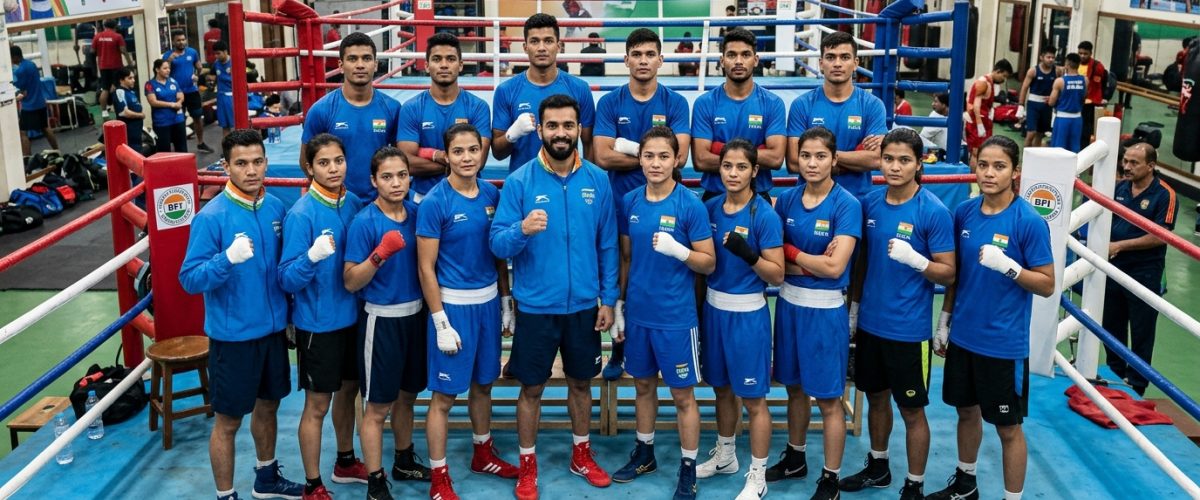
For Indian boxers, many of whom are based at the national camp in Patiala or at training centres in Delhi, the international travel schedule involves multiple transcontinental journeys with associated jet lag, climate adjustments, and dietary challenges. The BFI’s sports science team has developed protocols for managing these logistical demands, but the physical and mental toll of constant travel and competition is a factor that influences performance.
The financial implications of the international calendar are also significant. Travel, accommodation, coaching, and medical support for a 20-member squad across multiple international events represents a substantial investment. The BFI’s funding, which comes from a combination of government grants, commercial partnerships, and international federation support, must be allocated strategically to maximise the return on competitive investment.
Women’s Boxing: India’s Greatest Strength
India’s women’s boxing programme remains the jewel in the BFI’s crown. The combination of world-class individual talent — headlined by Borgohain and Zareen — and a deep pipeline of developing athletes makes India one of the premier women’s boxing nations in the world. The 2026 qualification season offers an opportunity to reinforce this status through medal performances at every major event.
The growth of women’s boxing in India has been remarkable. From a time when the sport struggled for recognition and resources, Indian women’s boxing now receives dedicated funding, professional coaching, and media attention that would have been unimaginable a decade ago. The success of pioneers like Mary Kom in blazing the trail has been followed by a generation of boxers who have taken Indian women’s boxing to new heights.
The Year Ahead: Optimism Tempered by Realism
As Indian boxing navigates the qualification maze of 2026, the mood within the BFI is one of cautious optimism. The talent is present. The institutional structures, while still evolving, are more professional than at any point in the sport’s history. And the motivation — from Olympic dreams to Asian Games medals to the simple pride of representing India — burns as brightly as ever.
The challenges are real: the intensity of competition, the logistical demands of the international calendar, and the selection pressures that come with depth of talent. But Indian boxing has demonstrated repeatedly that it can produce results on the global stage. As the nation’s athletes excel across sports in 2026, from India’s packed 2026 cricket calendar to Neeraj Chopra’s 2026 comeback season and Diamond League ambitions, boxing’s qualification journey represents another thread in the increasingly rich tapestry of Indian sporting ambition.
The first chapter of that journey begins in Mongolia on 28 March. For Lovlina, Nikhat, and India’s 18 other boxers, the road to the Asian Games, the Commonwealth Games, and ultimately the Olympics starts with a single bell — and the fierce determination that has made Indian boxing a force to be reckoned with on the world stage.

- India’s Fantasy Sports Market Marches Toward ₹50,000 Crore Valuation as Regulation Brings Clarity - March 24, 2026
- Dream11 and IPL 2026: Fantasy Cricket Platforms Reinvent Fan Engagement With AI-Powered Features - March 24, 2026
- India’s GPU Market Accelerates in 2026 as Affordable Graphics Cards Finally Reach Mainstream Buyers - March 24, 2026