Indian Football’s Post-Chhetri Era: Rebuilding a National Identity on the Global Stage

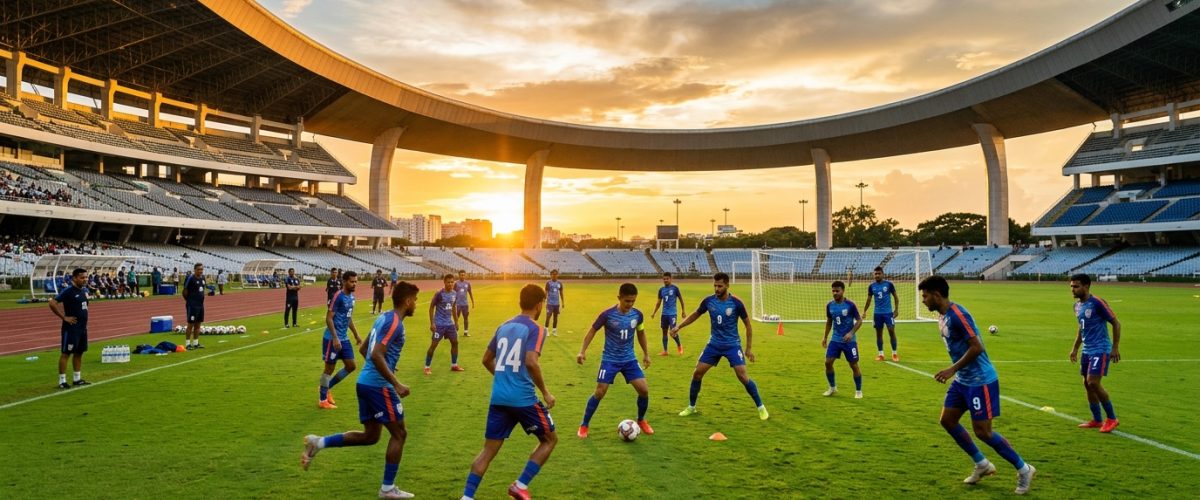
The retirement of Sunil Chhetri in 2024 left Indian football at a crossroads. The legendary striker, who carried the hopes of a billion people on his shoulders for nearly two decades, departed with records that may never be surpassed. Now, as the Indian national team navigates 2026 under new leadership and a changing football landscape, the challenge is clear: build a sustainable identity that transcends any single individual.
Life Without the Talisman
Sunil Chhetri’s farewell, during the FIFA World Cup 2026 qualifier against Kuwait in June 2024, marked the end of an era. With 94 international goals, Chhetri was the third-highest active international goal-scorer at the time of his retirement, behind only Cristiano Ronaldo and Lionel Messi. His departure was always going to leave a void — both in terms of goals scored and the intangible leadership he provided on and off the pitch.
In the months since, the Indian national team has grappled with the absence of their talisman. Results have been mixed, with moments of promise interspersed with the growing pains inevitable in any transition period. The All India Football Federation has sought to rebuild the team’s identity around collective effort rather than individual brilliance.
New Leadership and Coaching Direction
The AIFF has invested in a coaching restructure that extends beyond the senior national team. The appointment of new coaching staff, with an emphasis on tactical education and player development, signals a long-term approach to improvement. The federation has also strengthened its technical committee, bringing in experts with experience in European and Asian football development.
The coaching philosophy has shifted towards a more possession-oriented style, building from the back and emphasising positional play. While this approach may take time to yield results, it represents a deliberate move towards a more sustainable model of play that can develop incrementally rather than relying on moments of individual magic.
The ISL as a Development Engine
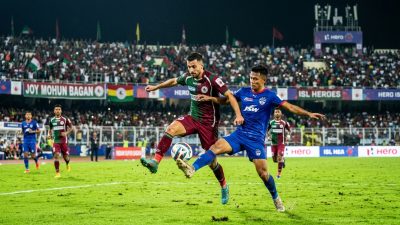
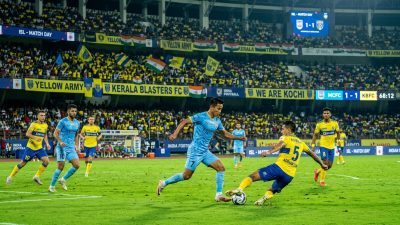
The Indian Super League continues to serve as the primary development pathway for national team hopefuls. The current ISL 2025-26 season’s intense playoff race has highlighted the growing competitiveness of the league, and several emerging Indian players have caught the eye of national team selectors with their performances.
Young players who have thrived in the ISL’s competitive environment are now being fast-tracked into the national setup. The league’s insistence on Indian player quotas, combined with the improving quality of coaching and facilities, has created an environment where domestic talent can develop to a higher standard than was previously possible.
FIFA Rankings and Asian Ambitions
India’s FIFA ranking, which has fluctuated in recent years, remains a source of both frustration and motivation. The target for the AIFF is to consistently maintain a ranking within the top 100 — a benchmark that would represent genuine progress for Indian football on the global stage.
In the Asian context, India’s immediate focus is on performing creditably in the AFC Asian Cup qualifiers and establishing themselves as a consistent presence in the tournament’s main draw. The 2023 Asian Cup, where India showed glimpses of improvement despite an early exit, provided lessons that the current coaching staff are actively incorporating.
Youth Development: The Foundation for the Future
Perhaps the most significant area of investment has been in youth development. The AIFF’s grassroots programmes, supported by FIFA development grants and private partnerships, have expanded across the country. State-level football academies have been strengthened, and scouting networks have broadened their reach into regions traditionally underrepresented in Indian football.
The Indian U-17 and U-20 teams have been given more exposure through international friendlies and tournament participation, building a pipeline of talent that should feed into the senior team over the coming years. This long-term approach, while not yielding immediate headline results, is essential for the sustainable growth of the sport in India.
Infrastructure and Grassroots Growth
Football infrastructure in India has seen notable improvements, driven by both government investment and private sector interest. Several cities now boast FIFA-standard training facilities, and the legacy of the 2017 FIFA U-17 World Cup, held in India, continues to benefit the sport through improved venues and increased public interest.
At the grassroots level, participation numbers continue to rise, particularly in states like Kerala, Goa, West Bengal, Manipur, and Mizoram, where football has deep cultural roots. The challenge for the AIFF is to harness this grassroots enthusiasm and channel it into structured development pathways that produce players capable of competing at the highest Asian and eventually global levels.
Entertainment and Cultural Relevance
Indian football’s cultural relevance is growing, aided by increased media coverage, social media engagement, and the integration of football content into India’s broader entertainment landscape. As Bollywood and OTT platforms explore sports narratives, football has emerged as a compelling subject, helping to broaden the sport’s appeal beyond traditional football-loving regions.
The Long Road Ahead
Rebuilding Indian football in the post-Chhetri era is a project that demands patience, investment, and a clear vision. The early signs are cautiously optimistic — the ISL is growing stronger, youth development is being prioritised, and the federation appears committed to a long-term strategy rather than short-term fixes. If these trends continue, the next chapter of Indian football could be its most exciting yet.

- Bollywood Box Office 2026: Why Hindi Cinema Is Betting Big on Franchise Films and Biopics - March 26, 2026
- ISL 2026: Mohun Bagan Super Giant Dominate as Indian Football Eyes FIFA 2027 Qualifiers - March 26, 2026
- ESFI Opens National Esports Championships 2026 to Select India’s Squad for Asian Games - March 25, 2026