FIH Hockey World Cup 2026: Schedule Announced, Pools Drawn as India Begin Qualification Campaign

The International Hockey Federation (FIH) has confirmed the match schedule and pool draws for the FIH Hockey World Cup 2026, marking a pivotal moment in the global hockey calendar. India, one of the sport’s most decorated nations with eight Olympic gold medals and a rich hockey heritage, now faces the challenge of navigating a competitive qualification pathway while simultaneously preparing for what promises to be the biggest hockey tournament of the decade.
The announcement, made on 18 March 2026, follows the conclusion of the World Cup Qualifiers where India secured their passage with a comfortable opening victory that set the tone for their campaign. England also began their qualification journey with an impressive win, ensuring that the sport’s traditional powers remain firmly in contention for the showpiece event.
Pool Draw: India’s Path to the World Cup
The pool draw ceremony, held on 17 March at FIH headquarters, produced groups that promise compelling encounters from the tournament’s opening day. India have been drawn in a challenging pool that includes European opposition and a resurgent southern hemisphere side, ensuring that complacency will not be an option for the defending Asian champions.
The composition of the pools reflects the sport’s evolving landscape, with traditional powers like India, Australia, the Netherlands, and Germany joined by emerging hockey nations that have invested significantly in development programmes. The FIH’s decision to expand the tournament field has been largely welcomed, providing greater exposure for developing hockey nations while maintaining the competitive quality of the event.
India’s pool matches will take place across multiple venues, with the FIH opting for a multi-city hosting model that maximises fan engagement and broadcast opportunities. The scheduling ensures that no team faces back-to-back matches with insufficient recovery time — a concern that had plagued previous editions and drawn criticism from players’ associations worldwide.
India’s Form and Preparations
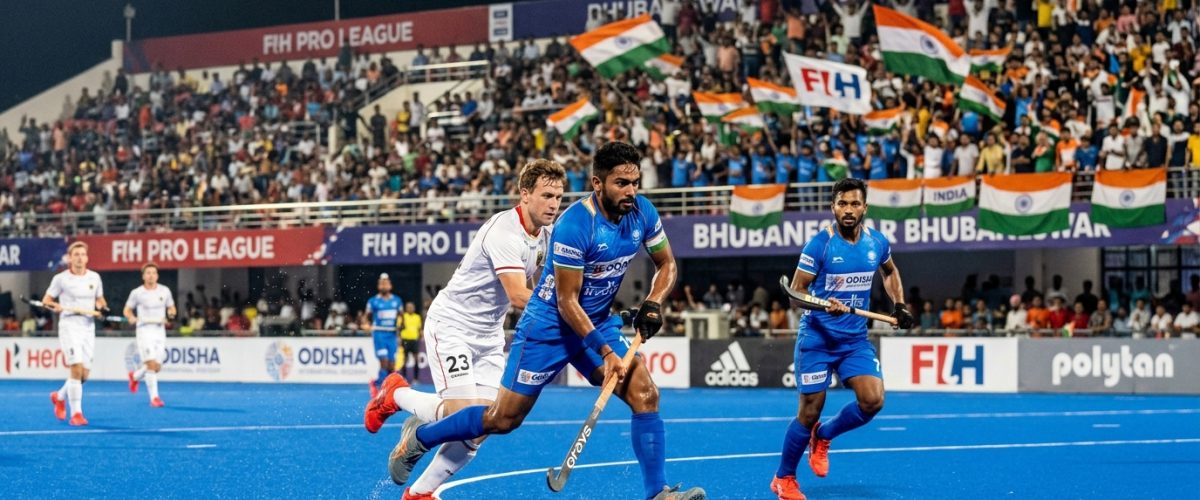
The Indian men’s hockey team enters the World Cup cycle in robust form, buoyed by their recent performances in the FIH Pro League 2025-26 where they demonstrated the tactical versatility and mental resilience that has characterised their play under the current coaching setup. The team’s blend of experienced campaigners and exciting young talent gives them genuine medal contention, though the leap from contender to champion requires a consistency of execution that India has occasionally lacked at major tournaments.
Captain Harmanpreet Singh, whose drag-flick prowess remains among the most potent weapons in world hockey, will lead a squad that has been meticulously prepared for the demands of tournament hockey. The team’s defensive organisation has improved markedly, with goalkeeper Pathak commanding his area with growing authority and the defensive line marshalled by players who understand the demands of international competition.
The midfield, traditionally India’s strength, continues to be the engine of the team’s play. The combination of ball carriers who can beat opponents one-on-one and distributors who find passes into the attacking circle gives India tactical flexibility that few teams can match. Their ability to shift between patient possession play and rapid counter-attacking transitions makes them unpredictable and dangerous.
FIH Pro League Performance: A Confidence Booster
India’s FIH Pro League 2025-26 campaign has provided valuable preparation for the World Cup. The shootout victory over Australia in their final league match — a result that showcased India’s nerve in high-pressure situations — was particularly significant. Beating the Kookaburras, historically one of India’s toughest opponents, in a shootout scenario builds the kind of psychological confidence that proves invaluable at major tournaments.
The Pro League format, with its home-and-away structure and the shootout bonus point system, has been criticised by some purists but has undeniably provided competitive match practice for participating nations. For India, whose calendar previously lacked regular high-quality opposition outside of major tournaments, the Pro League has been transformative in maintaining match sharpness and testing tactical variations against the world’s best teams.
The team’s Pro League statistics reveal a balanced outfit: strong in open play goal creation, disciplined in defending set pieces, and increasingly clinical in converting penalty corners — an area where India has been investing heavily through specialised coaching and video analysis.
The World Cup Schedule: Logistics and Implications
The FIH Hockey World Cup 2026 schedule, now confirmed, presents both opportunities and challenges for participating nations. The tournament will be spread across a compact timeframe, requiring teams to manage player workloads carefully, particularly those with ageing squads or players managing injuries.
For India, the schedule is favourable in that their pool matches are spaced to allow adequate recovery between fixtures. The team’s sports science department, which has been significantly upgraded in recent years with state-of-the-art monitoring equipment and nutrition protocols, will play a crucial behind-the-scenes role in ensuring that players peak at the right moments.
The broadcast and commercial arrangements for the World Cup have also been finalised, with significant interest from Indian broadcasters ensuring extensive live coverage. Hockey’s domestic audience in India, which swells during major international tournaments, represents an enormous commercial opportunity for the FIH and for Hockey India, the sport’s domestic governing body.
New Zealand and South Africa to Host FIH Hockey Nations Cup
In a related development, the FIH confirmed that New Zealand and South Africa will host the FIH Hockey Nations Cup 2025-26, a tournament that serves as both a competitive event in its own right and a pathway to the Pro League. This announcement underscores the FIH’s commitment to growing hockey’s global footprint, with new host nations bringing fresh audiences and commercial opportunities.
The Nations Cup’s role in the qualification ecosystem means that performances in the tournament carry consequences beyond the event itself. For India, monitoring results from the Nations Cup provides intelligence about potential opponents in the World Cup’s later stages, with the coaching team’s analysis department already compiling dossiers on emerging teams.
World Rankings Update and India’s Standing
Following the World Cup Qualifiers 2026, the FIH updated world rankings on 15 March, with changes that reflect recent form and results. India’s position in the rankings — among the top five globally — ensures a favourable seeding for major events, but the team and its supporters know that rankings alone do not win tournaments.
The rankings update also revealed the growing competitiveness of Asian hockey, with several nations from the continent climbing the rankings on the back of improved infrastructure and coaching. India’s dominance in Asian hockey, while still considerable, can no longer be taken for granted, adding another layer of motivation for the team’s World Cup preparations.
The Road Ahead for Indian Hockey
The FIH Hockey World Cup 2026 represents an opportunity for Indian hockey to cement its place among the sport’s elite. While the glory days of eight Olympic golds may belong to a different era, the current generation of Indian players has demonstrated that world-class hockey remains in the nation’s DNA. As India prepares for what could be a defining tournament, the parallels with the nation’s ambitions across other sporting arenas — from India’s packed 2026 cricket calendar to FC Goa’s record third AIFF Super Cup triumph — are unmistakable. Indian sport in 2026 is defined by ambition, preparation, and the relentless pursuit of excellence on the global stage.

- IPL 2026 Preview: Virat Kohli Fires Warning as League Kicks Off With New Rules and Record Ticket Prices - March 25, 2026
- India’s Fantasy Sports Market Marches Toward ₹50,000 Crore Valuation as Regulation Brings Clarity - March 24, 2026
- Dream11 and IPL 2026: Fantasy Cricket Platforms Reinvent Fan Engagement With AI-Powered Features - March 24, 2026