India Hockey Surges in FIH Pro League 2026 as Paris Olympic Bronze Fuels a New Era of Investment

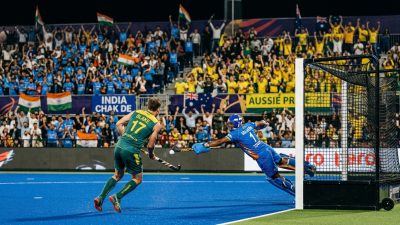
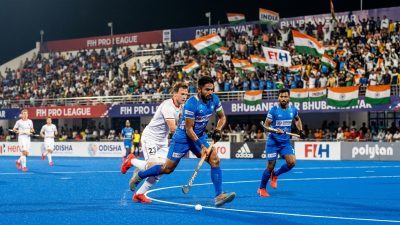
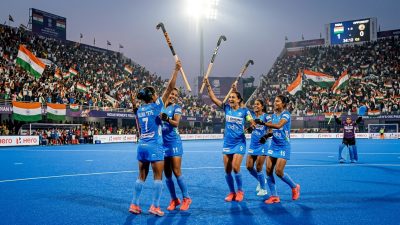
The India hockey team’s emphatic performance in the FIH Pro League 2026 season has confirmed what the Paris Olympic bronze medal first suggested: Indian hockey is experiencing its most sustained period of international competitiveness in decades. With four wins from five matches in the opening phase of the Pro League campaign, including victories over Australia and the Netherlands, the team under captain Harmanpreet Singh has established itself as a genuine contender for the 2026 Hockey World Cup later this year.
India Hockey FIH Pro League 2026: A Campaign Built on Olympic Confidence
The transformation in Indian hockey’s fortunes can be traced directly to the 2024 Paris Olympics, where the team’s bronze medal — its second consecutive Olympic podium finish — generated a wave of public interest, corporate sponsorship and government funding that has reshaped the sport’s infrastructure. Hockey India reported a 340 per cent increase in sponsorship revenue between 2024 and 2026, with major brands including Tata Steel, SBI and Adidas committing multi-year partnerships that provide financial stability previously unimaginable for Indian hockey.
On the pitch, the results reflect this investment. India’s Pro League record in 2026 shows a team that has evolved tactically under coach Craig Fulton, who took charge in late 2024. The South African has refined India’s attacking patterns while maintaining the defensive resilience that characterised the team’s Olympic campaigns. Penalty corner conversion rates have improved to 42 per cent, the highest in the Pro League, driven largely by Harmanpreet Singh’s drag-flicking accuracy.
The victories over Australia and the Netherlands were particularly significant. Both matches were played away from home, traditionally a challenge for Indian teams accustomed to the enthusiastic support of domestic crowds. India won 3-1 against Australia in Perth and drew first blood against the Netherlands in Amsterdam before closing out a 2-1 victory, demonstrating a maturity and composure that speaks to the squad’s growing experience at the highest level. The broader Indian sporting landscape, from the ISL 2026 football season to the IPL 2026 cricket season, is also riding a wave of growing investment and public interest.
Grassroots Revolution: From Odisha to Every State
The most consequential change in Indian hockey is happening far from international stadiums. Hockey India’s grassroots programme, launched in 2025 with Rs 200 crore in government funding under the Khelo India initiative, has established 140 hockey training centres across 22 states. The programme targets children aged eight to 14 and provides free coaching, equipment and nutritional support.
Odisha remains the heartland of Indian hockey development, with the state government’s sustained commitment — including the construction of the Birsa Munda Hockey Stadium in Rourkela for the 2023 World Cup — creating a model that other states are now replicating. Punjab, Haryana and Jharkhand have each announced dedicated hockey academies, while Maharashtra and Karnataka have integrated hockey into their state sports development programmes.
The pipeline of talent emerging from these centres is encouraging. The India junior team that won the Sultan of Johor Cup in late 2025 featured seven players from Khelo India centres, suggesting that the investment is already producing results. Junior national coach BJ Kariappa has identified at least 12 players aged 18 to 21 whom he considers capable of senior international debut within two years.
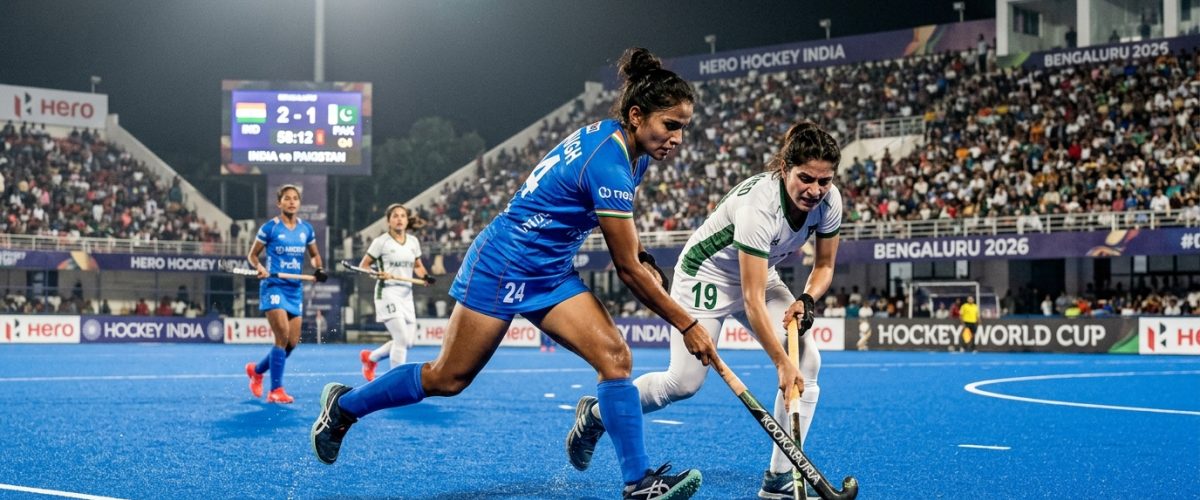
Women’s hockey has benefited equally from the post-Olympic investment surge. The Indian women’s team, which narrowly missed a medal at Paris 2024, has secured additional funding for a dedicated high-performance centre in Bengaluru. Captain Salima Tete has spoken publicly about the improved training conditions, noting that the team now has access to sports science and physiotherapy support comparable to European programmes.
World Cup 2026 Preparation: India’s Tactical Evolution
The FIH Hockey World Cup 2026, scheduled for August in Belgium and the Netherlands, represents India’s best opportunity for a podium finish at the tournament since 1975. Coach Fulton has used the Pro League campaign as a testing ground for tactical variations that he intends to deploy at the World Cup, including a high-pressing system that disrupts opposition build-up play and creates turnover opportunities in the attacking third.
India’s midfield has been the key area of tactical development. The combination of Vivek Sagar Prasad’s ball-carrying ability and Manpreet Singh’s distribution has given India a creative axis that can unlock defences through quick passing combinations. Fulton has also introduced a flexible formation that switches between a 4-3-3 attacking shape and a 5-3-2 defensive structure depending on the match situation, a level of tactical sophistication that previous Indian coaches rarely attempted.
The defence, marshalled by Harmanpreet Singh and Amit Rohidas, remains India’s strongest unit. Goalkeeper PR Sreejesh’s retirement after the Paris Olympics was a significant loss, but his successor Krishan Pathak has grown into the role with assurance. Pathak’s shot-stopping ability and command of the penalty corner defence have been critical factors in India’s improved away record.
Challenges: Sustaining Momentum Beyond the Hype Cycle
Indian hockey’s resurgence faces familiar structural challenges. The domestic league, the Hockey India League (HIL), remains in limbo despite repeated announcements about its revival. Without a strong domestic competition, Indian players lack the regular high-intensity match practice that their European and Australian counterparts enjoy through club leagues. Hockey India has indicated that the HIL will return in late 2026, but definitive dates and franchise commitments are yet to be confirmed.
The sport’s commercial footprint, while growing, remains a fraction of cricket’s dominance. Television viewership for India’s Pro League matches averages around 1.5 million — respectable for hockey but modest compared to even domestic cricket tournaments. Efforts to secure dedicated broadcasting slots and develop hockey content for streaming platforms are ongoing but face stiff competition from cricket’s overwhelming media presence.
International competition is also intensifying. Australia, Belgium and the Netherlands continue to invest heavily in their programmes, while Germany and Argentina have rebuilt effectively since the Paris Olympics. India’s ranking of third in the world — the highest in over four decades — is not guaranteed to hold if investment and tactical development plateau. As Indian boxing’s qualification campaign demonstrates, Indian athletes across multiple sports are navigating complex qualification and development pathways, and hockey must maintain its current trajectory to compete at the highest level.
The Road to the 2026 Hockey World Cup
The next three months will define whether India’s hockey renaissance translates into tournament success. The remaining Pro League fixtures against Germany, Belgium and Spain will test the team’s depth and adaptability, while a pre-World Cup tour of Europe in June will provide crucial preparation time. With unprecedented investment, a talented squad and a coach who understands the demands of global competition, India hockey enters the 2026 World Cup cycle with genuine belief. The Paris Olympic bronze was a breakthrough; the World Cup offers a chance to prove it was no anomaly.

- India Mobile Gaming Revenue Crosses $3 Billion as BGMI Return and New Studios Drive 2026 Surge - March 27, 2026
- OTT Wars 2026: JioStar and Netflix Battle for India’s 500 Million Streaming Audience - March 27, 2026
- India Hockey Surges in FIH Pro League 2026 as Paris Olympic Bronze Fuels a New Era of Investment - March 27, 2026