Indian Railways Crowned Champions at 72nd Senior National Kabaddi Championship 2026: A Dominant Performance

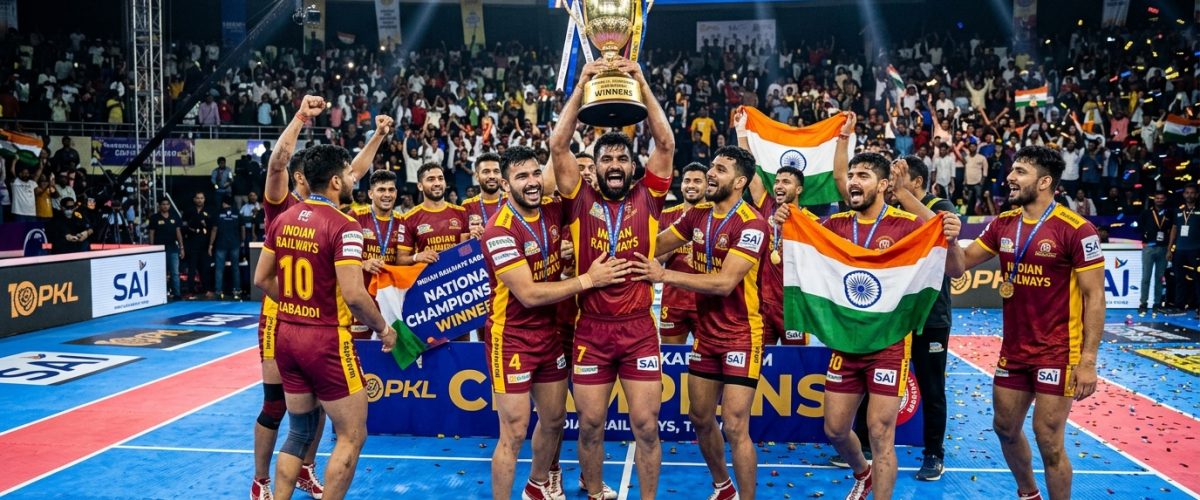
Indian Railways have lifted the 72nd Senior Men’s National Kabaddi Championship trophy after a commanding performance that saw them defeat Maharashtra by a decisive 18-point margin in the final. The tournament, which brought together teams from across India’s states, government departments, and institutional sides, reaffirmed Indian Railways’ status as a domestic kabaddi powerhouse while showcasing the extraordinary depth of talent that exists within India’s most indigenous and culturally significant sport.
The championship victory extends Indian Railways’ remarkable record in national kabaddi, where their combination of professional organisation, dedicated training facilities, and the ability to recruit and retain top talent through employment guarantees continues to set them apart from the competition. For Maharashtra, the runners-up finish represents both achievement and frustration — close enough to the title to taste it, yet unable to match the structured excellence that Railways bring to every tournament.
The Final: Railways’ Total Dominance
The championship final was expected to be a closely contested affair, with Maharashtra having impressed throughout the tournament with their attacking flair and the quality of their raiding department. However, from the opening raid, Indian Railways made their intentions clear: this was going to be a demonstration of superiority rather than a competitive match.
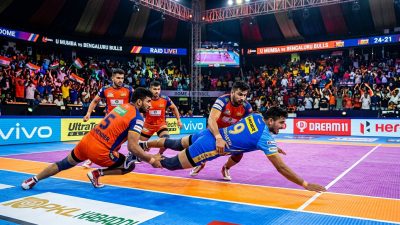
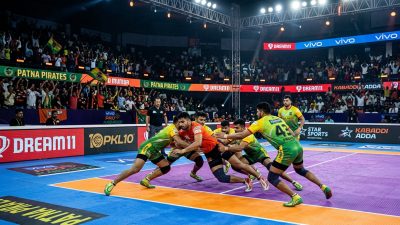
Railways’ defensive unit was the foundation of their success. Their left corner and right corner defenders, widely regarded as among the best in Indian kabaddi, neutralised Maharashtra’s raiders with a combination of timing, strength, and tactical intelligence. The ankle holds, blocks, and coordinated tackle attempts that characterise Railways’ defensive approach were executed with precision that spoke to hours of practice and preparation.
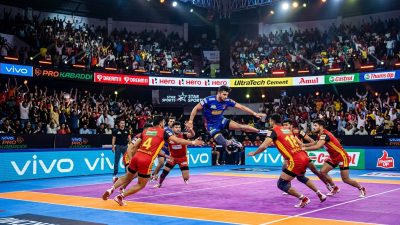
The raiding department was equally impressive. Railways’ lead raider, whose tournament performances had been consistently outstanding, produced a masterclass in the final — accumulating raid points through a mix of touch points, bonus points, and running touches that left Maharashtra’s defenders grasping at air. His ability to read the defensive formation, identify the weakest link, and exploit it with split-second decision-making was a joy to watch for kabaddi purists.
The 18-point winning margin — emphatic by any standard in national-level kabaddi — reflected Railways’ dominance across both halves of the match. At no point did Maharashtra threaten to close the gap, with Railways’ game management ensuring that momentum was never allowed to shift in favour of their opponents.
Tournament Highlights: Upsets, Newcomers, and Emerging Talent
While the final belonged to Indian Railways, the 72nd Senior National Championship produced compelling narratives across its earlier rounds. The group stage saw several traditional kabaddi powers tested by emerging teams, with Uttar Pradesh’s upset victory over Services — a result that sent shockwaves through the tournament — being the standout result of the opening days.
Haryana, traditionally one of India’s strongest kabaddi states, lived up to their reputation with a strong run to the semi-finals. Their combination of physically imposing defenders and technically gifted raiders made them a formidable proposition, and only Railways’ superior tactical discipline and squad depth prevented them from reaching the final. The Haryana team’s young players, several of whom are likely to feature in future Pro Kabaddi League (PKL) seasons, demonstrated the state’s enduring ability to produce kabaddi talent.
Delhi and Tamil Nadu also registered strong performances in the group stages, with both teams displaying improvements that reflect the growing investment in kabaddi infrastructure across Indian states. Tamil Nadu’s progress, in particular, was notable — the southern state has traditionally been associated with other sports, but their kabaddi programme is producing players of national calibre with increasing regularity.
Indian Railways’ Kabaddi Machine: How They Dominate
Indian Railways’ success in national kabaddi is no accident. It is the product of a systematic approach to the sport that combines institutional support with sporting excellence. Railways players are employed by Indian Railways, providing them with financial security and employment benefits that allow them to focus entirely on their sport — an advantage that state teams, which rely on part-time or semi-professional players, cannot match.
The training infrastructure available to Railways players is exceptional. Dedicated kabaddi courts, qualified coaches, sports science support, and regular competitive practice against internal opponents of a high standard create an environment that mirrors what the best professional sports teams worldwide offer. The consistency of this environment — year-round, without the disruptions that affect state teams — is a key factor in Railways’ sustained dominance.
Railways’ recruitment strategy is also noteworthy. The organisation scouts talent from across India, identifying young kabaddi players with potential and offering them the combination of employment and sporting opportunity that is impossible to refuse. This recruitment pipeline ensures that the Railways team is perpetually refreshed with young talent, while experienced players provide the leadership and game management that wins tournaments.
The State of National Kabaddi: Strengths and Concerns
The 72nd Senior National Championship, while producing excellent kabaddi, also highlighted structural issues within India’s domestic kabaddi ecosystem. The dominance of institutional sides like Railways and Services, while reflective of their excellence, raises questions about the competitiveness of the tournament and whether state teams can ever bridge the resource gap.
The relationship between the Pro Kabaddi League and the national championship is also evolving. PKL has raised kabaddi’s profile and commercial value enormously, but the league’s demands on players’ time and energy can create tensions with national championship commitments. The scheduling of the national championship — and its integration with the broader kabaddi calendar — requires careful management to ensure both competitions thrive.
Grassroots development remains the sport’s greatest long-term opportunity. Kabaddi’s accessibility — requiring minimal equipment and playing space — makes it uniquely suited to development in rural India, where the sport has deep cultural roots. State associations’ investment in school-level kabaddi programmes, coaching certification, and infrastructure development will determine the sport’s health in the decades to come.
Looking Forward: Kabaddi’s Place in Indian Sport
As kabaddi continues to occupy a unique place in Indian sporting culture — bridging traditional rural sports and modern professional entertainment — the 72nd Senior National Championship serves as a reminder of the sport’s depth and passion. In a year when Indian sport is making headlines across disciplines, from IPL 2026 season preview with key transfers and franchise strategies to WFI’s squad selections for the 2026 Asian Wrestling Championships, kabaddi’s national championship adds another thread to the rich tapestry of Indian sporting achievement in 2026.
Indian Railways’ triumph is a story of organisational excellence, but the tournament’s broader narrative is one of a sport that continues to captivate millions and produce athletes of remarkable skill and determination. As India’s dramatic FIH Pro League shootout win over Australia demonstrated in a different context, Indian sport’s strength lies in its diversity — and kabaddi remains one of its most vibrant expressions.

- India’s Fantasy Sports Market Marches Toward ₹50,000 Crore Valuation as Regulation Brings Clarity - March 24, 2026
- Dream11 and IPL 2026: Fantasy Cricket Platforms Reinvent Fan Engagement With AI-Powered Features - March 24, 2026
- India’s GPU Market Accelerates in 2026 as Affordable Graphics Cards Finally Reach Mainstream Buyers - March 24, 2026