Indian Wrestling’s Road to Redemption: Rebuilding After Turbulence and Targeting Global Glory

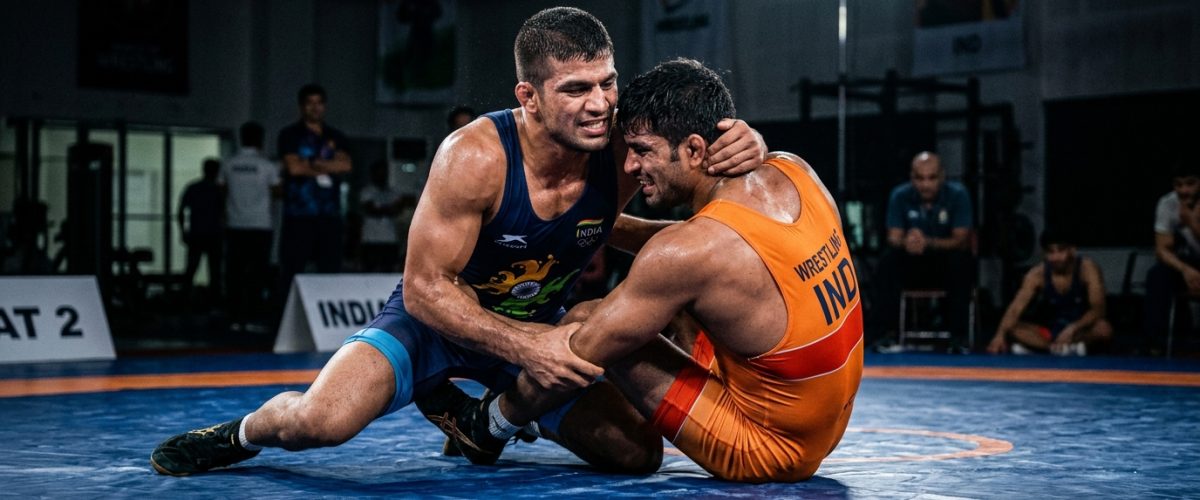
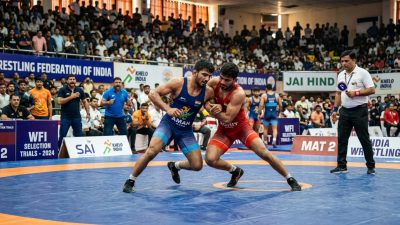
Indian wrestling, a sport that has delivered some of the nation’s most iconic Olympic moments, enters 2026 with renewed determination after a period of unprecedented turbulence. The governance crisis that engulfed the Wrestling Federation of India, the protests by top wrestlers, and the subsequent administrative overhaul have left deep scars. But as the competitive calendar gathers pace — with UWW ranking events, Asian Championships, and World Championships on the horizon — the focus is firmly back on the mat.
From Crisis to Reconstruction
The crisis that enveloped Indian wrestling in 2023, when some of the country’s most celebrated wrestlers staged protests at Jantar Mantar against the then-WFI president, was one of the most dramatic episodes in Indian sporting history. The aftermath — which included the dissolution of the federation’s elected body, the appointment of ad-hoc committees, and prolonged uncertainty about governance — disrupted the sport’s competitive programmes at every level.
By 2026, the administrative landscape has stabilised, with a reconstituted WFI working to restore order and focus to the national programme. The priority has been to rebuild trust with athletes, re-establish competitive structures, and ensure that India’s wrestlers are given every opportunity to prepare for major international events without the distractions of off-mat controversies.
The Competitive Calendar: A Year of Opportunity
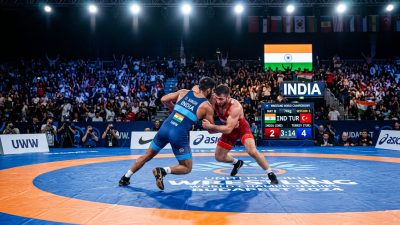
The UWW has finalised an extensive 2026 competition calendar that includes age-group and senior World Championships, Continental Championships across Europe, Asia, Africa, and the Americas, and ranking series events that carry critical points for Olympic qualification. For Indian wrestlers, the Asian Wrestling Championships and the World Wrestling Championships represent the pinnacle events of the year.
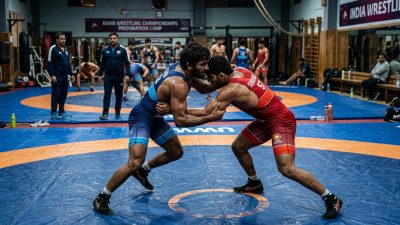
The WFI, in collaboration with the Sports Authority of India, has established training camps and selection trials designed to identify the best wrestlers in each weight category. The process, while still subject to scrutiny from athletes and observers, aims to be transparent and merit-based — a departure from the controversies that marred previous selection procedures.
India’s Medal Hopefuls
Despite the disruptions, India continues to possess world-class talent across freestyle, Greco-Roman, and women’s wrestling categories. Wrestlers who have accumulated international experience and UWW ranking points are the backbone of India’s medal ambitions at major championships.
In women’s wrestling, India’s depth is particularly impressive. The legacy of trailblazers like the Phogat sisters and Sakshi Malik has inspired a new generation of women wrestlers who are competing — and winning — at the international level. Multiple Indian women wrestlers hold competitive UWW rankings, and their performances at Continental and World Championships have consistently yielded medals.
In men’s freestyle, the focus is on developing a broader base of competitive wrestlers beyond the traditional dominant weight categories. Greco-Roman, historically the weakest discipline for India, has received increased attention through specialised coaching appointments and international exposure.
Grassroots and Akhada Culture
Indian wrestling’s strength has always been rooted in the akhada tradition — the earthen wrestling pits that serve as the training grounds for generations of wrestlers, particularly in Haryana, Punjab, Maharashtra, and Uttar Pradesh. This grassroots culture, which produces natural athletes with extraordinary physical attributes, continues to feed the national programme with raw talent.
However, the modernisation of training methodologies is essential to convert this raw talent into international success. The integration of sports science, nutrition, weight management, and mental conditioning into traditional wrestling training has been a key focus area. The balance between preserving the cultural essence of Indian wrestling and embracing modern performance techniques is delicate but necessary.
Infrastructure and Support Systems
The Sports Authority of India’s National Centres of Excellence provide the infrastructure for elite wrestling training. These centres, equipped with international-standard mats, gymnasiums, recovery facilities, and analytics capabilities, offer India’s top wrestlers an environment conducive to world-class preparation. Foreign coaching appointments have also brought fresh tactical perspectives and international best practices into the Indian system.
Financial support through government schemes, particularly the Target Olympic Podium Scheme, has ensured that wrestlers have access to international competitions, training camps abroad, and personalised support services. This investment, while substantial, is justified by wrestling’s consistent contribution to India’s Olympic medal tally.
Asian Championships 2026: A Key Benchmark
The Asian Wrestling Championships, scheduled for later in 2026, represent a crucial benchmark for Indian wrestling. The tournament will serve as both a competitive proving ground and a selection indicator for the World Championships. India’s performance at the Asian Championships will signal how effectively the sport has recovered from its governance crisis and whether the current competitive programme is producing results.
Asian wrestling is fiercely competitive, with traditional powerhouses like Japan, Iran, Kazakhstan, and Uzbekistan presenting formidable opposition. India’s ability to compete on this stage, particularly in weight categories where they have historically excelled, will be closely watched by the sporting community and the government.
A Sport That Embodies India’s Spirit
Wrestling occupies a unique place in India’s sporting and cultural identity. The discipline, sacrifice, and physical prowess demanded by the sport resonate deeply with Indian values, and the success of Indian wrestlers on the global stage has inspired millions. As the sport emerges from its recent difficulties, the determination to restore Indian wrestling to its rightful place among the world’s elite is unmistakable. The mat awaits, and India’s wrestlers are ready to answer the call — a story of resilience that mirrors the quest for consistency in Indian hockey and the broader ambitions of Indian sport.

- ESFI Opens National Esports Championships 2026 to Select India’s Squad for Asian Games - March 25, 2026
- IPL 2026 Preview: Virat Kohli Fires Warning as League Kicks Off With New Rules and Record Ticket Prices - March 25, 2026
- India’s Fantasy Sports Market Marches Toward ₹50,000 Crore Valuation as Regulation Brings Clarity - March 24, 2026