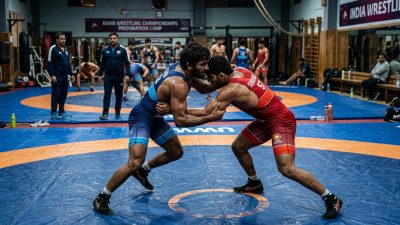
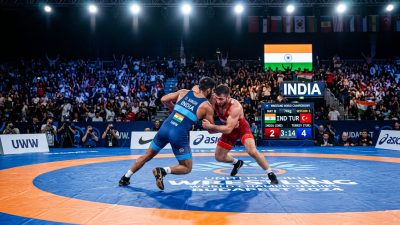
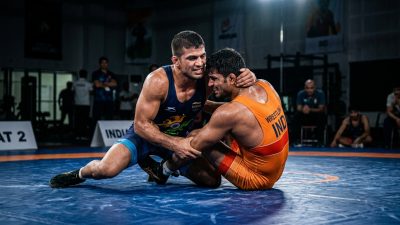
Indian Wrestling’s Road to Redemption: How the 2026 Asian Championships Could Mark a New Chapter

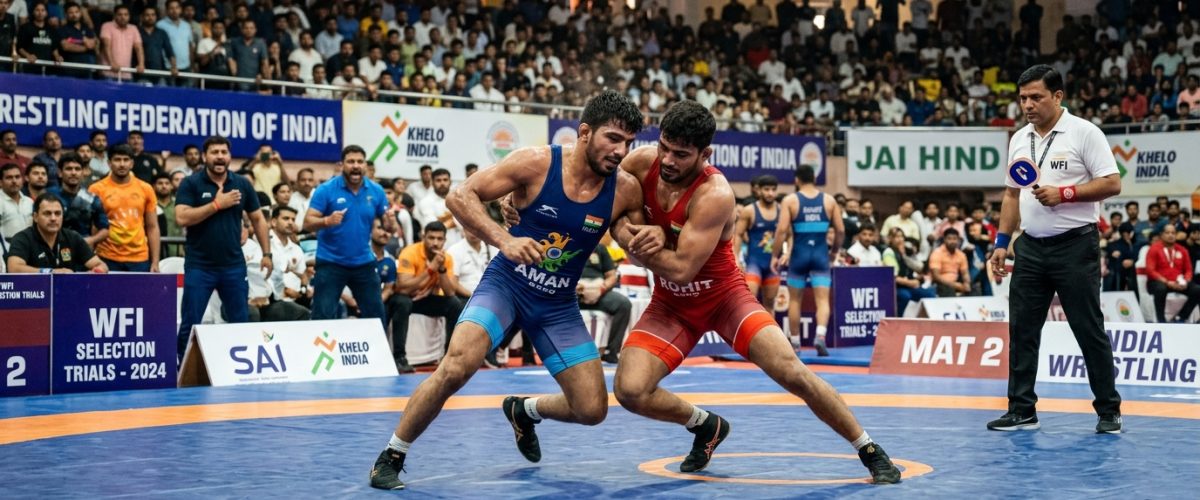
Indian wrestling stands at a pivotal juncture. After years of governance turmoil, athlete protests, and institutional dysfunction that threatened to derail one of the country’s most successful Olympic sports, the 2026 Senior Asian Wrestling Championships in Amman, Jordan — scheduled for 25-30 March — represent an opportunity for renewal. The championships mark the first major international assignment for Indian wrestlers in a new competitive cycle, and the stakes extend far beyond medals and rankings.
For the Wrestling Federation of India (WFI), the wrestlers themselves, and the millions of Indians who follow the sport with passionate devotion, the Asian Championships are about proving that Indian wrestling can emerge stronger from its recent difficulties. The question is whether on-mat excellence can coexist with the institutional reforms that the sport desperately needs.
The Governance Crisis: Understanding What Happened
To appreciate the significance of India’s 2026 Asian Championships campaign, one must understand the depth of the crisis that preceded it. Indian wrestling was engulfed in controversy when elite wrestlers — including Olympic and World Championship medallists — staged unprecedented public protests against the then-leadership of the WFI. The athletes’ demands for accountability and reform drew national and international attention, with the saga playing out in the courts, the media, and on the streets of New Delhi.
The fallout was severe. India’s wrestling programme, which had been on an upward trajectory since Sushil Kumar’s historic Olympic medal in 2008 and had produced a conveyor belt of international medallists, was disrupted at every level. Training programmes were interrupted, international competition entries were delayed, and the administrative uncertainty created an environment that was antithetical to elite athletic performance.
The resolution — involving court interventions, new elections, and structural reforms within the WFI — was protracted and painful. The current WFI leadership, under president Sanjay Singh, has inherited both the challenges of rebuilding and the opportunity to establish a new governance paradigm for Indian wrestling.
The Road Back: Rebuilding Institutional Trust
Under its current leadership, the WFI has taken several steps to rebuild trust with athletes, the sports ministry, and the broader wrestling community. The selection process for the Asian Championships was conducted with greater transparency than in previous cycles, with trials held under regulated conditions and clear criteria communicated to all eligible wrestlers in advance.
The federation has also secured the sports ministry’s approval for the team’s participation in the Asian Championships — a formality that carried unusual significance given the ministry’s previous suspensions of the WFI. This approval signals a tentative normalisation of the relationship between the federation and the government, though continued vigilance and accountability will be necessary to maintain this progress.
Beyond administrative reforms, the WFI has committed to investing in coaching, sports science, and international exposure for wrestlers. The engagement of foreign coaches — particularly in the Greco-Roman discipline where India has historically lagged — represents a practical step towards improving competitiveness. The federation’s partnership with the Sports Authority of India (SAI) for training infrastructure and medical support adds institutional backing to these efforts.
The Wrestlers: Talent Undiminished by Turmoil
Perhaps the most remarkable aspect of India’s wrestling story is that the talent pipeline has continued to produce world-class grapplers despite the institutional turbulence. The wrestlers selected for the 2026 Asian Championships have trained through uncertainty, maintained their competitive edge through sheer determination, and arrive in Amman with a hunger to prove themselves on the international stage.
The women’s wrestling programme, in particular, continues to flourish. The legacy of pioneers like Sakshi Malik and Vinesh Phogat — who were at the forefront of the protest movement — has inspired a generation of young women wrestlers who view the sport as a pathway to empowerment and national pride. The selection of talented young women like Meenakshi Goyat and Hanshika for the Asian Championships continues this tradition of excellence.
In men’s freestyle, the depth of talent in states like Haryana, Uttar Pradesh, and Maharashtra ensures that India remains competitive across weight categories. The cultural significance of wrestling in these regions — where pehlwani traditions stretch back centuries — provides a grassroots foundation that few nations can replicate. The challenge is harnessing this traditional wrestling culture and channelling it into the modern Freestyle and Greco-Roman formats that dominate international competition.
The Asian Championships: Competition and Context
The Senior Asian Wrestling Championships consistently feature some of the most competitive wrestling in the world. Asian nations dominate global wrestling — with Iran, Japan, Kazakhstan, India, and South Korea regularly among the world’s top wrestling nations — and the continental championship serves as both a proving ground and a predictor of form for global events.
For India, the competitive challenge is formidable. Iran’s freestyle programme, Japan’s technical excellence, and Kazakhstan’s Greco-Roman strength represent benchmarks that Indian wrestlers must match or exceed. The preparation that India’s wrestlers have undergone — including training camps, sparring sessions with international partners, and video analysis of likely opponents — is designed to bridge any gaps in competitive readiness.
The Amman venue presents its own considerations. Jordan’s climate, the travel logistics, and the competition schedule all factor into the preparation plans. India’s coaching team has studied previous championships held in the Middle East to optimise arrival timing, acclimatisation protocols, and competition-day routines.
What Success Looks Like
For India at the 2026 Asian Championships, success must be measured across multiple dimensions. Medals are the most visible metric, and India’s target of multiple podium finishes across weight categories and styles is ambitious but achievable given the quality of the squad. However, success also means demonstrating that Indian wrestling’s competitive infrastructure has survived the governance crisis intact.
The performances of young and first-time international competitors will be particularly scrutinised. These wrestlers represent the future of Indian wrestling, and their ability to compete at the Asian level — even if medals prove elusive — provides evidence of the developmental pathway’s effectiveness.
Perhaps most importantly, success means showing the world that Indian wrestling is back — that the governance challenges, while serious, have not diminished the nation’s passion for the sport or its ability to produce world-class athletes. The message from Amman needs to be one of resilience and renewal.
The Broader Indian Sporting Context
India’s wrestling campaign at the 2026 Asian Championships takes place within a broader narrative of Indian sporting ambition. Across disciplines, Indian athletes are competing at levels that would have been unimaginable a generation ago. From India’s packed 2026 cricket calendar with Tests and World Cup campaigns to FIH Hockey World Cup 2026 schedule and India’s qualification campaign, Indian sport in 2026 is defined by aspiration, investment, and increasingly, by results on the global stage.
Wrestling’s place in this narrative is unique. It is simultaneously one of India’s most traditional sports — rooted in akharas and kushti culture — and one of its most successful at the Olympic level. The sport bridges India’s past and its future, its rural heartlands and its international ambitions, its cultural heritage and its modern sporting infrastructure.
As India’s wrestlers arrive in Amman for the Asian Championships, they carry a weight that extends beyond the competition itself. They are the custodians of a tradition, the representatives of a national programme seeking renewal, and the embodiment of a sporting nation’s refusal to be defined by its challenges. The road to redemption begins on the mat, and Indian wrestling is ready.

- India’s Fantasy Sports Market Marches Toward ₹50,000 Crore Valuation as Regulation Brings Clarity - March 24, 2026
- Dream11 and IPL 2026: Fantasy Cricket Platforms Reinvent Fan Engagement With AI-Powered Features - March 24, 2026
- India’s GPU Market Accelerates in 2026 as Affordable Graphics Cards Finally Reach Mainstream Buyers - March 24, 2026