The Rise of AI-Powered Wearables in India: How Smart Rings, Health Trackers, and AR Glasses Are Reshaping Personal Technology

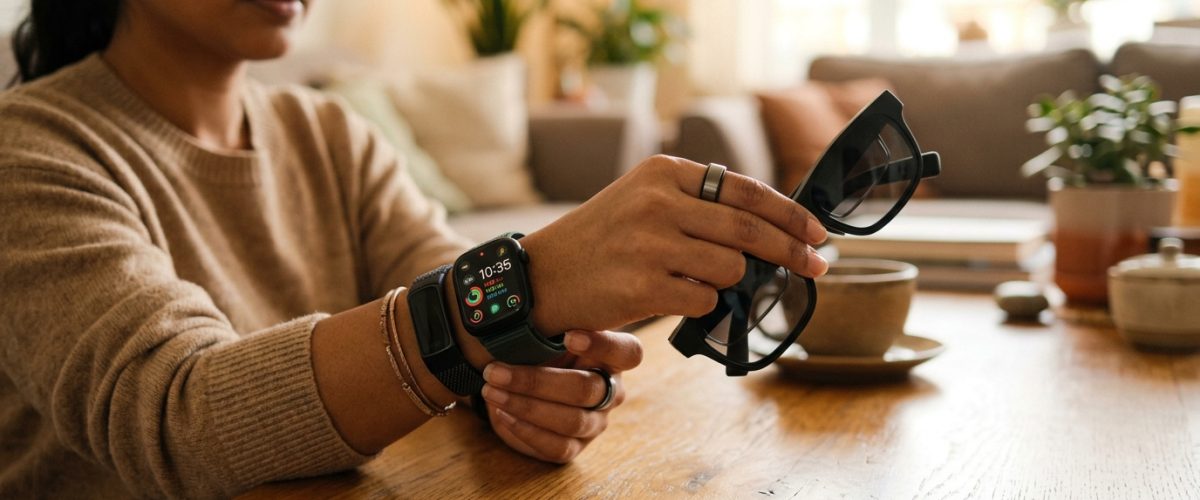
India’s wearable technology market is undergoing a transformation that extends far beyond the fitness trackers and basic smartwatches that defined the sector’s initial growth phase. In 2026, a new generation of AI-powered wearable devices—smart rings, advanced health monitoring platforms, and augmented reality glasses—is arriving in the Indian market, powered by on-device artificial intelligence capabilities that enable sophisticated health insights, contextual computing, and ambient intelligence features. This evolution is reshaping personal technology in a market that shipped over 40 million wearable devices in 2025 and shows no signs of deceleration.
Smart Rings: The Minimalist Health Revolution
The smart ring category, pioneered globally by companies like Oura and Samsung, has found an unexpectedly receptive market in India. Domestic brands including Noise, boAt, and Fire-Boltt—which dominate India’s wearables market by volume—have launched their own smart ring products in early 2026, while Samsung’s Galaxy Ring has expanded availability across Indian retail channels. These devices, which pack advanced health sensors into form factors indistinguishable from conventional jewellery, appeal to Indian consumers who desire health monitoring without the conspicuousness of a smartwatch.
The technology underpinning modern smart rings is remarkably sophisticated for their miniature size. Photoplethysmography (PPG) sensors measure heart rate and blood oxygen saturation through continuous optical monitoring. Accelerometers and gyroscopes track movement patterns, enabling sleep stage analysis of remarkable accuracy. Temperature sensors detect skin temperature variations that correlate with circadian rhythm disruptions and, in some implementations, menstrual cycle tracking.
What distinguishes the 2026 generation of smart rings from their predecessors is the integration of on-device AI processing. Rather than simply collecting raw sensor data and transmitting it to smartphone apps for analysis, these devices perform preliminary health analytics locally, using embedded machine learning models to identify patterns and anomalies in real-time. This edge AI approach reduces latency, improves battery life by minimising data transmission, and enhances privacy by keeping sensitive health data on-device. The intersection of AI and personal health technology reflects the broader AI governance discussions that India’s 2026 AI content regulation and deepfake governance has brought into sharp focus.
Advanced Health Monitoring: Beyond Step Counting
The evolution of wearable health monitoring in India has progressed dramatically beyond the step counting and basic heart rate tracking that characterised the first generation of fitness bands. In 2026, wearable devices available in the Indian market offer continuous blood pressure estimation, electrocardiogram (ECG) recording, stress level monitoring through heart rate variability analysis, and blood glucose indication through non-invasive optical sensors—although the latter remains in early stages with accuracy limitations that manufacturers are careful to acknowledge.
For India, where non-communicable diseases including diabetes, hypertension, and cardiovascular conditions account for over 60 percent of all deaths, the potential public health impact of widespread health monitoring wearables is enormous. The ability to detect early indicators of cardiovascular risk, sleep disorders, or stress-related conditions through passive, continuous monitoring could enable preventive interventions at a scale that India’s overstretched healthcare system cannot currently achieve through traditional clinical pathways.
Indian health technology startups are building on this wearable data foundation to create integrated digital health platforms. Companies are developing AI models trained on Indian physiological data—accounting for demographic, dietary, and genetic factors specific to the Indian population—that provide more accurate and relevant health insights than global models developed primarily on Western population datasets. This localisation of health AI represents a significant opportunity for India’s technology ecosystem.
Apple, Samsung, and the Premium Wearables Segment
While Indian brands dominate the mass market through aggressive pricing and distribution, the premium wearables segment in India is shaped by Apple and Samsung. Apple Watch continues to set the benchmark for smartwatch capabilities, with its latest iterations offering advanced health features including crash detection, fall detection, and irregular heart rhythm notifications that have demonstrated life-saving potential in documented cases worldwide.
Samsung’s Galaxy Watch series, paired with its Galaxy Ring and Galaxy Buds ecosystem, offers a cohesive wearable experience for Android users. Samsung’s health platform, which integrates data from multiple wearable devices into a unified health dashboard, represents the most comprehensive wearable health ecosystem available in the Indian market outside Apple’s closed garden.
The premium segment’s significance extends beyond direct revenue contribution. Apple Watch and Samsung Galaxy Watch serve as aspirational benchmarks that drive feature expectations across the market, compelling mass-market Indian brands to develop increasingly sophisticated products. The trickle-down effect has been remarkably rapid—features introduced in premium devices typically appear in sub-Rs 5,000 Indian brand wearables within twelve to eighteen months.
Augmented Reality Glasses: The Next Computing Platform?
While still in their early market stages, augmented reality (AR) glasses represent the most potentially disruptive wearable category. Meta’s Ray-Ban Meta smart glasses—which combine conventional eyewear aesthetics with cameras, speakers, and AI assistant capabilities—have been available in India through limited channels. Meanwhile, Chinese technology companies including Xreal and Rokid are offering consumer AR glasses that overlay digital information onto the physical world through lightweight optical systems.
India’s AR glasses market remains nascent, with adoption concentrated among technology enthusiasts and enterprise users. However, the potential applications for the Indian market are compelling. Navigation assistance in India’s complex urban environments, real-time language translation across India’s diverse linguistic landscape, and hands-free access to information for workers in manufacturing and logistics settings all represent use cases that could drive broader adoption as device prices decline and capabilities improve.
The development of India-specific AR content and applications will be critical for market growth. Indian startups are beginning to explore AR applications for sectors including education—where AR overlays can enhance textbook content with interactive visualisations—and tourism, where AR guides can provide contextual historical and cultural information at heritage sites across the country.
The Indian Wearables Manufacturing Ecosystem
India’s wearable device market has catalysed a domestic manufacturing ecosystem of growing sophistication. Brands including Noise, boAt, and Fire-Boltt, which initially relied on Chinese contract manufacturing, have progressively shifted production to Indian facilities under the government’s production-linked incentive programmes. This manufacturing localisation has reduced costs, improved supply chain resilience, and created employment in India’s electronics manufacturing sector.
The component supply chain is also evolving. Indian companies are developing capabilities in sensor manufacturing, display technology, and semiconductor design that reduce dependence on imported components. While India’s wearables manufacturing ecosystem remains less mature than China’s, the trajectory of capability development suggests that India could emerge as a significant global manufacturing hub for wearable devices within the next three to five years. The broader technology ecosystem, from the booming ISRO’s ambitious 2026 mission calendar to the rapid evolution of consumer electronics, reflects India’s accelerating ambition to become a technology superpower across sectors.
Privacy, Data, and Regulatory Considerations
The proliferation of health-monitoring wearables raises significant data privacy and regulatory questions. Wearable devices collect some of the most sensitive personal data imaginable—continuous physiological measurements, location tracking, sleep patterns, and activity profiles that collectively create an intimate digital portrait of the wearer’s daily life and health status.
India’s Digital Personal Data Protection Act provides the overarching framework for personal data governance, but the specific application of these principles to wearable health data requires detailed implementation guidance that is still being developed. Questions about data storage, cross-border transfer, consent mechanisms, and the circumstances under which wearable health data can be shared with insurance companies, employers, or government agencies remain unresolved.
The intersection of wearable health monitoring with India’s Ayushman Bharat Digital Mission—the government’s ambitious digital health identity programme—presents both opportunities and challenges. Integration of wearable health data into individual digital health records could enhance preventive care and clinical decision-making, but it also creates data aggregation risks that require careful governance. As March 2026 Bollywood releases and entertainment content increasingly explore themes of technology and privacy in their narratives, the societal conversation about wearable data governance is reaching mainstream consciousness in India.
As India’s wearable technology market matures, the devices strapped to consumers’ wrists, fingers, and faces will increasingly serve as the primary interface between individuals and the digital services that shape their daily lives—making the governance, quality, and accessibility of these technologies a matter of national significance.

- ISRO and AIIMS Sign Landmark MoU for Space Medicine Research Ahead of Gaganyaan Mission - March 25, 2026
- Rising Temperatures Reshape Wildlife Behaviour Across India as Scientists Sound Climate Alarm - March 25, 2026
- UPI Crosses 800 Million Daily Transactions as CRED Gets Payment Aggregator Licence From RBI - March 25, 2026