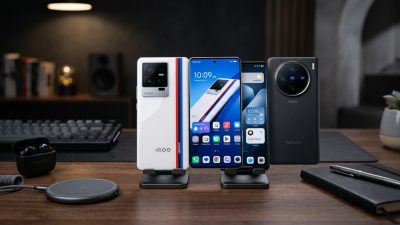
iQOO 15R and Vivo X200T: The Best Value Flagship Smartphones in India for March 2026

The Flagship Killers Are Back
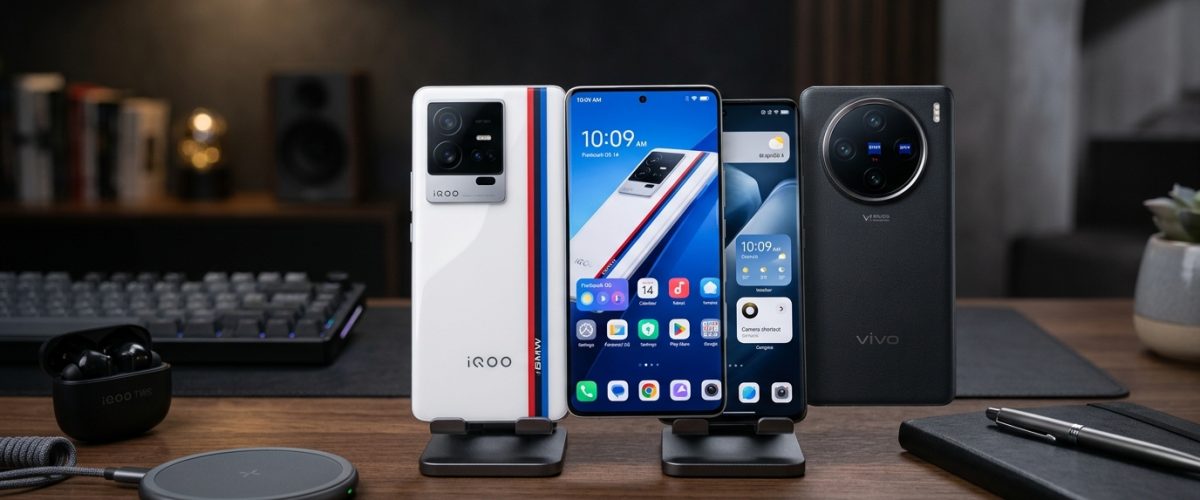
March 2026 has delivered two smartphones that embody the “flagship killer” philosophy that once defined brands like OnePlus in their early days. The iQOO 15R, priced from ₹34,999, and the Vivo X200T, starting at ₹59,999, represent different price points but share a common ambition: to deliver premium experiences at prices significantly below their Samsung and Apple competitors. In a market where the iPhone 16 starts at ₹79,900 and the Galaxy S26 at ₹74,999, both phones offer compelling arguments for value-conscious buyers who refuse to compromise on performance.
After two weeks of parallel testing, this comprehensive comparison examines how these devices stack up against each other and against the broader premium smartphone landscape in India.
iQOO 15R: Speed Above All Else
The iQOO 15R is a device built around a single, unapologetic priority: raw performance. Powered by the MediaTek Dimensity 9400 chipset paired with 12GB of LPDDR5X RAM, the phone delivers benchmark scores that compete with devices costing twice as much. In AnTuTu testing, the iQOO 15R consistently scored above 2.1 million — within striking distance of the Snapdragon 8 Elite-powered flagships from Samsung and OnePlus.
But benchmarks only tell part of the story. The iQOO 15R’s real-world performance is defined by its remarkably consistent frame rates in mobile gaming. In Genshin Impact at maximum settings, the phone maintained 58 to 60 frames per second across extended play sessions, with surface temperatures remaining manageable thanks to a vapour chamber cooling system that iQOO claims covers 6,000 square millimetres of internal surface area.
The 6.78-inch AMOLED display runs at 144Hz — one of the highest refresh rates available on any smartphone — with a touch sampling rate of 360Hz that provides a tangible responsiveness advantage in competitive gaming. The display reaches 4,500 nits peak brightness and supports HDR10+ content, making it equally capable for media consumption.
Battery capacity stands at 6,000 mAh — the largest in its class — paired with 120W wired charging that fills the battery from zero to 100 per cent in approximately 25 minutes. In real-world usage, the combination of massive battery and efficient chipset translates to screen-on times exceeding 8 hours — a figure that effectively eliminates battery anxiety for even the most demanding users.
Where the iQOO 15R makes compromises is in its camera system. The 50MP primary sensor with OIS delivers competent results in good lighting, but low-light performance and computational photography fall noticeably short of what the Vivo X200T achieves. The ultra-wide camera is a basic 8MP sensor without autofocus — functional for wide-angle shots but clearly a cost-cutting measure. For buyers who prioritise photography, this is the iQOO 15R’s clearest limitation.
Vivo X200T: The All-Rounder
If the iQOO 15R is a specialist, the Vivo X200T is a generalist that excels across every dimension. Priced at ₹59,999, it sits in the sub-flagship segment — below the ₹70,000+ premium tier occupied by the OPPO Find X9 Pro and its Hasselblad camera system but above the performance-focused value segment where the iQOO 15R competes.
The Vivo X200T runs on MediaTek’s Dimensity 9400 chipset with 12GB RAM and 256GB storage in its base configuration. Performance is indistinguishable from the iQOO 15R in daily usage — apps launch instantly, multitasking is seamless, and gaming performance is excellent. The phones share the same silicon, and in practice, neither holds a meaningful performance advantage over the other.
Where the Vivo X200T differentiates itself is in its camera system. The phone carries a 50MP Sony IMX920 primary sensor, a 50MP ultra-wide with autofocus, and a 50MP telephoto with 2x optical zoom — a genuinely capable triple-camera system that produces excellent results across its entire zoom range. Zeiss optics branding is not merely cosmetic; the colour science and lens coatings contribute to images with natural colours and well-controlled flare in challenging lighting conditions.
Video capabilities are similarly impressive. The X200T records 4K video at 60fps with effective stabilisation, and Vivo’s AI-powered video enhancement features — including low-light video mode and cinematic bokeh — produce results that rival what dedicated action cameras achieved just a few years ago.
Software and User Experience
Both phones run Android 16-based custom skins: FunTouch OS 16 on the iQOO 15R and FunTouch OS 16 on the Vivo X200T (both brands are owned by BBK Electronics). The software experience is similar but not identical. The iQOO variant includes gaming-specific features — a dedicated game mode with performance profiles, network optimisation, and notification blocking — while the Vivo version emphasises photography tools and social media integration.
Bloatware is present on both devices, though the quantity has reduced compared to previous generations. Both phones ship with pre-installed applications from Indian services including Paytm, MX Player, and various shopping apps. Most can be uninstalled, but several system apps resist removal without root access.
Both manufacturers have committed to four years of Android updates and five years of security patches — matching the update commitments of Samsung and approaching (though not quite reaching) Google’s seven-year promise for Pixel devices. This software support commitment is particularly important for mid-premium devices that buyers expect to use for three to four years.
5G and Connectivity
Both phones support the full range of 5G bands used by Indian operators, ensuring compatibility with Jio’s standalone and Airtel’s non-standalone 5G networks. In testing across multiple cities, both devices delivered comparable 5G speeds in the 200 to 400 Mbps range, with no meaningful difference in connectivity reliability.
Wi-Fi 7 support is available on both devices, along with Bluetooth 5.4 and NFC for contactless payments — important as India’s UPI digital payments continue their extraordinary growth trajectory. Both phones support NFC-based tap-to-pay, though this feature remains less widely used in India compared to QR-based UPI transactions.
Which Phone Should You Buy?
The choice between the iQOO 15R and the Vivo X200T ultimately depends on priorities and budget. At ₹34,999, the iQOO 15R offers the best pure performance and battery combination available in India. It is the phone for mobile gamers, power users, and anyone who values speed and endurance above all else. Its camera limitations are real but tolerable for users who treat smartphone photography as a secondary function.
At ₹59,999, the Vivo X200T is the better all-round device. Its camera system is genuinely excellent, its performance matches the competition, and its build quality and display are premium without reservation. For buyers who want a single device that excels at photography, productivity, entertainment, and communication, the X200T is the clearest recommendation in the sub-₹60,000 segment.
Both phones represent the remarkable state of India’s smartphone market in 2026: flagship-grade technology at prices that would have been unimaginable five years ago. Indian consumers, perhaps more than any other market, have benefited from the relentless competition among Chinese and Indian manufacturers that has driven prices down while pushing capabilities up. These two devices are the latest, and arguably the best, evidence of that trend.

- New Heavy Particle Discovered at CERN in 2026: What It Means for the Future of Physics - March 24, 2026
- Gaganyaan 2026: India’s Human Spaceflight Programme Enters Its Most Critical Phase - March 24, 2026
- India’s Semiconductor and AI Surge: How Research Labs Are Powering a Global Transformation - March 24, 2026