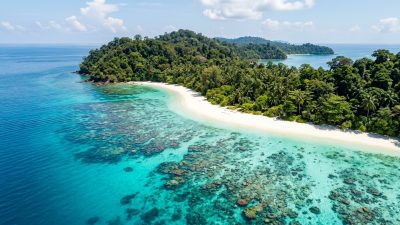
Goa Beyond Parties: How the State’s Quiet Southern Beaches Are Redefining Coastal Tourism in 2026

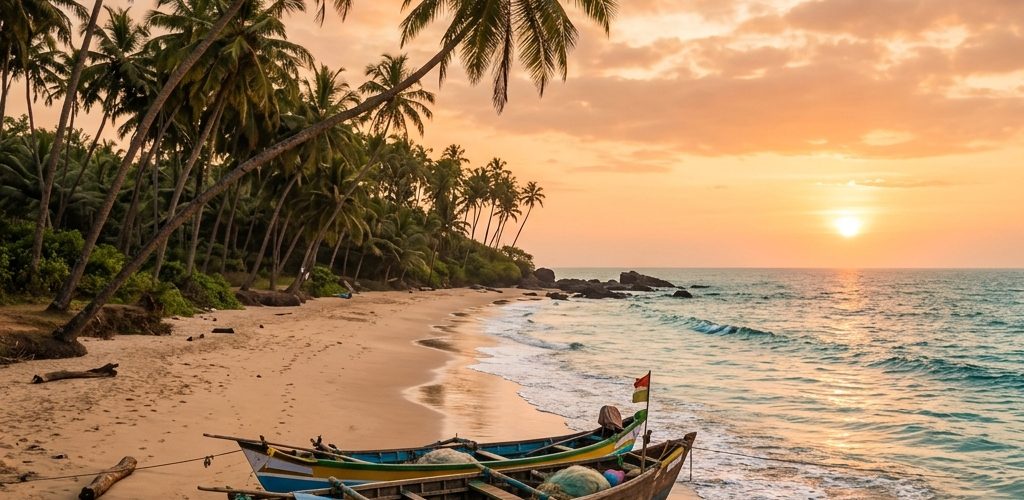
Goa, India’s smallest state and perennial holiday favourite, has long been synonymous with its northern beaches — the thumping nightclubs of Baga, the flea markets of Anjuna, and the crowded sands of Calangute that draw millions of domestic and international tourists each year. But in 2026, a quieter revolution is reshaping the state’s tourism identity. South Goa’s pristine, unhurried beaches — Palolem, Agonda, Cabo de Rama, Galgibaga, and Patnem — are emerging as the preferred destinations for a growing cohort of travellers who seek serenity, sustainability, and authentic coastal experiences over party culture and tourist congestion.
The South Goa Surge: Numbers Behind the Shift
Data from the Goa Tourism Development Corporation reveals a striking trend: while North Goa’s tourist footfall has plateaued over the past two years, South Goa registered a 28 per cent increase in visitor arrivals in the twelve months ending February 2026. The growth is particularly pronounced among domestic travellers in the 30-50 age bracket — professionals, couples, and families who prioritise tranquillity and quality over nightlife and crowds. International arrivals to South Goa have also surged, with Russian, German, and British tourists increasingly bypassing the northern strip in favour of longer stays in the south.
The shift is reflected in the hospitality landscape. South Goa has witnessed a proliferation of boutique eco-resorts, wellness retreats, and design-forward beach hut operations that cater to the premium leisure segment. Properties such as The Postcard Velha, Palolem’s Art Resort, and several new eco-lodges along the Agonda stretch offer curated experiences — from sunrise yoga sessions and farm-to-table dining to guided kayaking excursions through mangrove estuaries — that contrast sharply with the mass-market offerings of the north.
Palolem: The Crescent Bay That Has It All
Palolem, often described as Goa’s most beautiful beach thanks to its dramatic crescent shape flanked by rocky headlands and swaying palms, epitomises the South Goa experience. In 2026, the village has implemented a community-managed beach governance model that regulates shack density, enforces noise curfews after 10 PM, and mandates waste segregation by all commercial operators. The result is a beach that retains its natural charm while offering comfortable amenities — including kayak and paddleboard rentals, dolphin-spotting boat trips, and a vibrant but controlled evening food scene.
Palolem’s Silent Noise Parties — where revellers dance to music transmitted via wireless headphones — have become internationally famous as a creative solution to noise pollution, allowing party-goers and peace-seekers to coexist on the same stretch of sand. The concept, pioneered in Palolem over a decade ago, has inspired similar initiatives in beach destinations worldwide and remains a must-try experience for first-time visitors.
Agonda: India’s Turtle Nesting Sanctuary Meets Tourism
Neighbouring Agonda, approximately eight kilometres north of Palolem, has emerged as one of India’s most important Olive Ridley turtle nesting sites, and its tourism model in 2026 is explicitly designed around conservation. The Goa Forest Department, in collaboration with local NGOs and the Agonda Beach Committee, operates a turtle conservation programme that monitors nesting activity from November through March, protects egg clutches with bamboo enclosures, and organises controlled turtle release events that allow visitors to witness hatchlings making their first journey to the sea.
The conservation ethos extends to the beach’s commercial operations. Shack operators in Agonda are required to remove all structures by the end of the tourist season in May, allowing the beach to regenerate naturally during the monsoon months. Lighting regulations prohibit bright artificial lights near the waterline during nesting season, and beach clean-up drives, conducted twice weekly by a coalition of local volunteers and resort staff, ensure that Agonda consistently ranks among India’s cleanest beaches.
Cabo de Rama and Galgibaga: The Hidden Gems
Beyond Palolem and Agonda, South Goa’s less-explored beaches offer even more secluded experiences. Cabo de Rama, named after the ancient fort that overlooks it, is accessible only via a steep trail through cashew groves, which naturally limits visitor numbers and preserves its wild, untouched character. The beach is flanked by dramatic laterite cliffs and offers excellent snorkelling during calm weather months.
Galgibaga, known locally as Turtle Beach, is another Olive Ridley nesting site and one of the quietest beaches in all of Goa. With virtually no commercial development, it offers a genuinely remote coastal experience — a rarity in a state as densely touristed as Goa. In 2026, the Goa government has designated Galgibaga as a Protected Eco-Sensitive Zone, restricting future construction and ensuring that the beach remains a sanctuary for both wildlife and visitors seeking solitude.
Sustainable Tourism Infrastructure Takes Shape
The Goa government’s 2026 Sustainable Coastal Tourism Policy is providing the regulatory framework for South Goa’s responsible growth. Key provisions include a cap on the number of beach shacks per kilometre of coastline, mandatory environmental impact assessments for new hospitality projects, and a Coastal Tourism Cess that funds beach maintenance, lifeguard services, and conservation programmes. The policy also promotes the development of inland tourism experiences — including spice plantation tours, heritage village walks through colonial-era Portuguese mansions, and river kayaking on the Sal and Talpona rivers — to reduce the pressure on coastal zones.
Transport connectivity has also improved. The Manohar International Airport at Mopa, which commenced operations in 2023, has significantly enhanced South Goa’s accessibility with direct flights from major Indian cities and international routes. The Konkan Railway, which runs through South Goa, connects the region to Mumbai, Mangalore, and Kerala, making multi-destination itineraries — such as combining South Goa with Kerala’s sustainable backwater experiences — increasingly popular among travellers seeking a comprehensive western coastal journey.
The Culinary Scene: South Goa’s Secret Weapon
South Goa’s food scene is another compelling draw. While the north is dominated by tourist-oriented restaurants, the south retains a stronger connection to authentic Goan cuisine. Family-run tavernas in Benaulim, Varca, and Cuncolim serve traditional fish curry rice, prawn balchão, and pork vindaloo recipes passed down through generations. In 2026, a new wave of chef-driven restaurants has added a contemporary dimension, with establishments such as Maison on the Lake and Edda offering tasting menus that reinterpret Goan flavours using locally sourced, seasonal ingredients.
The feni distilling tradition also thrives in the south, where cashew orchards carpet the hillsides. Several artisan distilleries now offer guided tours and tastings, educating visitors about the craft production of this uniquely Goan spirit — an experience that pairs naturally with the region’s relaxed, discovery-oriented tourism ethos. For travellers keeping an eye on India’s cultural calendar in March 2026, South Goa offers a perfect retreat between engagements.
A Blueprint for India’s Coastal Future
South Goa’s emergence as a sustainable, quality-first beach destination in 2026 offers a blueprint that other Indian coastal regions would do well to emulate. In a country blessed with 7,500 kilometres of coastline, the challenge has always been balancing economic development with environmental preservation. South Goa is demonstrating that it is possible — and profitable — to choose quality over quantity, conservation over exploitation, and authenticity over commercialisation. For the discerning traveller, the quiet southern beaches of Goa are not merely an alternative to the north — they are, increasingly, the main attraction.

- South India Travel 2026: Hampi, Alleppey and Coorg Top Domestic Search Charts This Spring - March 26, 2026
- India’s Social Media Habits Are Shifting: Why Short Video and AI Companions Are Replacing Traditional Feeds - March 26, 2026
- Northeast India Emerges as 2026’s Hottest Travel Destination as Jorhat-Majuli Searches Spike - March 25, 2026