55 Visa-Free Destinations for Indian Passport Holders in 2026: The Complete Guide

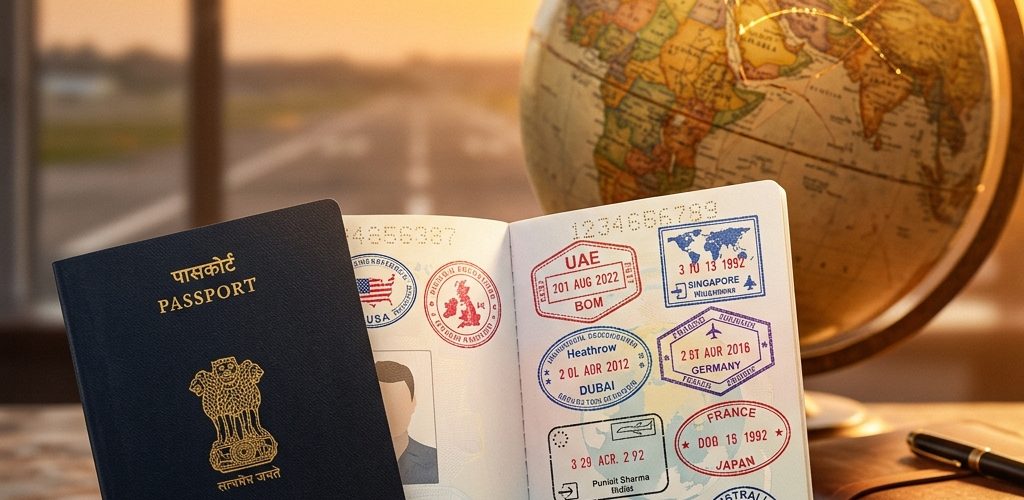
Indian passport holders have reason to celebrate in 2026: the country’s travel document now provides visa-free or visa-on-arrival access to 55 destinations worldwide, a significant improvement from the 40-odd destinations accessible just five years ago. India’s passport ranking has risen to 80th on the Henley Passport Index, reflecting both the country’s growing diplomatic influence and the increasing global recognition of Indian travellers as valuable visitors. This comprehensive guide covers every visa-free and visa-on-arrival destination available to Indian passport holders in 2026, with practical information on entry requirements, stay durations, and key considerations for each region.
Southeast Asia: The Indian Traveller’s Playground
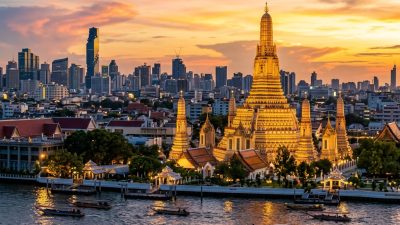
Southeast Asia continues to offer the most accessible and rewarding visa-free options for Indian travellers. Thailand’s visa-free entry for Indians, extended and clarified in 2026, permits stays of up to 60 days — making it ideal for everything from quick Bangkok weekends to extended Chiang Mai digital nomad stints. Indonesia grants visa-on-arrival valid for 30 days at major ports of entry, including Bali and Jakarta. Malaysia offers visa-free transit for up to 120 hours and a Digital Arrival Card system that has streamlined the entry process for Indian visitors.
Sri Lanka, India’s closest neighbour, provides Electronic Travel Authorization (ETA) that functions as a visa-on-arrival, valid for 30 days and extendable. Cambodia issues visa-on-arrival at its international airports and select land borders. The Philippines and Vietnam offer more complex but increasingly accessible e-visa systems that, while not technically visa-free, involve minimal processing time and documentation.
Indian Ocean and Africa
The Maldives continues to offer visa-on-arrival for 30 days to Indian passport holders — a policy that has made the island nation the single most popular international beach destination for Indian honeymooners and leisure travellers. Mauritius, Seychelles, and Madagascar also provide visa-free or visa-on-arrival access, creating an Indian Ocean island circuit that rivals the Caribbean for tropical diversity.
In Africa, Kenya, Tanzania (including Zanzibar), Ethiopia, and Rwanda offer e-visas or visa-on-arrival. South Africa’s e-visa system, overhauled in 2025, has reduced processing times dramatically. These destinations are increasingly popular with Indian travellers seeking safari experiences, cultural immersion, and adventure tourism at price points significantly lower than comparable experiences in other continents.
Middle East and Central Asia
The Gulf states have been among the most significant additions to the Indian visa-free map in recent years. Qatar offers visa-free entry for Indian passport holders for stays of up to 30 days. Oman provides an e-visa with rapid processing. The UAE, while not visa-free for ordinary passport holders, has streamlined its visa process to the point where transit visas and short-stay tourist visas are available with minimal documentation.
Iran offers visa-on-arrival at major airports, providing access to one of the world’s most culturally rich and historically significant destinations. Uzbekistan, Kyrgyzstan, and Kazakhstan in Central Asia have all liberalised their visa regimes for Indian travellers, opening up a region of stunning natural beauty and Silk Road heritage that remains largely undiscovered by Indian tourists.
Caribbean, Pacific, and Beyond
Several Caribbean nations — including Jamaica, Trinidad and Tobago, Dominica, and Grenada — offer visa-free or visa-on-arrival access to Indian passport holders. While the distance makes these destinations less popular than Asian alternatives, they offer unique cultural experiences and pristine natural environments. Fiji and Vanuatu in the Pacific also provide visa-free entry, opening up Oceania for Indian travellers.
In Europe, the situation remains more restrictive. Schengen area countries, the United Kingdom, and most EU members still require Indian passport holders to obtain visas in advance. However, Serbia and Bosnia and Herzegovina offer visa-free entry, providing affordable European travel options. Georgia, increasingly popular with Indian tourists for its dramatic landscapes and affordable living costs, also offers visa-free access.
Practical Considerations
While visa-free access simplifies travel planning, several important considerations apply. First, visa-free entry typically requires a passport valid for at least six months beyond the planned departure date — a requirement that catches many travellers off guard. Second, proof of onward travel (a return ticket or ticket to a third country) is commonly required even where no visa is needed. Third, travel insurance, while not always legally mandated, is increasingly expected by immigration authorities and should be considered essential.
Financial proof — demonstrating sufficient funds to support your stay — may be requested at immigration, particularly for longer stays. Carrying a credit card, bank statement, or evidence of hotel bookings is advisable. Some destinations that offer visa-on-arrival charge fees payable in local currency or US dollars; carrying small-denomination dollar bills is a practical precaution.
The Diplomatic Drivers
India’s expanding visa-free access reflects active diplomatic engagement. The Modi government has pursued bilateral visa facilitation agreements with dozens of countries, leveraging India’s growing economic weight, its large diaspora community, and the spending power of Indian tourists. The “soft power” dimension of tourism diplomacy — Indian visitors who experience a country positively become advocates for bilateral relations — is increasingly recognised in foreign policy circles.
India’s own e-visa programme, which grants electronic visas to nationals of over 160 countries for visits to India, has been an important tool in negotiating reciprocal access. The principle of mutuality — India offering easy access to foreign nationals in exchange for similar treatment of Indian travellers — has been a cornerstone of the strategy.
Budget-Friendly International Travel from India
For budget-conscious travellers, several visa-free destinations offer exceptional value. Nepal (open border, no visa required for Indians) and Bhutan (permit-based, no visa fee for Indians) in South Asia are the most accessible and affordable international experiences. In Southeast Asia, Vietnam, Cambodia, and Indonesia offer daily budgets of ₹3,000-5,000 inclusive of accommodation, meals, and activities.
For those preferring domestic destinations, India’s own diversity offers compelling alternatives. The Lakshadweep islands provide a Maldives-like experience without leaving the country, while Himalayan trekking routes rival Nepal’s offerings in both scenery and adventure value.
Looking Ahead
The trend towards greater visa-free access for Indian passport holders is expected to continue. Negotiations are reportedly underway with several additional countries, including in the European Union, where discussions about visa facilitation for Indian nationals have gained momentum in the context of the EU-India trade agreement negotiations. The Indian government’s target of reaching a passport ranking in the top 50 by 2030 — ambitious but not unrealistic given the current trajectory — would represent a transformational change in the travel freedom available to India’s 1.4 billion citizens.
For the Indian traveller in 2026, the world has never been more accessible. Fifty-five destinations await without the bureaucratic hurdle of a visa application — an invitation to explore, connect, and discover that an earlier generation of Indian travellers could only dream of. The passport in your pocket is not just a travel document; it is a ticket to a more connected, more open world.

- Mamaearth, boAt, and Noise: How India’s D2C Champions Are Chasing Profitability in 2026 - March 24, 2026
- India’s D2C Brands Bet Big on Offline Expansion as Quick Commerce Reshapes the Playbook - March 24, 2026
- Himalayan Trekking in 2026: Top Routes and New Trails for Adventure Seekers in India - March 24, 2026