March 2026 Travel Guide: The Best North India Destinations from Jaipur to Rishikesh

March in North India is a traveller’s sweet spot — the winter chill has receded, the summer heat has not yet arrived, and the landscape is at its most photogenic, with mustard fields in bloom and clear skies framing the Himalayas. For domestic and international visitors alike, March 2026 offers an exceptional window to explore some of India’s most iconic destinations, from the regal splendour of Rajasthan to the spiritual banks of the Ganges. This comprehensive guide covers the best North India destinations for March, with practical advice on what to see, how to get there, and what to expect.
Jaipur: The Pink City in Full Bloom
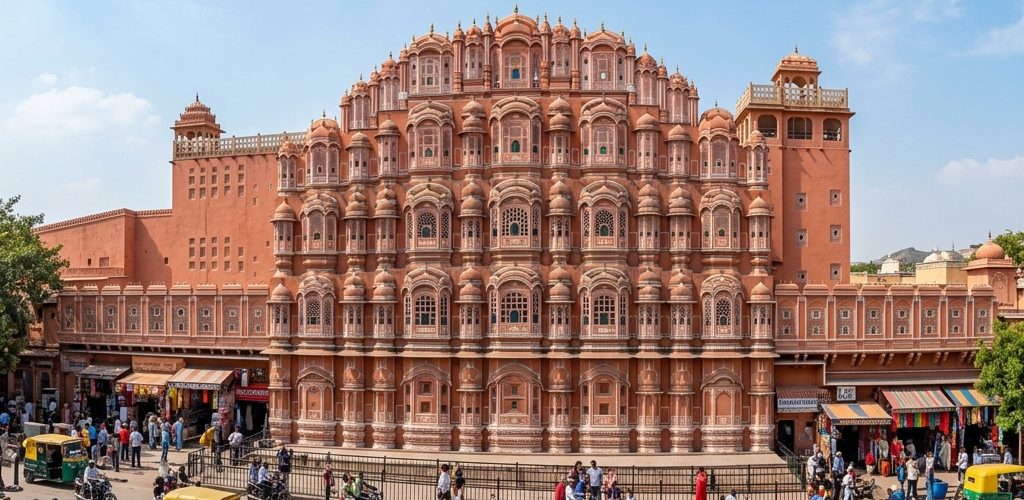
Jaipur, the capital of Rajasthan and a UNESCO World Heritage Site since 2019, is arguably the finest North Indian city to visit in March. Temperatures hover between a pleasant 15°C and 30°C, making it comfortable to explore the city’s extraordinary architectural heritage on foot or by autorickshaw. The iconic Hawa Mahal, Amber Fort, Nahargarh Fort, and the City Palace are at their most accessible without the punishing heat that makes outdoor sightseeing arduous from April onwards.
March 2026 holds particular significance for Jaipur as it coincides with the festival of Holi, the celebration of colours, which transforms the city into a riot of pigment, music, and communal joy. While Holi is celebrated across India, Jaipur’s celebrations — particularly at the Amber Fort and in the old city’s bazaars — are among the most spectacular. Visitors should book accommodation well in advance, as the city’s hotels fill rapidly during the festival period.
Beyond the monuments, Jaipur’s culinary scene has matured considerably. The city now offers everything from traditional Rajasthani thalis at iconic establishments like LMB and Suvarna Mahal to contemporary fine dining at properties like the Leela Palace. For shoppers, Jaipur remains India’s gemstone capital, with the Johari Bazaar offering precious and semi-precious stones, blue pottery, and block-printed textiles.
Rishikesh and Haridwar: Where Adventure Meets Spirituality
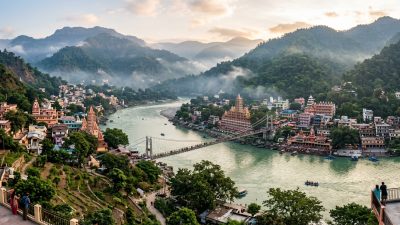
The twin cities of Rishikesh and Haridwar, separated by just 20 kilometres on the banks of the Ganges in Uttarakhand, offer a unique combination of spiritual immersion and adventure tourism that has made them among India’s fastest-growing destinations. March is the ideal month for both — the river levels are low enough for white-water rafting on Grade III and IV rapids, the weather is warm enough for camping on sandy beaches, and the spiritual calendar includes important ceremonies that draw pilgrims and curious travellers alike.
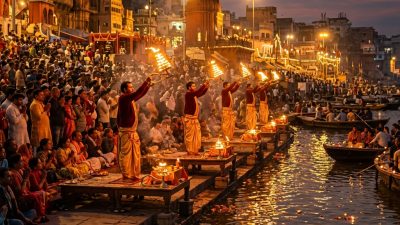
Rishikesh, self-styled as the “Yoga Capital of the World,” attracts practitioners from every continent. The ashrams along the Ganges — including the Beatles Ashram (formally the Chaurasi Kutia), Parmarth Niketan, and Sivananda Ashram — offer programmes ranging from drop-in classes to month-long teacher training certifications. The evening Ganga Aarti at Triveni Ghat, where priests perform elaborate fire rituals as the river catches the last light, is one of India’s most moving spiritual experiences.
For the adventure-inclined, Rishikesh offers bungee jumping from a 83-metre platform (India’s highest commercial jump), cliff jumping, mountain biking, and trekking to nearby waterfalls. The white-water rafting season typically runs from September to May, with March offering excellent conditions on the 16-kilometre and 26-kilometre stretches from Shivpuri and Marine Drive respectively.
Agra: The Taj and Beyond
No guide to North India would be complete without Agra, home to the Taj Mahal. March offers the best conditions for experiencing what is often called the most beautiful building ever constructed — clear skies provide the ideal backdrop for the monument’s white Makrana marble, and the gardens surrounding it are in bloom. Visiting at sunrise remains the quintessential experience, when the Taj transitions through shades of pink, gold, and white as the sun rises over the Yamuna River.
However, limiting Agra to the Taj Mahal alone is a disservice to the city’s rich Mughal heritage. The Agra Fort, a UNESCO World Heritage Site in its own right, is a massive red sandstone complex containing palaces, audience halls, and gardens that tell the story of the Mughal dynasty. Fatehpur Sikri, the abandoned Mughal capital located 40 kilometres west of Agra, is an extraordinary ghost city of perfectly preserved 16th-century architecture that receives a fraction of the Taj’s visitors.
With improved rail connectivity, including the Vande Bharat Express service connecting Delhi to Agra in under two hours, the city is more accessible than ever for day trips or short stays.
Varanasi: India’s Spiritual Heartbeat
Varanasi, one of the world’s oldest continuously inhabited cities, has experienced a dramatic transformation in recent years. The city’s record-breaking tourism figures — over 72 million visitors in 2025 — reflect both its timeless spiritual appeal and the infrastructure improvements that have made it more accessible. The Kashi Vishwanath Corridor, which connects the ancient temple directly to the ghats via a grand walkway, has transformed the visitor experience.
March is an excellent time to visit, with comfortable temperatures and several important festivals on the Hindu calendar. A boat ride along the ghats at dawn, witnessing the cremation pyres at Manikarnika, exploring the narrow lanes of the old city, and attending the spectacular Ganga Aarti at Dashashwamedh Ghat are experiences that transcend tourism and enter the realm of the existential.
Dharamshala and McLeod Ganj: Himalayan Serenity
For those seeking mountain tranquillity, Dharamshala and the adjoining settlement of McLeod Ganj in Himachal Pradesh offer a unique blend of Himalayan scenery, Tibetan culture, and colonial heritage. March brings the first hints of spring to the region, with rhododendrons beginning to bloom on the surrounding hillsides and the Dhauladhar range still capped in snow — a dramatic visual contrast.
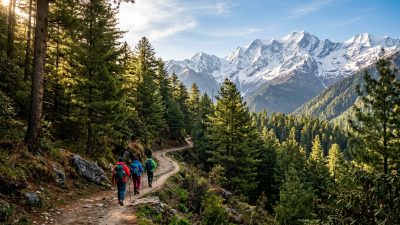
McLeod Ganj, the seat of the Tibetan government-in-exile and home to the Dalai Lama, is a fascinating cultural crossroads. The Tsuglagkhang Complex (the Dalai Lama’s temple), the Tibet Museum, and the many Tibetan monasteries offer insight into a culture that has maintained its identity despite exile. The area also serves as a base for excellent day treks, including the Triund trek — a moderate 9-kilometre hike that rewards with panoramic Himalayan views from a high-altitude meadow.
Amritsar: Golden Temple and Partition History
Amritsar, in Punjab, is increasingly recognised as one of North India’s most compelling destinations. The Golden Temple (Sri Harmandir Sahib), the holiest shrine of Sikhism, is an experience of profound beauty and egalitarian spirituality. The temple’s langar (community kitchen) serves free meals to over 100,000 people daily, regardless of religion, caste, or nationality — a practice that embodies the Sikh values of service and equality.
The Partition Museum, opened in 2017 in the Town Hall building, is the world’s first museum dedicated to the 1947 Partition of British India. Its collection of personal testimonies, photographs, and artefacts provides a deeply moving account of one of history’s largest mass migrations. The Wagah Border ceremony, held every evening at the India-Pakistan border 30 kilometres from the city, is a spectacle of choreographed patriotism that draws thousands of spectators daily.
Practical Travel Tips for March 2026
Getting around North India has never been easier. The expansion of the Vande Bharat Express network has connected major cities with high-speed, comfortable rail services. Low-cost airlines operate frequent flights between Delhi, Jaipur, Varanasi, and Amritsar. For road trips, the improving national highway network — particularly the recently completed sections of the Bharatmala Pariyojana — has significantly reduced travel times between cities.
Accommodation options range from heritage havelis and palace hotels in Rajasthan to riverside camps in Rishikesh and boutique properties in Dharamshala. March is peak season for most North Indian destinations, so advance booking is strongly recommended, particularly during Holi. Budget travellers will find excellent hostels and guesthouses in all major destinations, with costs significantly lower than comparable experiences in Southeast Asia or Europe.
March 2026 is an invitation to experience North India at its finest — a region where ancient spirituality, Mughal grandeur, Himalayan beauty, and modern Indian energy coexist in a tapestry that rewards every type of traveller. Pack light layers, comfortable walking shoes, and an open mind — North India will do the rest.

- Mamaearth, boAt, and Noise: How India’s D2C Champions Are Chasing Profitability in 2026 - March 24, 2026
- India’s D2C Brands Bet Big on Offline Expansion as Quick Commerce Reshapes the Playbook - March 24, 2026
- Himalayan Trekking in 2026: Top Routes and New Trails for Adventure Seekers in India - March 24, 2026