Northeast India Emerges as 2026’s Hottest Travel Destination as Jorhat-Majuli Searches Spike

Northeast India has emerged as the fastest-growing travel destination in the country in 2026, with Google Trends data showing a sharp spike in searches for Jorhat, Majuli, and broader Assam itineraries. The region, long considered inaccessible for mainstream tourists, is benefiting from improved air connectivity, digital infrastructure investments, and a generational shift toward culturally immersive, slow-paced journeys. Travel platforms report that Northeast India bookings have grown 45 per cent year-on-year, outpacing every other Indian region.
Jorhat and Majuli: Northeast India Travel 2026’s Breakout Stars
Jorhat, the cultural capital of Assam, and Majuli, the world’s largest river island in the Brahmaputra, have recorded some of the sharpest search interest growth of any Indian destination this year. The appeal is multifaceted: tea estate tours that take visitors through century-old gardens, river island exploration by local ferry, and immersion in indigenous Mishing and Deori art traditions.
Majuli’s Neo-Vaishnavite monasteries, known as satras, are a particular draw. These 500-year-old institutions preserve dance, music, and manuscript-painting traditions that exist nowhere else on Earth. The Kamalabari Satra and Auniati Satra have begun offering structured visitor programmes, allowing travellers to spend a full day observing and participating in cultural practices.
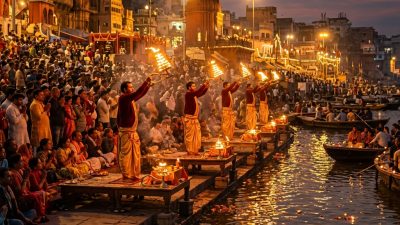
Travel data from MakeMyTrip and Booking.com confirms the trend. While Varanasi continues its tourism boom as India’s spiritual capital, Jorhat-Majuli is attracting a distinct audience: younger, experience-driven travellers who prioritise authenticity over luxury amenities.
Spiti Valley and the Rise of Astro-Travel
Beyond the Northeast, Spiti Valley in Himachal Pradesh has carved out a niche as India’s premier astro-travel destination. The high-altitude desert, situated above 3,600 metres, offers some of Asia’s clearest night skies. Tour operators report a 200 per cent increase in astronomy-themed bookings, which combine guided stargazing sessions with visits to ancient Buddhist monasteries and traditional Spitian villages.
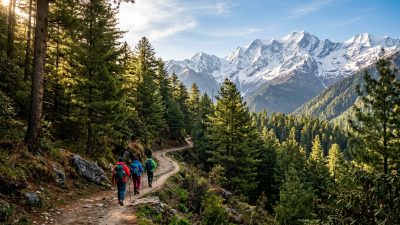
Winter tourism in Spiti has been enabled by improved snow-clearing infrastructure along the Manali-Kaza highway. What was once a summer-only destination now receives visitors year-round, with the winter months offering the clearest skies for astrophotography. Himalayan trekking routes in the surrounding region attract adventure tourists who combine mountain expeditions with Spiti’s contemplative landscape.
The astro-travel trend reflects broader changes in Indian tourism preferences. Rather than ticking off landmark photographs, a growing segment of travellers seeks transformative experiences — and sleeping under a canopy of visible galaxies in a Himalayan valley qualifies.
Slow Travel Goes Mainstream Among Indian Millennials
The underlying driver of both the Northeast surge and Spiti’s rise is the slow travel movement. Research from Airbnb India and Cleartrip indicates that average trip durations among 25- to 40-year-old Indian travellers have increased by 1.5 days compared with 2024. Fewer destinations per trip, longer stays, and deeper engagement with local communities define the new ethos.
Several factors are converging to enable this shift. Remote work flexibility, which persists in many white-collar sectors, allows professionals to combine work and travel through month-long stays. Homestay platforms such as Airbnb, Zostel, and SaffronStays provide affordable accommodation in rural areas. Most importantly, a generation that grew up watching travel influencers has developed aspirations that extend beyond five-star resorts to include village homestays and artisan workshops.
The economic impact is significant. Slow travellers typically spend more per trip than short-stay tourists because they patronise local restaurants, hire local guides, and purchase handcrafted goods. For communities in the Northeast, where formal employment opportunities remain limited, tourism revenue is becoming a meaningful income source.
Infrastructure Investments Enable Accessibility
Government investment has been critical. The UDAN regional connectivity scheme has added 12 new air routes linking northeastern state capitals to Delhi, Mumbai, and Kolkata since 2024. Direct daily flights to Jorhat’s Rowriah Airport, compared with just three weekly services in 2024, have been transformative. The Bogibeel Bridge, India’s longest rail-cum-road bridge across the Brahmaputra, has cut travel times between Assam and Arunachal Pradesh.
Digital infrastructure is equally important. Four-G mobile coverage now extends to most district headquarters across the northeastern states. For travellers who document journeys on Instagram, YouTube, and travel blogs, the ability to share content from previously disconnected locations has made the Northeast more visible. A single viral reel from Majuli’s misty mornings can generate thousands of search queries within hours.
Railway improvements are also under way. The Indian Railways’ Northeast Frontier Railway zone has introduced Vistadome coaches on scenic routes, offering panoramic views of tea gardens, river valleys, and forested hillsides. These services have become tourist attractions in their own right, with tickets selling out weeks in advance.
Sustainable Tourism: Managing Growth Without Losing Authenticity
Rapid growth brings sustainability challenges. Meghalaya’s Living Root Bridges, a UNESCO World Heritage tentative site, have implemented daily visitor caps and guided-only access after visitor numbers doubled in two years. Sikkim is developing a sustainable tourism framework tying accommodation licensing to waste management and energy efficiency standards.
Community-based tourism models offer a promising path. In Nagaland, the Hornbill Festival has evolved from a 10-day event into year-round village homestays, cooking classes, and guided forest walks managed by local tribal communities. Revenue reaches communities directly rather than being captured by urban tour operators.
Assam’s tea estates are experimenting with agritourism partnerships. Rather than selling tea by the kilogram, some gardens now charge visitors for immersive plucking-to-tasting experiences that command premium prices while educating consumers about sustainable agriculture.
The Northeast’s Tourism Moment Has Arrived
The convergence of improved connectivity, digital visibility, and shifting traveller preferences positions Northeast India for sustained tourism growth. State tourism boards in Assam, Meghalaya, and Nagaland are collaborating on joint marketing campaigns targeting domestic and international visitors. Industry projections suggest that the northeastern states will attract over 15 million domestic tourists in 2026, a 25 per cent increase from 2025.
For a region historically underrepresented in India’s tourism narrative, the transformation is profound. Whether the Northeast can scale tourism without compromising the authenticity that makes it attractive will be the defining challenge of the next decade. The early signs, from community-managed access to sustainable framework development, suggest that the region understands the stakes.

- Northeast India Emerges as 2026’s Hottest Travel Destination as Jorhat-Majuli Searches Spike - March 25, 2026
- Mamaearth, boAt, and Noise: How India’s D2C Champions Are Chasing Profitability in 2026 - March 24, 2026
- India’s D2C Brands Bet Big on Offline Expansion as Quick Commerce Reshapes the Playbook - March 24, 2026