Varanasi Tourism Boom: 72 Million Visitors Signal a Golden Era for India’s Spiritual Capital

When the tourism statistics for Varanasi in 2025 were released in early 2026, even the most optimistic projections were exceeded: over 72.6 million visitors descended upon India’s holiest city in a single year, marking a surge that has fundamentally altered the city’s economy, infrastructure, and identity. More remarkable still was the demographic composition of these visitors — approximately 80 per cent were under 35, challenging the perception of Varanasi as a destination primarily for elderly pilgrims and suggesting a profound shift in how young India engages with its spiritual and cultural heritage.
The Numbers Behind the Boom
The figure of 72.6 million visitors in 2025 represents a staggering increase over historical norms. As recently as 2019, before the COVID-19 pandemic disrupted global travel, Varanasi received approximately 6-7 million tourists annually, according to official estimates. Even accounting for differences in counting methodology — the 2025 figure includes pilgrims and day-trippers who may not appear in traditional tourist arrival data — the scale of growth is unprecedented for any Indian city.
The composition of visitors has diversified significantly. While Hindu pilgrims remain the largest category, Varanasi has seen substantial increases in international tourists (particularly from Japan, Southeast Asia, and Europe), domestic leisure travellers drawn by the city’s Instagram-worthy ghats and street culture, and business visitors attending the growing number of conferences and events hosted in the city. The youth demographic — those under 35 — has been particularly surprising to city administrators and tourism planners who had not anticipated such strong engagement from younger travellers.
The Kashi Vishwanath Corridor Effect
Multiple factors have contributed to the tourism boom, but the most transformative has been the Kashi Vishwanath Corridor (KVC), inaugurated by Prime Minister Modi in December 2021. This ambitious infrastructure project demolished over 300 structures adjacent to the ancient Kashi Vishwanath Temple to create a grand, clean, and accessible approach from the Dashashwamedh Ghat to the temple.
The corridor has fundamentally changed the visitor experience. Where once pilgrims navigated narrow, congested lanes to reach one of Hinduism’s most sacred temples, they now walk along a wide, well-maintained pathway with shelters, facilities, and views of the temple complex that were obscured for centuries by encroaching construction. The project has been controversial — critics have raised concerns about displacement, loss of urban heritage, and the commercialisation of sacred space — but its impact on visitor numbers is undeniable.
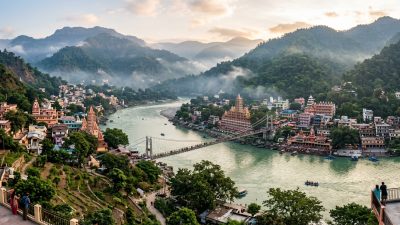
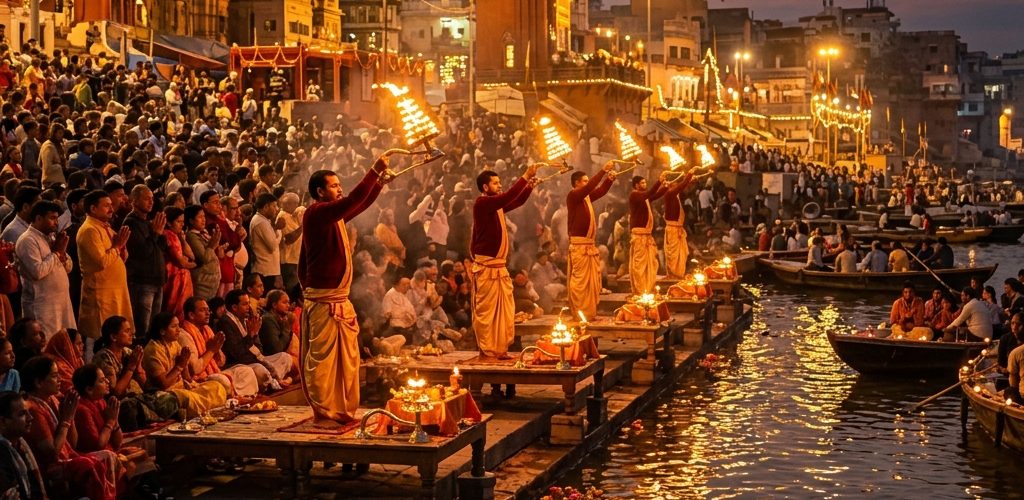
The aesthetic transformation extends beyond the corridor. The ghats themselves have been cleaned and restored, with improved lighting that has made the famous Ganga Aarti ceremony even more spectacular. New sewage treatment capacity, while still insufficient for the Ganges’ full pollution challenge, has improved water quality visibly near the bathing ghats.
Infrastructure Investments
The tourism surge has been supported by substantial infrastructure investments. The Lal Bahadur Shastri International Airport has been expanded with a new terminal that increased capacity and introduced direct flights from cities including Bangkok, Colombo, and Kuala Lumpur. The Varanasi railway station, one of India’s busiest, has been upgraded with improved platforms, waiting facilities, and digital information systems. The Vande Bharat Express now connects Varanasi with Delhi, Lucknow, and other major cities, bringing the capital within reach in approximately eight hours — a journey that once took twelve or more.
Within the city, river cruise services have been expanded, with a fleet of electric boats now operating between the major ghats. The Ropeway project, connecting several elevated points across the old city, is under construction and is expected to provide both transportation and panoramic viewing opportunities when completed. Road infrastructure has also improved, with the Purvanchal Expressway providing a modern highway connection from Lucknow.
The Youth Factor
The dominance of youth among Varanasi’s visitors reflects broader trends in Indian tourism and culture. Social media, particularly Instagram and YouTube, has played a significant role in repositioning Varanasi from an “old people’s pilgrimage” to a vibrant, photogenic cultural destination. Travel influencers documenting sunrise boat rides, street food walks through the galis (narrow lanes), silk weaving workshops, and the dramatic Ganga Aarti have generated millions of views, creating aspirational content that resonates with young urban Indians.
The city’s street food scene has become a significant attraction in itself. Varanasi’s chai wallahs, kachori sellers, and lassi shops — some operating for generations — have become culinary celebrities through social media exposure. The famous Blue Lassi shop and Deena Chaat Bhandar now see queues stretching down the lane, their offerings documented by food vloggers with audiences in the millions.
Cultural tourism has also evolved. Young visitors are increasingly interested in Varanasi’s living traditions — the Banarasi silk weaving community, the classical music gharanas, the Sanskrit scholarly tradition — rather than merely visiting monuments. Workshops, homestays, and experiential programmes offered by local artisans and musicians have proliferated, creating new economic opportunities for communities that had been struggling economically.
Economic Impact and Challenges
The tourism boom has generated substantial economic activity. Hotel occupancy rates in Varanasi exceeded 80 per cent during peak months in 2025, and the city’s hospitality sector has seen significant investment in new properties ranging from budget hostels targeting young backpackers to luxury heritage hotels. Employment in tourism-related services — guides, boatmen, transport, hospitality, retail — has grown by an estimated 40 per cent since 2019.
However, the rapid growth has also exposed significant challenges. The city’s waste management system, designed for a much smaller population, is overwhelmed during peak periods. Traffic congestion in the narrow streets of the old city — which were never designed for modern vehicles — creates miserable conditions for residents and visitors alike. The pressure on the ghats, where increasing visitor numbers must share space with ancient rituals and ceremonies, has raised concerns about the commodification of sacred practices.
Environmental pressures on the Ganges, already one of the world’s most polluted rivers, intensify with each additional visitor. While the Namami Gange programme has invested billions in sewage treatment and riverfront cleaning, the gap between treatment capacity and the waste generated by a city hosting millions of visitors remains significant. The broader challenges facing India’s environmental infrastructure are acutely visible in Varanasi, where the sacred river serves as both spiritual lifeline and waste receptacle.
Preserving Authenticity in the Age of Mass Tourism
Perhaps the most profound question facing Varanasi is how to preserve the authenticity and spiritual character that makes it unique while accommodating the economic and logistical demands of mass tourism. Cities around the world — from Venice to Dubrovnik — have grappled with this tension, often with mixed results. Varanasi’s challenge is compounded by the fact that its primary attraction is not a monument or a landscape but a living culture — the daily rituals, the funeral pyres, the prayers, the music — that exists independent of and prior to tourism.
Some measures are being discussed. Capacity management through timed entry passes for the most congested ghats, investment in “experience zones” that distribute visitors more evenly across the city, and the development of satellite attractions in nearby areas such as Sarnath (where the Buddha delivered his first sermon) are all being considered. International models of heritage city management, adapted for Indian conditions, offer potential frameworks.
A City Transformed
Varanasi in 2026 is a city in transformation — ancient in its soul but rapidly modernising in its infrastructure, traditional in its practices but newly accessible to a digital-native generation. The 72.6 million visitors who came in 2025 found a city that is simultaneously being preserved and reimagined, where the oldest continuous civilisation on Earth meets the energy of the world’s youngest major population. As North India’s tourism landscape expands, Varanasi stands as the spiritual anchor — a reminder that the most powerful travel experiences are not about novelty but about connection to something timeless.

- Mamaearth, boAt, and Noise: How India’s D2C Champions Are Chasing Profitability in 2026 - March 24, 2026
- India’s D2C Brands Bet Big on Offline Expansion as Quick Commerce Reshapes the Playbook - March 24, 2026
- Himalayan Trekking in 2026: Top Routes and New Trails for Adventure Seekers in India - March 24, 2026