Five Game-Changing Expressways Set to Transform Road Travel Across India by 2026-27

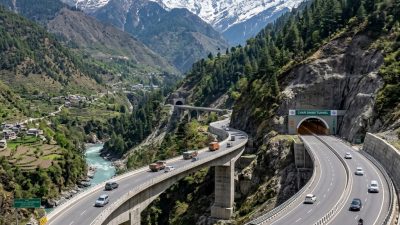
India’s road infrastructure is undergoing a revolution as five major expressway projects approach completion, promising to dramatically reduce travel times, improve safety, and reshape economic connectivity between regions. These greenfield expressways, representing cumulative investments of over ₹2 lakh crore, are among the most ambitious infrastructure projects in India’s history and reflect the government’s strategic vision of using transportation infrastructure as a catalyst for economic growth, tourism development, and national integration.
The Expressway Moment
India’s expressway programme has accelerated substantially since the successful completion of the Purvanchal Expressway, the Bundelkhand Expressway, and the Agra-Lucknow Expressway in Uttar Pradesh — projects that demonstrated both the technical feasibility and the transformative economic impact of high-speed road corridors. The current wave of projects represents a further scaling up of this approach, extending the expressway network to regions that have historically been underserved by premium road infrastructure.
The five game-changing expressways currently nearing completion or in advanced construction are: the Delhi-Mumbai Expressway, the Ganga Expressway, the Bengaluru-Chennai Expressway, the Amritsar-Jamnagar Expressway, and the Raipur-Visakhapatnam Expressway. Collectively, these projects span over 4,000 kilometres and will connect India’s economic centres, industrial corridors, port cities, and tourism destinations with road infrastructure that meets international standards for speed, safety, and capacity.
Delhi-Mumbai Expressway: India’s Flagship
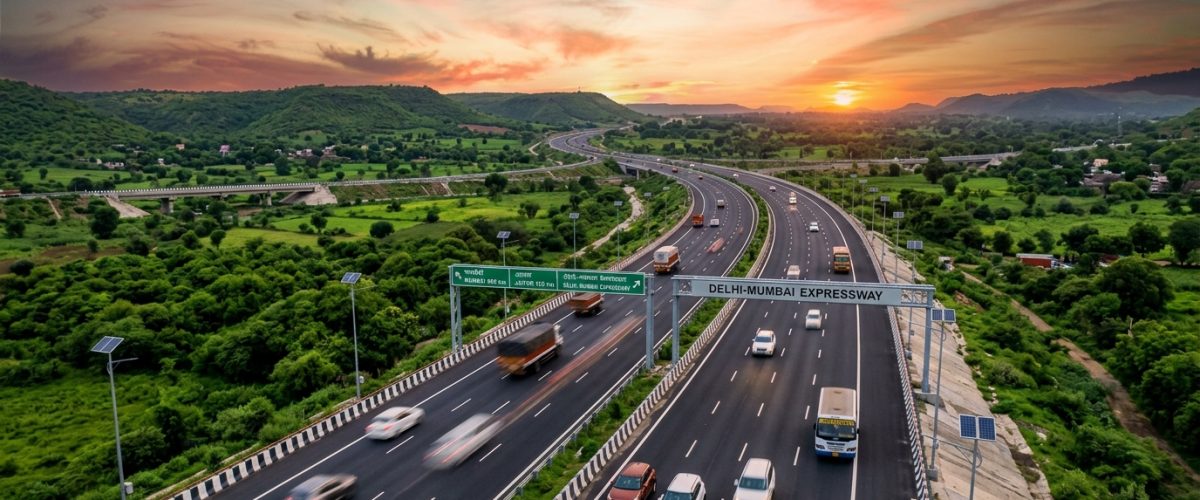
The Delhi-Mumbai Expressway (DME) is the crown jewel of India’s expressway programme. At 1,386 kilometres, it will be India’s longest expressway and one of the longest in the world when fully operational. The eight-lane highway (expandable to twelve) will reduce the travel time between India’s political and financial capitals from approximately 24 hours to under 12 hours — a reduction that will have profound implications for freight logistics, business travel, and tourism.
The expressway’s route passes through Haryana, Rajasthan, Madhya Pradesh, and Gujarat, connecting multiple intermediate cities including Jaipur, Kota, Ratlam, and Vadodara. Each of these cities stands to benefit significantly from the improved connectivity, as the expressway will create a continuous high-speed corridor that facilitates industrial development, distribution logistics, and commuter-range integration between cities that were previously separated by arduous journeys.
For tourism, the DME opens up new possibilities. The expressway passes within striking distance of several major tourist destinations, including the Ranthambore Tiger Reserve, the temple city of Pushkar, and the cultural heritage sites of Rajasthan. The prospect of reaching these destinations from Delhi in a matter of hours rather than a full day fundamentally changes the economics and convenience of road-based tourism.
Ganga Expressway: Connecting India’s Heartland
The Ganga Expressway, at 594 kilometres, will connect Meerut in western Uttar Pradesh to Prayagraj in the east, running roughly parallel to the Ganges and connecting some of India’s most historically and culturally significant cities. The six-lane expressway (expandable to eight) will reduce the travel time between its terminal cities from over 10 hours to approximately 5 hours.
The expressway’s route traverses the Indo-Gangetic plain, one of the most densely populated and economically important regions in the world. Cities along the route — including Hapur, Bulandshahr, Badaun, Shahjahanpur, Hardoi, Unnao, Rae Bareli, Pratapgarh, and Prayagraj — will benefit from dramatically improved connectivity to both the National Capital Region and the rest of the expressway network.
The Ganga Expressway also holds significant implications for pilgrimage tourism, as it will create a fast road link between the NCR and the Triveni Sangam at Prayagraj, one of Hinduism’s most sacred sites and the venue for the Maha Kumbh Mela. The 2025 Maha Kumbh demonstrated the enormous scale of pilgrimage traffic to the region, and the expressway is expected to substantially improve the logistics of managing such events.
Bengaluru-Chennai Expressway: South India’s Corridor
The Bengaluru-Chennai Expressway, spanning approximately 260 kilometres, will connect India’s two major southern metropolitan areas with a high-speed road corridor that reduces travel time from the current 5-6 hours to under 2 hours. The project represents the single most significant improvement in road connectivity between Karnataka and Tamil Nadu in decades.
The expressway’s impact extends beyond intercity travel. The corridor is expected to catalyse industrial and commercial development along its route, creating a Bengaluru-Chennai economic zone that combines Bengaluru’s technology industry strengths with Chennai’s manufacturing and port capabilities. Real estate development, logistics parks, and industrial clusters are already being planned in anticipation of the expressway’s completion.
For South India’s tourism sector — which is experiencing a significant renaissance driven by coastal and heritage tourism investments — the expressway creates new possibilities for multi-destination itineraries that combine the attractions of both metropolitan areas with the temples, beaches, and cultural sites along the corridor.
Amritsar-Jamnagar and Raipur-Visakhapatnam: Regional Connectors
The Amritsar-Jamnagar Expressway, traversing Punjab, Rajasthan, and Gujarat, will create a high-speed diagonal corridor across northwestern India, connecting the Golden Temple city with one of Gujarat’s major port cities. The route’s passage through areas of significant agricultural and industrial activity is expected to boost trade flows and reduce logistics costs for producers in the region.
The Raipur-Visakhapatnam Expressway, connecting the capitals of Chhattisgarh and the Visakhapatnam district (a major port and emerging industrial centre in Andhra Pradesh), will open up one of India’s most resource-rich but infrastructure-deficient regions. The corridor has particular significance for the mining and steel industries that are concentrated in the tribal regions of Chhattisgarh, Odisha, and northern Andhra Pradesh.
Safety and Smart Infrastructure
India’s new expressways incorporate safety and smart infrastructure features that represent a significant upgrade from the country’s conventional highway network. These include controlled-access design that eliminates the cross-traffic, pedestrian intrusions, and animal crossings that are the primary causes of highway accidents in India; intelligent traffic management systems with real-time monitoring and incident response capabilities; and emergency services infrastructure including helipads, trauma centres, and automated vehicle breakdown assistance.
The safety improvements are urgently needed. India leads the world in road traffic fatalities, with over 160,000 deaths annually. The National Highways, despite constituting only 2 per cent of the road network, account for approximately 30 per cent of these fatalities, largely due to design deficiencies, mixed traffic, and inadequate safety infrastructure that the new expressways are specifically designed to address.
The Road Ahead
The five expressways approaching completion in 2026-27 represent not just an infrastructure upgrade but a transformation in how Indians experience road travel. By offering journey times competitive with air travel for distances under 500 kilometres, safety standards comparable to international expressways, and the convenience of door-to-door connectivity that rail and air cannot match, these expressways are creating a new category of intercity travel that will reshape tourism patterns, business logistics, and the economic geography of the regions they serve.
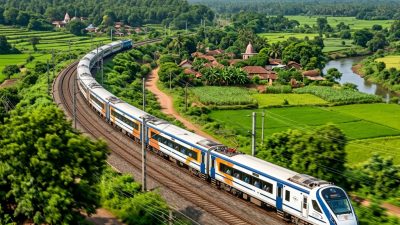
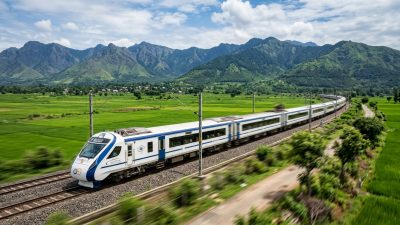
The ambition underpinning India’s expressway programme mirrors the country’s broader infrastructure development trajectory, from the expansion of the Vande Bharat Express rail network to the construction of new airports and port facilities. Together, these investments are creating the physical foundations of a more connected, more mobile, and more economically integrated India.
For the traveller, the message is clear: India’s vast distances are shrinking, and the journey itself — once an endurance test — is becoming an experience worth savouring. The open road, reimagined for the 21st century, beckons.

- Mamaearth, boAt, and Noise: How India’s D2C Champions Are Chasing Profitability in 2026 - March 24, 2026
- India’s D2C Brands Bet Big on Offline Expansion as Quick Commerce Reshapes the Playbook - March 24, 2026
- Himalayan Trekking in 2026: Top Routes and New Trails for Adventure Seekers in India - March 24, 2026