Mumbai-Ahmedabad Bullet Train Completes First High-Speed Trial Run as India’s Rail Revolution Accelerates in 2026

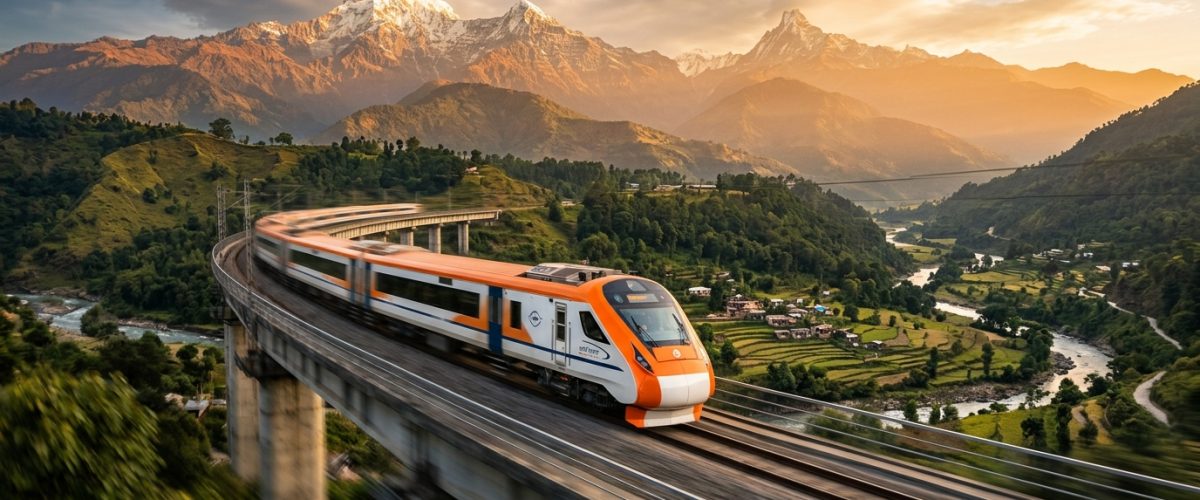
India’s First Bullet Train Hits 280 km/h on Test Track
India crossed a historic threshold in its rail infrastructure journey on 26 March 2026 when a Shinkansen-derived E5 series trainset completed its first high-speed trial run on the Mumbai-Ahmedabad High Speed Rail corridor. The 12-car train reached a top speed of 280 kilometres per hour on the newly completed 50-kilometre test section between Bilimora and Surat in Gujarat, marking the fastest a train has ever travelled on Indian soil.
The trial, witnessed by Railway Minister Ashwini Vaishnaw and Japanese Ambassador Suzuki Hiroshi, lasted approximately 22 minutes and included acceleration, cruising, braking and station-approach tests. Engineers from NHSRCL (National High Speed Rail Corporation Limited) and Japan’s JICA confirmed that all systems — traction, signalling, overhead catenary and track alignment — performed within design specifications.
From Blueprint to Reality: The Bullet Train Timeline
The Mumbai-Ahmedabad corridor, India’s first high-speed rail project, has been one of the country’s most scrutinised infrastructure ventures since its inception in 2017. Originally scheduled for completion by 2023, the project faced delays due to land acquisition challenges, the COVID-19 pandemic and engineering complexities in the 21-kilometre undersea tunnel beneath Thane Creek.
As of March 2026, approximately 72 per cent of the 508-kilometre corridor’s civil works are complete. The Gujarat section, which spans 352 kilometres, is substantially finished, with viaducts, stations and track infrastructure ready for system integration. The Maharashtra section, particularly the tunnel and elevated sections through Mumbai’s densely populated suburbs, remains the primary bottleneck.
NHSRCL Managing Director Vivek Kumar Gupta has confirmed a revised commissioning target of December 2028 for the Surat-Bilimora section as a pilot, with full Mumbai-Ahmedabad service expected by 2030. “The trial run proves the technology works on Indian soil. The remaining challenge is completing civil works in Maharashtra,” Gupta told journalists.
Travellers exploring top North India travel destinations are eagerly tracking the project, as the corridor promises to cut the Mumbai-Ahmedabad journey from seven hours to just under three.
Vande Bharat Network Expands to 136 Routes
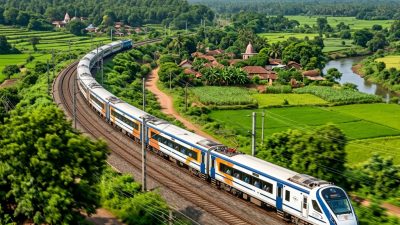
While the bullet train captures imaginations, the more immediate transformation of Indian rail travel is happening through the rapid expansion of the Vande Bharat Express network. Indian Railways has now deployed 136 Vande Bharat services across the country, up from 84 at the start of 2025, covering routes from Katra to Kanyakumari.
The latest additions include the Bengaluru-Goa Vande Bharat, which has become one of the highest-demand routes with average occupancy exceeding 115 per cent (including standing tickets). The Varanasi-Lucknow service, launched in February, has been particularly successful, attracting both business travellers and tourists visiting the spiritual corridor. Insights from popular South India travel routes suggest that rail connectivity is now the primary driver of domestic tourism growth in the region.
The third generation of Vande Bharat trainsets, manufactured at the Integral Coach Factory in Chennai with enhanced features including onboard Wi-Fi, aircraft-style reclining seats and GPS-based real-time information displays, is expected to enter service in Q3 2026. These trainsets will also feature improved suspension systems, reducing travel times by an additional 10-15 per cent on existing routes.
India’s Expressway Revolution: 10,000 Kilometres by 2027
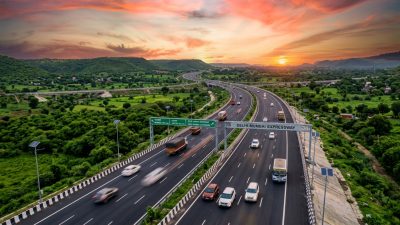
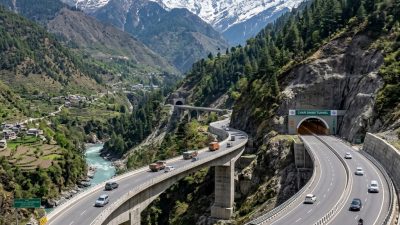
India’s rail renaissance is complemented by an equally ambitious expressway programme. The National Highways Authority of India (NHAI) has completed construction of 6,800 kilometres of access-controlled expressways as of March 2026, with a target of 10,000 kilometres by December 2027.
The recently opened Delhi-Mumbai Expressway, India’s longest at 1,386 kilometres, has reduced driving time between the two cities from 24 hours to approximately 12 hours. Early traffic data shows that the expressway handles over 45,000 vehicles daily, with commercial freight accounting for 60 per cent of the volume.
Other notable corridors nearing completion include the Bengaluru-Chennai Expressway (262 km, opening September 2026), the Amritsar-Jamnagar Expressway (1,257 km, due 2028) and the Ganga Expressway in Uttar Pradesh (594 km, fully operational by mid-2026). Together, these projects are creating an interconnected national road network that complements rail services and opens previously remote destinations like the Himalayan hill stations to road trippers.
The Economic Multiplier Effect
Transport economists estimate that India’s combined rail and road infrastructure investments, totalling approximately Rs 14 lakh crore between 2024 and 2028, will generate a GDP multiplier of 2.5x — meaning every rupee invested will produce Rs 2.50 in economic output through improved logistics, reduced travel times and enhanced market access.
The impact is already visible in property markets along new corridors. Real estate prices within 5 kilometres of Vande Bharat stations have appreciated by 18-25 per cent since route announcements, according to data from Anarock Property Consultants. Similarly, land values along the Delhi-Mumbai Expressway corridor have more than doubled in districts such as Haryana’s Nuh and Rajasthan’s Dausa.
Small and medium enterprises are among the biggest beneficiaries. A study on India’s economic growth trajectory by CII found that logistics costs for SMEs in cities connected by new expressways have fallen by 15-20 per cent, improving competitiveness against larger competitors with established supply chains.
Sustainability and the Green Transport Agenda
India’s rail and road expansion raises important sustainability questions. Indian Railways has committed to achieving net-zero carbon emissions by 2030, a target it is pursuing through the electrification of its entire broad-gauge network — now 93 per cent complete — and the installation of 20 GW of solar capacity along rail corridors.
The Mumbai-Ahmedabad bullet train, powered entirely by electricity, will produce zero direct emissions per journey. NHSRCL estimates that by diverting passengers from flights and private cars, the corridor will prevent approximately 1.5 million tonnes of CO2 emissions annually once fully operational.
On the road side, NHAI has mandated that all new expressways include dedicated EV charging stations every 50 kilometres and wayside amenities built with recycled construction materials. The environmental challenges India faces make these green infrastructure investments essential for long-term sustainability.
The Future of Indian Travel
India’s transport transformation is reshaping not just how people travel but how they think about distance. The combination of high-speed rail, semi-high-speed Vande Bharat services and access-controlled expressways is shrinking the country, making weekend trips to destinations that once required overnight journeys entirely feasible.
As the bullet train inches closer to commercial operation and the Vande Bharat network densifies, India is building the infrastructure backbone of a $5 trillion economy. The trial run at Bilimora was just 22 minutes long, but it covered a distance that has taken India decades to bridge.

- Mumbai-Ahmedabad Bullet Train Completes First High-Speed Trial Run as India’s Rail Revolution Accelerates in 2026 - March 30, 2026
- Indian Outbound Travel Hits Record 30 Million Trips in 2026 as Japan Thailand and Azerbaijan Emerge Top Destinations - March 29, 2026
- Navratri 2026 Draws Record 50 Lakh Visitors to Gujarat as India’s Festival Economy Touches Rs 4.5 Lakh Crore - March 29, 2026