Kerala and Karnataka Coastal Development Gets Budget Push as South India Emerges as Tourism Powerhouse

South India’s tourism sector is poised for a transformative year as the Union Budget 2026-27 channels unprecedented investment into coastal development across Kerala and Karnataka, while simultaneously announcing plans to upgrade heritage destinations and train thousands of tourism guides across the region. The budgetary provisions, combined with growing international recognition of South India’s diverse tourism offerings, are positioning the region as India’s next great tourism powerhouse — a destination that rivals Southeast Asia’s best in natural beauty while offering a cultural depth that is uniquely its own.
Coastal Development: Kerala and Karnataka Lead the Way
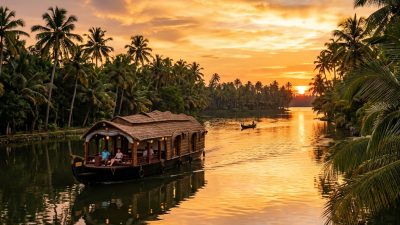
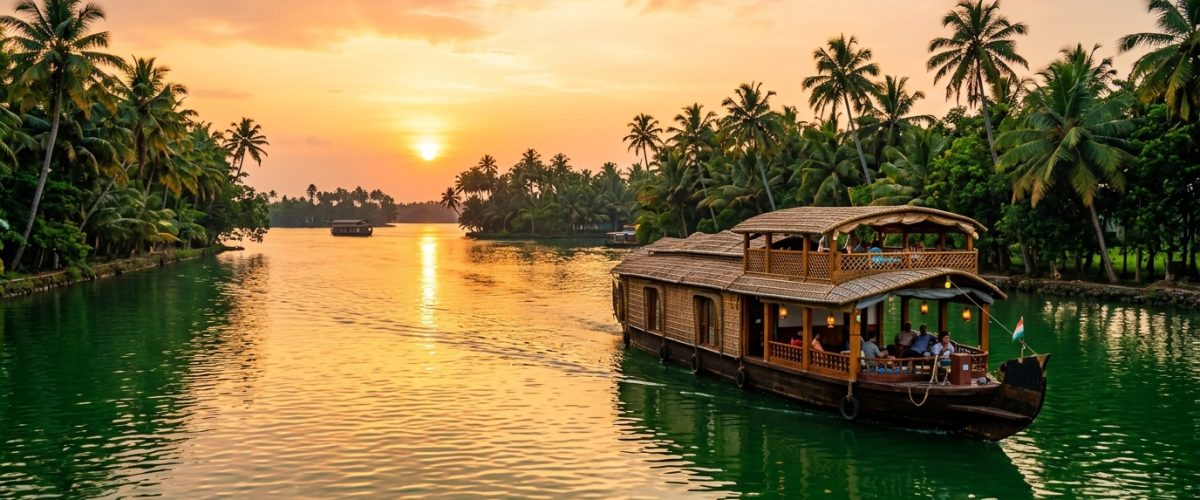
The Budget’s announcement of dedicated coastal development programmes for Kerala and Karnataka represents a strategic acknowledgment of the region’s untapped potential. While Kerala’s backwaters and Karnataka’s temple towns have long been tourism staples, the 1,100-kilometre combined coastline of the two states — stretching from Kasaragod in the north to Kanyakumari-adjacent regions in the south — has been significantly under-developed compared to Goa’s more established beach tourism infrastructure.
The development programme encompasses several interconnected elements: the construction of coastal promenades and public access points at 20 priority beach locations; the development of water sports and marine tourism infrastructure; the establishment of seafood tourism circuits linking fishing villages with gastronomy-focused travel experiences; and the creation of eco-tourism zones around mangrove forests, estuaries, and marine biodiversity hotspots.
Kerala Tourism Minister P.A. Mohamed Riyas described the allocation as “a recognition that Kerala’s tourism brand must evolve beyond the backwaters and hill stations that have defined it for decades. Our coastline is among the most beautiful in Asia, but we have barely begun to develop its tourism potential in a systematic, sustainable manner.”
Heritage Tourism: Tamil Nadu and Andhra Pradesh
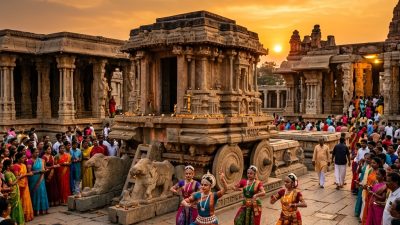
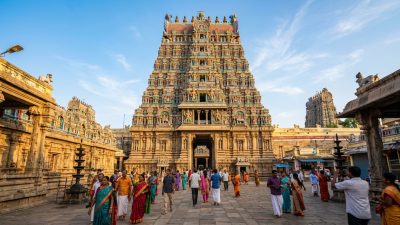
Beyond the coastal focus, South India’s tourism landscape is being enriched by renewed investment in heritage destinations. Tamil Nadu, home to some of the world’s most spectacular temple architecture, has received funding for the conservation and tourism infrastructure development of the Chola-era temples of Thanjavur and Gangaikondacholapuram, the Meenakshi Temple complex in Madurai, and the UNESCO World Heritage group of monuments at Mahabalipuram.
The Budget’s heritage tourism provisions also include the development of interpretation centres, multilingual audio guides, and digital experience platforms that use augmented reality to bring historical narratives to life. These technological enhancements are designed to make India’s heritage sites more accessible and engaging for international visitors, who often find that the extraordinary architectural and artistic significance of South Indian temples is inadequately communicated by existing infrastructure.
Andhra Pradesh’s tourism sector, meanwhile, is benefiting from the spotlight on Araku Valley and the broader development of the Visakhapatnam-Araku tourism corridor. The state government has announced complementary investments in the Buddhist heritage circuit connecting Amaravati, Nagarjunakonda, and Sankaram — sites that together tell the story of Buddhism’s flowering in South India over two millennia.
The 10,000 Guides Initiative
One of the most impactful provisions of the Budget for South India’s tourism sector is the nationwide plan to deploy 10,000 certified tourism guides at 20 major destinations. Several South Indian sites are expected to be among the beneficiaries, including Hampi, Mysore, Kochi, Madurai, and Pondicherry.
The guide shortage has been a persistent challenge for Indian tourism. International visitors frequently report that the absence of knowledgeable, English-speaking guides at major heritage sites diminishes their experience. The problem is compounded by the prevalence of unlicensed and poorly trained guides who provide inaccurate information and, in some cases, engage in commission-based practices that damage India’s tourism reputation.
The new guide training programme, to be implemented through the Indian Institute of Tourism and Travel Management (IITTM) and its regional centres, will offer a comprehensive curriculum covering art history, archaeology, regional languages, hospitality standards, and digital literacy. Graduates will receive government certification and be eligible for listing on official tourism platforms, creating a quality-assured pool of professionals that destinations can draw upon.
International Tourism: South India’s Rising Profile
South India has been steadily gaining recognition among international travellers, driven by factors including improved air connectivity, positive coverage in global travel media, and the growing influence of social media in shaping travel decisions. Kerala’s “God’s Own Country” brand has achieved global recognition, while Karnataka’s Hampi and Gokarna, Tamil Nadu’s Pondicherry, and Telangana’s Hyderabad have each carved distinct niches in the international travel market.
The region’s appeal is further enhanced by its cuisine, which is increasingly celebrated globally. South Indian food — from Kerala’s seafood and Malabar biryani to Tamil Nadu’s Chettinad cuisine and Karnataka’s Bisi Bele Bath — has gained a following among food-conscious travellers who rank gastronomy alongside culture and nature in their travel priorities.
India’s evolving approach to tourism development, including the investments in South India, reflects the same systematic, long-term strategy visible in the country’s scientific research expansion and technology sector growth — a recognition that sustainable competitive advantage requires sustained, coordinated investment.
Sustainable Tourism: Lessons from Kerala
Kerala’s Responsible Tourism (RT) initiative, launched in 2007 and progressively expanded since, offers a model that other South Indian states are beginning to emulate. The RT programme has established community-owned tourism enterprises in over 100 villages across the state, generating employment and income for rural households while offering visitors authentic cultural experiences that mass tourism cannot replicate.
The programme’s success has been recognised by the United Nations World Tourism Organization (UNWTO) and has inspired similar initiatives in Karnataka, where community-based tourism projects are being developed around the Western Ghats, Coorg’s coffee plantations, and the historical villages of the Hoysala temple belt.
Challenges and Opportunities
Despite the positive trajectory, South India’s tourism sector faces challenges that must be addressed if the region’s potential is to be fully realised. Coastal erosion, exacerbated by climate change, threatens several of Kerala’s most popular beach destinations. Overcrowding at heritage sites such as Hampi and Mahabalipuram during peak season degrades the visitor experience and poses conservation risks. And the seasonal concentration of tourism — with the majority of international visitors arriving during the October-March period — creates boom-bust cycles that make it difficult for tourism-dependent communities to sustain livelihoods year-round.
The Budget 2026-27 provisions represent a significant step toward addressing these challenges, but their impact will ultimately depend on implementation quality and the genuine integration of sustainability principles into tourism development decisions. South India’s tourism story is one of enormous potential meeting growing ambition — a combination that, if managed wisely, could create economic value, cultural preservation, and community empowerment in equal measure.
As India positions itself for a technology-driven economic transformation, the parallel development of its tourism sector ensures that the nation’s growth story encompasses both innovation and heritage — a balance that defines India’s unique place in the global economy.

- Mamaearth, boAt, and Noise: How India’s D2C Champions Are Chasing Profitability in 2026 - March 24, 2026
- India’s D2C Brands Bet Big on Offline Expansion as Quick Commerce Reshapes the Playbook - March 24, 2026
- Himalayan Trekking in 2026: Top Routes and New Trails for Adventure Seekers in India - March 24, 2026