India Celebrates Baisakhi, Vishu, Puthandu and Ambedkar Jayanti on 14 April as Multiple New Year Festivals Converge

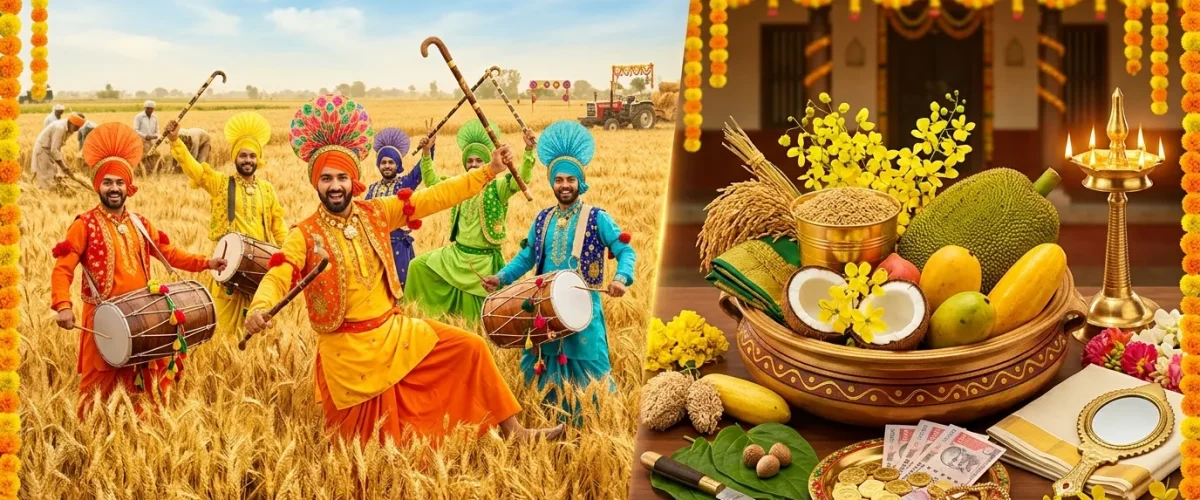
India marks one of its most culturally significant days on Tuesday, 14 April 2026, as a rare convergence of regional new year celebrations and national commemorations creates a nationwide tapestry of festivity. Baisakhi in Punjab and Haryana, Vishu in Kerala, Puthandu in Tamil Nadu, Bohag Bihu in Assam and Maha Vishuba Sankranti in Odisha will all be celebrated on the same day, while the nation also observes Ambedkar Jayanti, marking the 135th birth anniversary of Dr B.R. Ambedkar, the architect of India’s Constitution. The day is a national holiday, with stock markets, banks and government offices remaining closed.
This annual convergence, tied to the solar calendar’s Mesha Sankranti or the sun’s transition into the zodiac sign of Aries, makes 14 April one of the few dates when India’s extraordinary cultural diversity is simultaneously on display from the wheat fields of Punjab to the backwaters of Kerala.
Baisakhi: Punjab’s Harvest Festival and Sikh Commemoration
Baisakhi holds a dual significance in Punjab and Haryana. As a harvest festival, it marks the completion of the rabi wheat crop and the beginning of a new agricultural cycle, a moment of thanksgiving and celebration for farming communities across northern India. Farmers who have tended their fields through the winter months gather to celebrate the harvest with community meals, music and the energetic bhangra and gidda dances that have become synonymous with Punjabi culture.
For the Sikh community, Baisakhi carries deep religious significance. It commemorates the establishment of the Khalsa by Guru Gobind Singh in 1699 at Anandpur Sahib, a foundational moment in Sikh history. Gurdwaras across India and around the world hold special prayers, processions called Nagar Kirtans and community langar meals on this day. The Golden Temple in Amritsar, the holiest shrine in Sikhism, draws hundreds of thousands of devotees during Baisakhi celebrations.
In 2026, Punjab’s Baisakhi celebrations carry additional cultural weight following the recent passage of a strict sacrilege law by the state government to protect the Guru Granth Sahib. The law has been welcomed by Sikh religious bodies and reflects the centrality of faith to Punjab’s public life. India’s festival economy, estimated at Rs 4.5 lakh crore annually, receives a significant boost from Baisakhi-related spending on food, clothing, travel and religious offerings.
Vishu: Kerala Welcomes the Astronomical New Year
In Kerala, 14 April is Vishu, the Malayalam astronomical new year. The festival is centred on the Vishu Kani, an auspicious arrangement of items including rice, fruits, vegetables, flowers, a mirror, gold coins and an image of Lord Krishna that family members view as the first sight upon waking. The tradition reflects the belief that what one sees first on New Year’s morning shapes the year ahead.
Vishu Kaineettam, the custom of elders giving money to younger family members, reinforces family bonds and generational connections. The day is also marked by the bursting of firecrackers, the preparation of the traditional Vishu Sadya feast and visits to temples. Kerala’s tourism sector benefits from the festival, with hotels and resorts in destinations like Munnar, Alleppey and Wayanad reporting strong bookings as families combine celebrations with short holidays.
The upcoming Thrissur Pooram on 27 April means that Kerala’s festival season extends well into late April, creating a sustained period of cultural activity, tourism and economic stimulation across the state.
Puthandu, Bohag Bihu and Maha Vishuba Sankranti
Tamil Nadu celebrates Puthandu, the Tamil New Year, on 14 April. Homes are decorated with kolam patterns at the entrance, and the Puthandu Pirappu or New Year’s dawn is greeted with prayers and the preparation of the traditional mango pachadi, a dish that combines sweet, sour, bitter and spicy flavours to symbolise the varied experiences life brings in the year ahead. Temples across Tamil Nadu hold special puja ceremonies, and cultural programmes featuring Carnatic music and Bharatanatyam performances mark the occasion in cities and towns.
In Assam, Bohag Bihu or Rongali Bihu begins on 14 April, marking the Assamese New Year and the start of the agricultural season. The week-long celebration is one of the most vibrant in India’s festival calendar, featuring the Bihu dance, traditional games and community feasts. Young people exchange gamosas, the traditional Assamese towel, as tokens of respect and affection. Bohag Bihu is also associated with the onset of spring and is celebrated with particular enthusiasm in rural Assam.
Odisha celebrates Maha Vishuba Sankranti, which marks the beginning of the Odia New Year. The day is observed with visits to temples, particularly the Jagannath Temple in Puri, and the preparation of special dishes. In Bengal, Pohela Boishakh, the Bengali New Year, falls on 15 April this year, extending the cluster of regional new year celebrations across consecutive days.
Ambedkar Jayanti: Honouring the Constitution’s Architect
Alongside the regional festivals, 14 April is Ambedkar Jayanti, a national commemoration of Dr Bhimrao Ramji Ambedkar’s birth in 1891. As the principal architect of the Indian Constitution, Ambedkar’s contributions to social justice, equality and democratic governance are honoured through government functions, educational programmes and public gatherings across the country.
In 2026, the commemoration holds particular resonance as India continues to grapple with questions of social inclusion, reservation policy and constitutional rights that Ambedkar championed throughout his life. Political leaders from across the spectrum pay tribute at Ambedkar memorials in New Delhi, Mumbai and Nagpur, reflecting the universal regard in which he is held despite differing interpretations of his legacy.
The designation of 14 April as a national holiday ensures that India’s diverse cultural life receives the space it needs to express itself. India’s festival traditions remain central to the national identity. Schools, offices and institutions remain closed, allowing families to participate fully in their respective traditions. Stock markets, including the BSE and NSE, observe the holiday, and banking services are suspended for the day.
A Day That Reflects India’s Cultural Richness
The convergence of so many celebrations on a single date is a reminder of the calendrical diversity that underpins Indian civilisation. While the Gregorian calendar provides a common administrative framework, India’s cultural life continues to be governed by solar, lunar and lunisolar calendars that vary by region, religion and community. The fact that Punjab, Kerala, Tamil Nadu, Assam and Odisha all mark new beginnings on the same solar date, using different names and customs, illustrates both the unity and diversity that define the Indian experience.
For India’s cultural and tourism sectors, this cluster of April festivals represents a significant economic opportunity. Domestic travel peaks during the Baisakhi-Vishu-Puthandu week, with airlines, railways and hospitality providers recording high occupancy. The production and sale of festive clothing, food, decorations and gifts generates substantial economic activity, particularly in Tier-2 and Tier-3 cities where traditional celebrations are observed with particular fervour.
As India celebrates on 14 April 2026, the day serves as a vivid illustration of the country’s ability to hold multiple traditions, histories and identities in simultaneous celebration, a quality that remains one of its most defining characteristics.