Little Caesars Enters India as QSR Chains and Cloud Kitchens Race to Capture the Country’s Booming Food Market

American pizza chain Little Caesars has entered the Indian market in what marks the brand’s 30th country of operation, joining an increasingly competitive quick-service restaurant landscape where domestic and international players are racing to capture India’s booming food consumption market. The entry comes as Burger Singh expands with a new franchise model targeting 50 outlets in three months, Third Wave Coffee rolls out its summer menu across a growing cafe network, and Devyani International completes a $49.1 million acquisition of Sky Gate Hospitality to consolidate its multi-brand food portfolio.
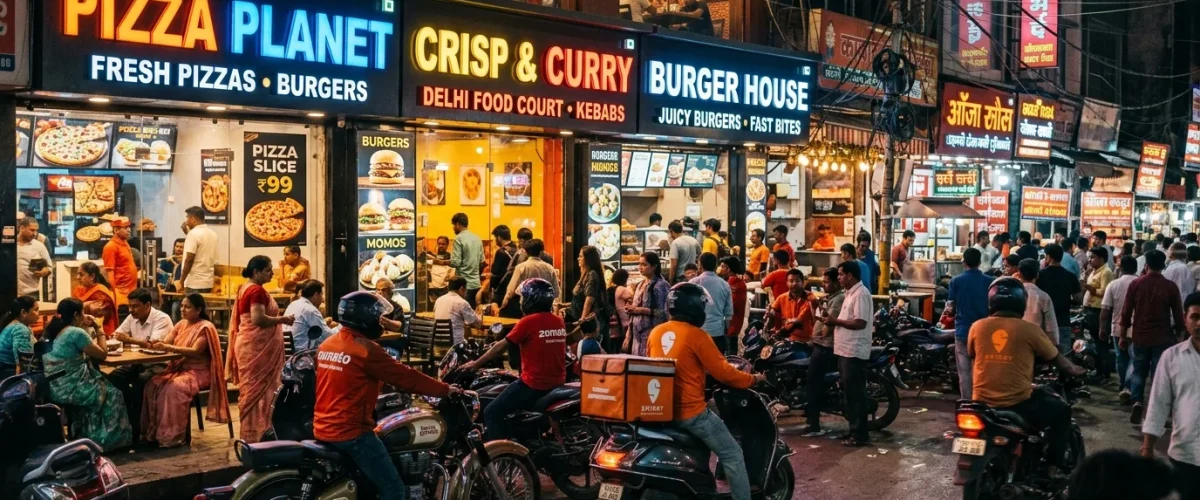
India’s organised restaurant and food service industry is experiencing a period of rapid structural change, driven by rising disposable incomes, urbanisation, the proliferation of food delivery platforms and a younger population that eats out more frequently than any previous generation.
Little Caesars and the International QSR Push Into India
Little Caesars’ India launch represents the latest move by a global QSR brand to establish a foothold in the world’s most populous country. The American chain, known for its hot-and-ready pizza concept and competitive pricing, is entering a market where Domino’s has already crossed the 2,000-store milestone and Pizza Hut continues to expand. McDonald’s, operated in western and southern India by Westlife Foodworld, is targeting 580 to 630 outlets within two years under its Vision 2027 strategy.
The competitive dynamics of India’s QSR market favour brands that can balance price, quality and convenience. Little Caesars’ value proposition, built on speed and affordability in the US market, will be tested against established local preferences and competitors who have had years to adapt their menus and operations to Indian tastes. The chain’s success will depend on its ability to localise effectively while maintaining the operational efficiency that defines its global model.
Other international brands are also expanding or entering the market. Magnolia Bakery, the New York-based bakery chain, has opened its seventh outlet in Bengaluru and tenth in India, catering to the premium bakery segment. French bakery and cafe chain PAUL has debuted in Bengaluru with a 3,850-square-foot outlet. South Korean brand GOPIZZA is riding the K-wave with plans to enter North and West India, reflecting the growing influence of Korean culture on Indian food preferences.
Burger Singh and the Domestic QSR Expansion
While international chains attract headlines, domestic QSR brands are expanding at an equally impressive pace. Burger Singh has rolled out a new franchise model designed to rapidly scale its presence across India, targeting 50 new outlets in the next three months. The chain, which offers burgers with Indian flavour profiles, has positioned itself as a homegrown alternative to McDonald’s and Burger King.
Third Wave Coffee, one of India’s fastest-growing specialty coffee chains, has launched its summer menu featuring bubble drinks, mango treats and sundaes. The chain has also partnered with HarperCollins India for World Book Day, turning select outlets into cafe libraries, reflecting a broader trend of Indian coffee chains positioning themselves as lifestyle and community spaces rather than simple beverage outlets.
Nothing Before Coffee secured $2.3 million in Pre-Series A funding to fuel an ambitious expansion plan targeting 150 new cafes by 2026. The Indian coffee chain market has become one of the most dynamic segments of the food service industry, driven by the country’s rapidly growing coffee culture among younger consumers who view cafes as social, work and leisure destinations.
Devyani’s Acquisition and Industry Consolidation
Devyani International’s $49.1 million acquisition of Sky Gate Hospitality signals a wave of consolidation in India’s food service sector. Devyani, which operates KFC and Pizza Hut outlets across India, is building a diversified restaurant portfolio through strategic acquisitions. The deal is expected to be completed in May and will expand Devyani’s operational footprint across formats and price points.
Consolidation is being driven by the economics of scale in an industry where margins are thin and operational complexity is high. Larger operators can leverage shared supply chains, centralised technology platforms and brand portfolio management to achieve profitability that smaller standalone operators struggle to match. In a market as price-sensitive as India, this operational advantage can be the difference between survival and closure.
Everstone Capital’s decision to sell its entire stake in Restaurant Brands Asia, the operator of Burger King outlets in India, further illustrates the shifting ownership landscape. The stake, valued at approximately $57 million, is being offloaded as private equity investors seek exits from maturing food service investments.
Cloud Kitchens Transform India’s Food Delivery Landscape
The cloud kitchen revolution continues to reshape how food reaches Indian consumers. By eliminating the need for dine-in facilities, cloud kitchens have reduced the capital requirement for launching a food brand from Rs 50-75 lakh for a traditional restaurant to Rs 10-15 lakh, dramatically lowering entry barriers. Swiggy’s Access Kitchens programme operates over 1,000 kitchen spaces, providing ready-to-use infrastructure for restaurant partners looking to expand without physical storefronts.
Zomato and Swiggy, India’s dominant food delivery platforms, each list over 200,000 restaurant partners. Zomato’s food delivery business generated revenue of Rs 1,023 crore in Q2 FY26, while Swiggy’s coverage extends across 580 cities. The platforms’ quick commerce arms, Blinkit and Instamart, have also entered the food space, with Swiggy Bolt offering 10-minute delivery for select food items in over 500 cities.
The cloud kitchen market is expected to continue growing as more food entrepreneurs enter the space. Multi-brand kitchen operators run several virtual restaurant concepts from a single location, targeting different customer segments through separate listings on delivery platforms. This model maximises kitchen utilisation and revenue while minimising fixed costs.
India’s Food Market: Scale, Speed and Competition
India’s organised food service market is growing at a pace that continues to attract domestic and international investment. The combination of a young population, rising incomes, rapid urbanisation and a cultural willingness to experiment with new cuisines creates a market environment where multiple formats and brands can coexist and grow simultaneously.
The shift towards diverse food experiences across the Indian food sector extends beyond QSRs and cloud kitchens. Fine dining has reached Tier-2 cities, with 12 Indian restaurants entering Asia’s 50 Best list in 2026. Street food tourism is being promoted by state tourism boards. Speciality cuisine restaurants focusing on regional Indian food are finding urban audiences. And healthy eating concepts are carving out a growing niche as health-conscious consumers seek options beyond traditional fast food.
For consumers visiting any Indian restaurant today, the intensifying competition means greater choice, better quality and more accessible pricing. For industry participants, the challenge is clear: in a market this competitive, only brands that combine operational excellence, menu innovation and customer understanding will thrive. The entry of Little Caesars, the expansion of Burger Singh and Third Wave Coffee, and the consolidation moves by Devyani all reflect different strategies for navigating this exciting and demanding landscape.