India’s Real Estate Outlook 2026: From Residential Boom to Retail Revival, Every Segment Shows Transformative Growth

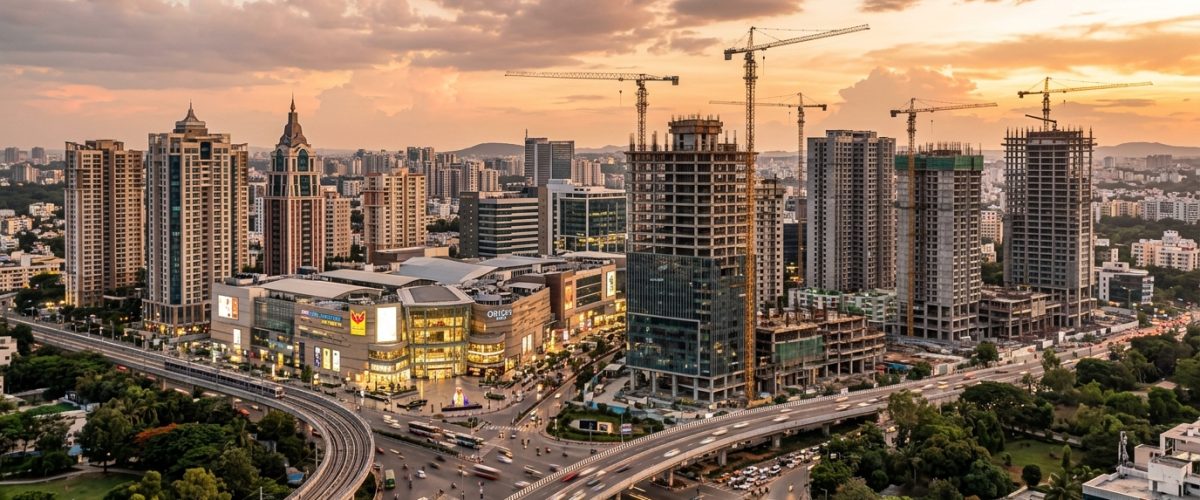
India’s real estate sector stands at the cusp of a multi-dimensional transformation as it enters 2026, with every major segment—commercial offices, residential housing, retail, logistics, and data centres—exhibiting robust growth fundamentals. According to Cushman & Wakefield’s India Outlook 2026 report, the sector is benefiting from a convergence of demographic tailwinds, infrastructure investment, institutional capital flows, and evolving consumer preferences that are collectively reshaping the country’s built environment.
Residential Market: Sustained Demand Defies Sceptics
India’s residential real estate market has confounded those who predicted a post-pandemic correction. Housing sales across the top seven cities exceeded 3.5 lakh units in 2025, the highest level in over a decade, driven by genuine end-user demand rather than speculative buying. The first quarter of 2026 has maintained this momentum, with launches and sales both tracking above year-ago levels.
Several factors underpin the residential boom. Mortgage rates, while slightly above their 2024 lows, remain historically manageable at 8.5-9 per cent for prime borrowers, supported by the RBI’s accommodative monetary stance. The government’s extension of PMAY (Pradhan Mantri Awas Yojana) benefits and tax deductions on home loan interest under the old tax regime continue to incentivise home purchases.
The premium and luxury segments have been particularly strong, with units priced above ₹1.5 crore accounting for an increasing share of total sales in metros. This trend reflects the growing affluence of India’s upper-middle class, the work-from-home-driven preference for larger homes, and the perception of real estate as a tangible, inflation-hedging asset class. Developers such as DLF, Godrej Properties, Prestige Estates, and Oberoi Realty have reported record-breaking sales in their premium project launches.
Affordable Housing: The Unfinished Promise
While premium housing thrives, the affordable segment—units priced below ₹45 lakh—presents a more nuanced picture. Rising input costs, particularly for steel, cement, and labour, have squeezed developer margins in this segment, leading some to pivot toward mid-range and premium developments. The share of affordable housing in total new launches has declined from 40 per cent in 2020 to approximately 25 per cent in 2025.
This trend creates a policy challenge. India’s estimated housing shortage of 29 million units is concentrated overwhelmingly in the affordable segment. The government’s response—enhanced PMAY allocations, interest subsidy schemes, and regulatory streamlining for small developers—has made a difference but has not fully bridged the gap between demand and financially viable supply in the sub-₹45 lakh category.
Retail Real Estate: The Premiumisation Wave
India’s retail real estate sector is experiencing a renaissance, driven by premiumisation, experience-driven retail formats, and the entry of global luxury brands. Cushman & Wakefield projects 5.9 million square feet of Grade A mall space to enter the market in 2026—the highest addition in five years—reflecting developer confidence in the evolution of Indian retail from value to experience.
Fashion, food and beverage, and entertainment continue to dominate mall leasing activity. International brands such as Zara, H&M, Uniqlo, and Sephora have expanded their Indian footprint, while domestic retail chains such as Reliance Trends, Tata CLiQ, and Titan have increased their presence in premium malls. The F&B sector has been a particular growth driver, with food courts and standalone restaurants accounting for 20-25 per cent of mall leasing.
The experience economy is reshaping mall design. Developers are incorporating multiplex cinemas, indoor gaming zones, co-working spaces, art galleries, and wellness centres to create destinations that attract footfall beyond traditional shopping. As India’s entertainment and leisure industries evolve, reflected in developments like Bollywood’s innovative content strategies in March 2026, retail spaces are becoming platforms for cultural consumption and social interaction.
Logistics and Warehousing: The Backend of India’s Consumer Economy
The logistics and industrial real estate segment has emerged as one of the fastest-growing sectors, driven by e-commerce expansion, quick commerce growth, and the government’s focus on supply chain modernisation. Warehousing absorption across the top eight cities exceeded 50 million square feet in 2025, with Grade A facilities commanding premium rents.
E-commerce and quick commerce companies—including Amazon, Flipkart, Blinkit, Zepto, and Swiggy Instamart—have been the most active occupiers, establishing fulfilment centres, dark stores, and micro-warehouses across urban and peri-urban locations. The need for same-day and sub-30-minute delivery has created demand for warehouse space in locations that were previously considered unsuitable for logistics operations, driving absorption in inner-city areas and transportation hubs.
The government’s PM Gati Shakti national master plan, which integrates logistics infrastructure planning across rail, road, and waterway networks, is expected to further boost warehouse development along identified multi-modal corridors. Industrial land values in key logistics clusters around Delhi-NCR, Mumbai-Pune, Bengaluru, and Chennai have appreciated 15-20 per cent over the past two years.
Data Centres: The New Frontier of Indian Real Estate
Data centre development has emerged as a distinct and rapidly growing real estate sub-sector, fuelled by India’s digital transformation, data localisation regulations, and the global expansion of cloud computing. India’s total data centre capacity is projected to reach 2,000 MW by 2027, up from approximately 900 MW in 2024, representing one of the fastest growth rates globally.
Mumbai, Chennai, and Hyderabad have emerged as primary data centre hubs, attracting investment from global operators such as Equinix, Digital Realty, and NTT, alongside Indian players like Nxtra Data (Airtel), Yotta, and CtrlS. The sector’s unique requirements—reliable power supply, fiber connectivity, water for cooling, and seismic stability—are reshaping land use patterns and infrastructure development in these cities.
Institutional Investment: Capital Flows Validate the India Real Estate Story
Institutional investment in Indian real estate reached $7.8 billion in 2025, reflecting sustained confidence from global investors. Singapore’s GIC, Canada Pension Plan Investment Board (CPPIB), Blackstone, and Brookfield have been among the most active investors, deploying capital across office, residential, logistics, and data centre assets.
The success of India’s REIT market has been a key enabler. The three listed office REITs have delivered competitive returns for investors while providing developers with an institutional exit route. The proposed launch of residential and retail REITs could further deepen the market and attract a broader investor base. This growing institutional interest aligns with the broader theme of India’s financial maturation, which is also reshaping equity markets as explored in our coverage of how institutional investors are transforming Indian market dynamics.
Looking Ahead: Challenges and Opportunities
The Indian real estate sector faces challenges including rising construction costs, regulatory complexity across different states, and the need for sustainable development practices. However, the structural drivers of demand—urbanisation, demographic dividends, income growth, and infrastructure investment—remain firmly in place.
For a country where 40 per cent of the population is expected to be urban by 2030, the real estate sector’s development trajectory is not just about buildings and square footage—it is about creating the physical infrastructure for India’s economic future, from the offices where innovation happens to the homes where families thrive to the warehouses that power the consumer economy.

- Startup India at 10: A Decade of Disruption and the Founders Who Shaped the Ecosystem - March 24, 2026
- From Side Hustles to Success: Five Indian Founders Who Turned Adversity Into Billion-Dollar Ventures - March 24, 2026
- Healthtech Funding Shifts Toward Integrated Care Models as Investors Eye Sustainable Growth in India - March 24, 2026