Supreme Court Slams RERA for Favouring Builders Over Buyers: A Wake-Up Call for India’s Real Estate Regulation

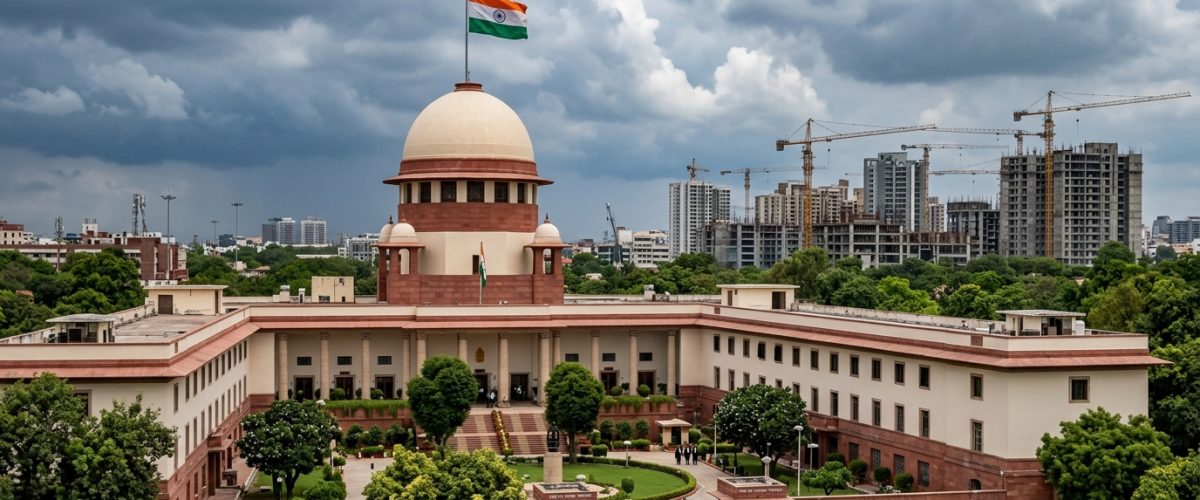
In a scathing indictment that has reverberated across India’s real estate industry, the Supreme Court of India in February 2026 issued pointed observations questioning the very effectiveness of the Real Estate (Regulation and Development) Act — better known as RERA — in protecting the interests of homebuyers. The bench went so far as to suggest that the law, which was enacted in 2016 with the express purpose of shielding consumers from unscrupulous developers, appears in practice to be serving the interests of builders more than the buyers it was designed to protect.
The observations, made during the hearing of a case involving chronic project delays and developer non-compliance, have sparked a nationwide conversation about the gap between RERA’s legislative promise and its ground-level implementation. For millions of Indian homebuyers — many of whom have invested their life savings into properties that remain undelivered years after promised completion dates — the Court’s words articulate a frustration that has been simmering for nearly a decade.
The Court’s Observations: A Systematic Critique
The Supreme Court’s critique was not directed at the statute itself, but at its implementation machinery. The bench observed that RERA authorities across multiple states have demonstrated a “lack of intent” in exercising their powers, poor coordination with state governments, and a pattern of underutilising the enforcement mechanisms available under the Act.
Specifically, the Court noted that the cost of violating RERA provisions is often lower than the benefits developers derive from non-compliance — creating a perverse incentive structure that undermines the law’s deterrent effect. Penalties imposed by RERA authorities have been inconsistent and frequently inadequate, failing to match the scale of developer misconduct or the financial losses suffered by homebuyers.
The bench also highlighted the structural issue of RERA authority leadership. In several states, the chairpersons of RERA authorities are retired bureaucrats or judges whose appointments are influenced by state governments — the same governments that often have close relationships with powerful real estate developers. This creates an inherent conflict of interest that can compromise the independence and effectiveness of regulatory oversight.
RERA’s Promise vs Reality: Eight Years On
When RERA was enacted in 2016, it was hailed as a transformational reform that would bring transparency, accountability, and consumer protection to India’s notoriously opaque real estate sector. The Act mandated project registration, escrow accounts for construction funds, timely delivery obligations, and penalty provisions for delays — a comprehensive framework that, on paper, addressed the most egregious practices of the pre-RERA era.
Eight years later, the record is mixed at best. On the positive side, RERA has brought a degree of formalisation to the sector. Over 1.15 lakh real estate projects and more than 85,000 real estate agents have been registered across the country. The requirement to disclose project details, approvals, and timelines on RERA portals has improved information availability for prospective buyers.
However, the enforcement of RERA’s protective provisions has been deeply uneven. Maharashtra, which has one of the more active RERA authorities, has disposed of over 25,000 complaints — but resolution rates remain contested, with homebuyer groups alleging that many orders in their favour go unenforced. In states like Uttar Pradesh, where the real estate crisis is particularly acute due to the Noida-Greater Noida stalled projects saga, RERA’s impact has been limited by bureaucratic delays and jurisdictional complexities.
The Stalled Projects Crisis
India’s real estate sector continues to grapple with a legacy crisis of stalled and delayed projects. According to industry estimates, approximately 4.8 lakh residential units across the top eight cities remain stalled or significantly delayed — representing investments worth over ₹4.5 lakh crore by homebuyers who are simultaneously paying EMIs on incomplete properties and rent on alternative accommodation.
The human cost of this crisis is immense. Families who booked homes a decade ago remain without possession, their financial plans derailed and their faith in the system eroded. Many of these buyers are middle-class families for whom the property purchase represents their single largest financial commitment — a fact that makes RERA’s enforcement failures particularly unconscionable.
The Supreme Court’s intervention has been welcomed by homebuyer advocacy groups, who hope that judicial scrutiny will compel RERA authorities to adopt a more proactive and stringent approach. NBCC, the government’s construction company that has been tasked with completing several stalled projects, has indicated its intent to approach the Supreme Court for directions in specific cases where it faces obstacles from original developers and their creditors.
Reforms Needed: Expert Perspectives
Real estate experts and consumer advocates have identified several reforms that could strengthen RERA’s effectiveness. First, the appointment process for RERA chairpersons and members needs to be insulated from state government influence, perhaps through a collegiate system involving the judiciary. Independence is a prerequisite for effective regulation, and the current appointment mechanism falls short.
Second, the penalty framework needs to be significantly enhanced. Current penalties, which are typically calculated as a percentage of the project cost or as per diem interest payments, are insufficient to deter large developers for whom the financial upside of delay far exceeds the penalty cost. Punitive damages, personal liability for developer directors, and criminal prosecution for wilful defaults would materially strengthen the deterrent effect.
Third, the escrow account mechanism — which requires developers to deposit 70 per cent of project collections in a designated account for construction purposes — needs stricter monitoring. Instances of fund diversion from escrow accounts continue to be reported, suggesting that the supervisory mechanism is inadequate. Real-time digital monitoring of escrow accounts by RERA authorities could address this vulnerability.
Market Implications and Industry Response
The Supreme Court’s observations come at a time when India’s real estate market is otherwise in a buoyant phase. Residential property sales across the top eight cities reached record levels in 2025, driven by strong demand in the premium and luxury segments, improved affordability due to falling interest rates, and demographic tailwinds including urbanisation and nuclear family formation.
The industry’s response to the Court’s critique has been predictably defensive. Developer associations have emphasised the progress made under RERA, the challenges of project execution in India’s complex regulatory environment, and the impact of external factors such as the pandemic and input cost inflation on project timelines. While these factors are not entirely without merit, they do not address the fundamental question of accountability that the Supreme Court has raised.
For the market’s long-term health, effective RERA implementation is not just a consumer protection issue — it is an economic imperative. Buyer confidence is the foundation of a healthy real estate market, and any erosion of that confidence due to perceived regulatory failure will ultimately hurt developers and the broader economy. The RBI’s accommodative monetary policy has created favourable conditions for real estate, but these can only be fully realised if buyers trust the system.
As India continues its journey towards becoming a developed economy — a vision that requires robust institutional frameworks that inspire investor confidence — the Supreme Court’s wake-up call on RERA must be heeded. The law’s potential remains enormous; what is needed is the political will and administrative commitment to translate that potential into protection that homebuyers can rely upon with confidence.

- Startup India at 10: A Decade of Disruption and the Founders Who Shaped the Ecosystem - March 24, 2026
- From Side Hustles to Success: Five Indian Founders Who Turned Adversity Into Billion-Dollar Ventures - March 24, 2026
- Healthtech Funding Shifts Toward Integrated Care Models as Investors Eye Sustainable Growth in India - March 24, 2026