India Adds New UNESCO World Heritage Nominations as Cultural Preservation Gets a Digital Makeover in 2026

India’s cultural heritage preservation efforts are entering a transformative phase in 2026, driven by two parallel developments: the government’s push to add new sites to the UNESCO World Heritage list, and the adoption of digital technologies that are fundamentally changing how the country documents, conserves and shares its vast cultural patrimony. With 42 existing World Heritage Sites and a tentative list of 52 nominations pending review, India is asserting its position as a global leader in heritage preservation while grappling with the enormous challenge of protecting a cultural landscape that spans five millennia of continuous civilisation.
India UNESCO Heritage Preservation 2026: New Nominations and Strategy
The Archaeological Survey of India (ASI) submitted three new nominations to UNESCO in January 2026: the Maratha military forts of Maharashtra (a serial nomination covering 12 forts including Raigad, Pratapgad and Sinhagad), the living heritage of Varanasi’s ghats and their cultural landscape, and the ancient Buddhist sites of the Krishna River valley in Andhra Pradesh. Each nomination represents years of documentation, conservation planning and stakeholder engagement — UNESCO’s evaluation process is rigorous and typically takes 18 to 24 months from submission to decision.
The Maratha forts nomination is particularly significant as a serial heritage site that tells the story of Maratha military architecture and its relationship with the Deccan landscape over four centuries. The nomination dossier, prepared in collaboration with the Maharashtra state government and conservation architects, includes detailed structural surveys, historical documentation and management plans for each fort. If successful, it would add a military heritage dimension to India’s World Heritage portfolio that is currently underrepresented.
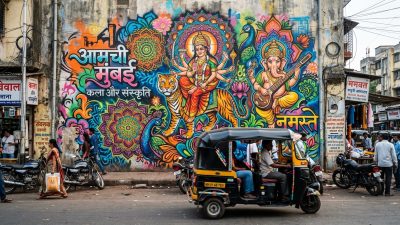
India’s heritage conservation narrative connects to the country’s broader cultural life, including Holi 2026 celebrations across India and spring new year festivals like Ugadi and Gudi Padwa, which demonstrate the living nature of India’s intangible cultural heritage.
Digital Preservation: How Technology Is Transforming Conservation
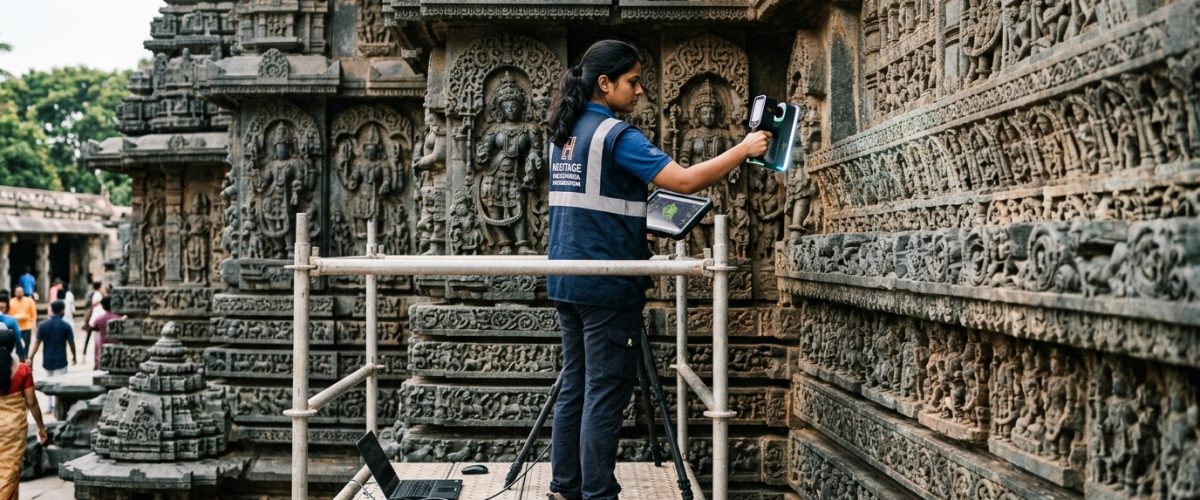
The most revolutionary change in Indian heritage preservation is the adoption of digital technologies that create precise, permanent records of physical structures and artistic works. The ASI, in partnership with IIT Delhi and IIT Bombay, has launched a comprehensive 3D scanning programme that aims to create high-resolution digital twins of India’s 3,693 centrally protected monuments by 2030.
The programme uses a combination of terrestrial laser scanning, drone-based photogrammetry and structured light scanning to capture monuments at millimetre-level accuracy. The digital models serve multiple purposes: they provide baseline documentation against which future deterioration can be measured, they enable virtual restoration studies without physical intervention, and they create immersive digital experiences that make heritage accessible to audiences who cannot visit in person.
The Ajanta Caves in Maharashtra have been one of the programme’s showcase projects. The 2nd-century BCE cave temples, with their fragile paintings that are deteriorating due to humidity, visitor traffic and biological growth, have been scanned at ultra-high resolution. The resulting digital model allows researchers to study individual brush strokes, pigment compositions and structural micro-cracks that are invisible to the naked eye. More importantly, the digital archive ensures that even if the physical paintings continue to degrade, a detailed record of their current state is preserved permanently.
AI-Powered Heritage Management
Artificial intelligence is being deployed to address challenges that human expertise alone cannot manage at scale. The ASI has piloted an AI-based structural health monitoring system at 50 high-priority monuments, using sensors embedded in walls and foundations that continuously measure vibration, moisture levels, temperature fluctuations and structural movement. The AI analyses this data in real time, identifying early warning signs of structural distress that might otherwise go unnoticed until visible damage occurs.
At the National Museum in New Delhi, AI-powered image recognition is being used to catalogue and cross-reference the institution’s collection of over 200,000 artefacts. The system can identify artistic styles, date objects, flag potential forgeries and suggest connections between artefacts across different collections — tasks that would require decades of human curatorial work to accomplish manually.
Machine learning algorithms are also being applied to the decipherment of ancient scripts. Researchers at IIT Kharagpur have developed a system that analyses Indus Valley script symbols using pattern recognition techniques, generating statistical models of symbol relationships that may eventually contribute to understanding this undeciphered writing system. While full decipherment remains elusive, the AI approach has identified previously unrecognised patterns that have refined scholarly debate. The intersection of technology and heritage connects to India’s shifting digital habits, as cultural content increasingly reaches audiences through digital platforms.
Community-Led Conservation: Heritage Beyond Monuments
India’s heritage preservation efforts are expanding beyond the protection of individual monuments to encompass living heritage — the crafts, performing arts, languages and cultural practices that define communities. The Intangible Cultural Heritage programme, administered by the Sangeet Natak Akademi and the Ministry of Culture, has documented over 500 traditional art forms across India, creating audiovisual archives that preserve knowledge held by master practitioners.
Community-led conservation has proven particularly effective for heritage buildings in urban areas. The Indian National Trust for Art and Cultural Heritage (INTACH) has worked with communities in cities including Ahmedabad, Pondicherry and Mysuru to develop heritage management plans that balance preservation with the practical needs of residents and businesses. Ahmedabad’s inscription as a UNESCO World Heritage City in 2017 demonstrated that community engagement and economic incentives — including heritage property tax reductions and restoration grants — can make conservation economically viable.
Challenges: Funding, Encroachment and Climate
Despite progress, India’s heritage preservation faces significant challenges. The ASI’s budget, while increased in recent years, remains inadequate for maintaining 3,693 protected monuments across the country. Many sites receive only minimal maintenance, with restoration work concentrated at high-profile tourist destinations while lesser-known but historically significant monuments deteriorate.
Urban encroachment remains a persistent threat, with illegal construction around protected monuments violating buffer zone regulations. Enforcement is complicated by the intersection of heritage law, property rights and local politics. Climate change presents an additional challenge, with rising temperatures, changing rainfall patterns and increased flooding threatening vulnerable sites including the Sundarbans mangroves, Hampi’s riverside monuments and coastal heritage structures in Goa and Kerala.
India’s Heritage Future: Where Tradition Meets Innovation
India’s UNESCO heritage strategy in 2026 reflects an understanding that preservation requires both traditional expertise and cutting-edge technology. The new nominations demonstrate continued commitment to international recognition, while the digital preservation programme ensures that India’s cultural record survives regardless of physical challenges. The task is enormous — few countries possess heritage as vast, varied and ancient as India’s — but the tools and the commitment to protect it have never been stronger.

- Himalayan Adventure Tourism Booms in Spring 2026 But Overtourism and Climate Risks Sound Alarm - March 27, 2026
- India Adds New UNESCO World Heritage Nominations as Cultural Preservation Gets a Digital Makeover in 2026 - March 27, 2026
- South India Travel 2026: Hampi, Alleppey and Coorg Top Domestic Search Charts This Spring - March 26, 2026