The Handloom Revival: How India’s Sustainable Fashion Movement Is Transforming Textile Communities and Global Markets

India’s handloom and sustainable fashion movement has evolved from a niche concern into a powerful economic and cultural force, reshaping how the world’s second-most-populous nation thinks about clothing, craftsmanship, and the environmental impact of textile production. In 2026, the convergence of consumer consciousness, designer innovation, government support, and global market demand has created conditions that are transforming the livelihoods of millions of artisans while positioning India as a global leader in sustainable fashion.
The Scale of India’s Handloom Heritage
India possesses the world’s largest handloom sector, with an estimated 4.3 million weaver households producing textiles that embody centuries of accumulated knowledge and artistic tradition. From the silk weavers of Varanasi and Kanchipuram to the cotton artisans of Gujarat and the wool craftspeople of Kashmir, India’s handloom traditions represent one of the most diverse and sophisticated textile heritages on earth.
Despite this extraordinary legacy, the handloom sector has faced decades of decline, pressured by industrialised textile production, changing consumer preferences, and inadequate institutional support. Weaver incomes have historically been among the lowest in India’s informal economy, driving younger generations away from hereditary crafts and threatening the continuity of techniques that have been passed down for centuries.
The sustainable fashion movement has the potential to reverse this decline, but realising that potential requires systemic changes in how handloom products are designed, marketed, and valued. The challenges facing India’s artisanal communities mirror broader questions about cultural preservation discussed in IPL 2026 Season Preview: Key Transfers, Injuries, and Franchise Strategies.
Designer-Artisan Collaborations: A New Model
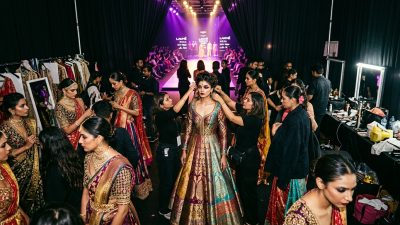
The most promising development in India’s sustainable fashion landscape has been the proliferation of designer-artisan collaborations that bring contemporary design sensibilities to traditional textiles. These partnerships typically involve fashion designers working directly with weaver communities to develop products that honour traditional techniques while meeting the aesthetic preferences and quality expectations of modern consumers.
Several Indian fashion brands have built their entire business models around such collaborations, establishing long-term relationships with artisan clusters and investing in infrastructure, training, and quality control that enable weavers to access premium markets. These brands have demonstrated that handloom-based fashion can be commercially viable at scale, generating revenues in the tens of crores while supporting artisan livelihoods that are meaningfully better than the alternatives available in local markets.
The designer-artisan model has also attracted international attention, with global fashion brands and retailers seeking partnerships with Indian artisan communities to develop sustainable collections. European luxury houses, in particular, have expressed interest in Indian handloom textiles as a means of enhancing their sustainability credentials while accessing unique materials and techniques that are unavailable in industrialised production.
Government Initiatives and Policy Support
Government policy has played a supportive role in the handloom revival, with several initiatives launched or expanded in 2025-2026. The Handloom Mark scheme, which certifies authentic handwoven products, has been strengthened with improved verification mechanisms and consumer awareness campaigns. The government has also increased procurement of handloom products for institutional use, providing a stable demand base for weaver communities.
The integration of handloom promotion with India’s broader textile export strategy has opened international market access for artisan products. Trade delegations featuring handloom producers have been organised at major international textile fairs, and several bilateral trade agreements have included provisions that benefit artisanal textile exports. The One District One Product (ODOP) programme has also spotlighted distinctive handloom traditions in various districts, creating focused development support for specific textile clusters.
At the state level, several state governments have implemented innovative support programmes including weaver cooperatives, design centres, and marketing platforms that connect artisan communities directly with urban consumers. Telangana’s Pochampally ikat cluster and Odisha’s Sambalpuri weaving community have been cited as successful models of state-supported artisan development.
Technology and the Modern Handloom
Technology is playing an increasingly important role in the handloom revival, not by replacing traditional techniques but by enhancing productivity, quality, and market access. Improved loom designs that reduce the physical strain on weavers while maintaining handwoven quality have been adopted by several artisan clusters. Digital design tools enable weavers to visualise patterns before committing to the labour-intensive weaving process, reducing waste and enabling more responsive production.
E-commerce platforms have been transformative for handloom marketing, enabling artisan communities to reach consumers far beyond their traditional market areas. Specialised platforms dedicated to handloom and artisanal products have emerged, offering curated selections that address the discovery challenge that has historically limited handloom sales. Social media marketing, particularly on visually-oriented platforms like Instagram, has also proven effective for handloom brands seeking to build consumer awareness and desire. The role of digital platforms in connecting artisans to markets reflects broader patterns in AI Summit 2026: India Showcases Ambitions but Structural Gaps Exposed.
Consumer Consciousness and Market Growth
The demand side of India’s sustainable fashion equation has been transformed by growing consumer consciousness about the environmental and social impact of clothing choices. Urban Indian consumers, particularly younger demographics, are increasingly willing to pay premium prices for products that are sustainably produced, support artisan livelihoods, and carry authentic cultural narratives.
Market research indicates that India’s sustainable fashion market has grown at approximately 25 percent annually over the past three years, reaching an estimated ₹5,000 crore in 2026. While this remains a small fraction of India’s total fashion market, the growth trajectory suggests that sustainability is transitioning from a marketing differentiator to a baseline expectation among educated urban consumers.
The “slow fashion” movement, which advocates for fewer, higher-quality garments with longer lifespans, has found fertile ground in India, where traditional attitudes towards clothing already emphasised durability and care. The conceptual alignment between slow fashion principles and Indian textile traditions has been a powerful marketing narrative for sustainable fashion brands.
Challenges and Structural Barriers
Despite the positive trends, significant challenges remain. The income gap between handloom weavers and workers in other sectors continues to drive attrition, with younger family members often preferring employment in manufacturing, construction, or services over hereditary weaving. The physical demands of handloom weaving, combined with often inadequate workspace conditions, contribute to health issues that shorten weavers’ productive careers.
Quality consistency remains a challenge for handloom products seeking to compete in premium markets. While the inherent variability of handwoven textiles is part of their appeal, it can also create challenges for brands seeking to maintain consistent product standards across multiple artisan suppliers. Investment in quality control infrastructure and training is essential for enabling handloom products to access the most demanding market segments.
The proliferation of “handloom-look” products produced on power looms has also created consumer confusion and market distortion, undermining genuine handloom producers’ ability to command premium prices. Stricter enforcement of product labelling regulations and consumer education campaigns are needed to protect the integrity of the handloom designation. Those following March 2026 in Bollywood: Anil Kapoor Leads Bold Storytelling will recognise these as manifestations of broader challenges in protecting authentic artisanal production.
A Vision for the Future
India’s handloom and sustainable fashion movement stands at a crossroads of enormous possibility and persistent challenge. The alignment of consumer demand, designer creativity, government support, and global market interest has created an opportunity that, if fully seized, could transform the livelihoods of millions of Indian artisan families while establishing India as the world’s leading source of sustainable luxury textiles. Realising this vision will require sustained investment, systemic support, and a collective commitment to valuing craftsmanship—a commitment that honours not only India’s textile heritage but the human dignity of the men and women whose hands create it.

- South India Travel 2026: Hampi, Alleppey and Coorg Top Domestic Search Charts This Spring - March 26, 2026
- India’s Social Media Habits Are Shifting: Why Short Video and AI Companions Are Replacing Traditional Feeds - March 26, 2026
- Northeast India Emerges as 2026’s Hottest Travel Destination as Jorhat-Majuli Searches Spike - March 25, 2026