Indian Fashion Trends 2026: Pre-Draped Sarees, Indo-Western Fusion and Sustainable Style Dominate the Runway

Indian fashion in 2026 is writing a new chapter — one that honours the country’s extraordinary textile heritage while embracing the contemporary, the sustainable, and the globally connected. As the country’s fashion weeks unfold and designers present their latest collections, a clear set of trends has emerged that defines how India dresses, shops, and thinks about clothing in the current moment. From the reinvention of the saree to the mainstreaming of sustainable fashion, from the continued explosion of Indo-Western fusion to the influence of technology on both design and retail, Indian fashion in 2026 is simultaneously rooted and revolutionary.
The Pre-Draped Saree Revolution
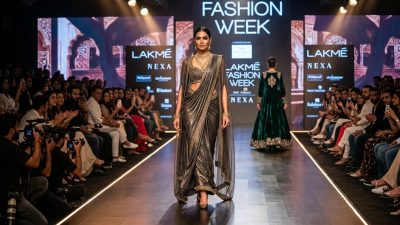
If there is a single garment that symbolises Indian fashion’s ability to innovate within tradition, it is the pre-draped saree. In 2026, this format — which transforms the six-yard garment from a complex draping challenge into an effortlessly wearable outfit — has moved decisively from niche innovation to mainstream staple. Designers across price points, from luxury couture houses to high-street brands, are offering pre-draped variations that retain the elegance and cultural resonance of the traditional saree while eliminating the practical barriers that had pushed younger generations away from the garment.
The pre-draped saree’s success reflects a broader dynamic in Indian fashion: the desire to maintain cultural identity without sacrificing convenience. For working women who admire the saree but lack the time or skill for traditional draping, the pre-draped format offers a practical solution that allows them to incorporate the garment into daily professional and social life. For younger consumers raised in a culture of fast fashion and global brands, the pre-draped saree provides an accessible entry point to traditional Indian dressing that feels contemporary rather than obligatory.
Indo-Western Fusion: Beyond the Obvious
Indo-Western fusion has been a presence in Indian fashion for decades, but 2026 marks a moment where the category has achieved a new level of sophistication. The best fusion designers are no longer simply grafting Indian embroidery onto Western silhouettes or adding Western cuts to Indian fabrics. Instead, they are creating genuinely hybrid garments that integrate construction techniques, design principles, and aesthetic sensibilities from both traditions in ways that feel organic rather than forced.
The fusion trend extends beyond formal wear into everyday dressing. Hybrid garments that combine kurta elements with structured blazers, lehenga-inspired skirts paired with minimal tops, and Western dresses crafted from traditional Indian textiles have become wardrobe staples for a generation of Indian consumers who move fluidly between cultural contexts. This everyday fusion — as opposed to the occasion-specific fusion that dominated earlier decades — represents the most significant evolution in Indian dressing habits since liberalisation.
Sustainability: From Buzzword to Business Model
Sustainable fashion in India has graduated from a niche preoccupation to a significant commercial force in 2026. Consumer awareness of fashion’s environmental impact has grown substantially, driven by media coverage of textile waste, water pollution from dyeing processes, and the carbon footprint of fast fashion supply chains. This awareness is translating into purchasing behaviour, with surveys indicating that over 40 per cent of urban Indian consumers now consider sustainability when making fashion purchases — a figure that has nearly doubled in three years.
Indian designers and brands are responding with innovations that leverage the country’s traditional advantages. India’s handloom and artisanal textile traditions — which are inherently sustainable in their use of natural fibres, low-energy production methods, and local supply chains — are being repositioned as premium sustainable alternatives to industrially produced fast fashion. Brands that build their identity around specific weaving traditions, natural dyeing techniques, or artisan partnerships are finding receptive markets among conscious consumers willing to pay premium prices for products with transparent, ethical supply chains.
Technology Meets Traditional Craft
The intersection of technology and traditional Indian textile craft is producing some of the most innovative work in global fashion. In 2026, Indian designers are using 3D printing to create accessories that reinterpret traditional jewellery forms, digital weaving technology to produce fabrics with complexity that exceeds human capability, and AI-powered design tools that generate pattern variations inspired by historical textile motifs. These technological applications do not replace traditional craft but extend its possibilities, creating products that could not exist through either technology or tradition alone.
The retail dimension of this technology integration is equally significant. Virtual try-on technology, powered by sophisticated AI models as explored in India’s AI Summit 2026 technology discussions, is being adopted by Indian fashion e-commerce platforms, allowing consumers to visualise how garments will look before purchasing. This technology is particularly impactful for Indian fashion, where complex garments like sarees and lehengas are difficult to assess from flat product images alone.
Menswear: The Quiet Revolution
While women’s fashion typically dominates trend coverage, Indian menswear in 2026 deserves attention for its own quiet revolution. The traditional binary between formal Western suiting and ethnic Indian wear — kurta-pyjama, sherwani, bandhgala — is dissolving, replaced by a more fluid approach where elements from both traditions mix freely. Printed kurtas worn with tailored trousers, Nehru collar jackets over Western shirts, and traditional footwear paired with contemporary outfits represent a new vocabulary of Indian male dressing that reflects changing attitudes towards masculinity, formality, and self-expression.
Celebrity influence plays a significant role in driving menswear trends, with actors and cricketers serving as style icons whose fashion choices are dissected and emulated. The convergence of entertainment and fashion — visible in the fashion-forward presentations of Bollywood’s March 2026 film promotions — continues to shape how Indian men think about and engage with clothing.
The Rise of Indian Luxury
India’s luxury fashion segment has experienced remarkable growth in 2025-2026, driven by an expanding base of high-net-worth individuals and a cultural shift towards conspicuous consumption among younger wealthy consumers. Indian luxury designers — particularly those working in bridal and festive wear — are commanding prices that place them alongside international luxury houses, while Indian consumers’ appetite for global luxury brands has made the country one of the fastest-growing markets for houses like Louis Vuitton, Gucci, and Dior.
The growth of Indian luxury is distinctive in its cultural specificity. Unlike luxury markets in other emerging economies, where consumption often defaults to established Western brands, Indian luxury buyers demonstrate a strong preference for indigenous luxury — handcrafted Indian garments, traditional jewellery, and artisanal textiles that carry cultural meaning alongside material value. This preference has created space for Indian luxury brands to compete with international names on their home turf, a dynamic that strengthens the domestic fashion ecosystem.
Inclusivity and the Expanding Definition of Indian Fashion
Indian fashion in 2026 is grappling with questions of inclusivity that reflect broader social conversations. Size inclusivity, while still lagging behind Western markets, has made notable progress, with several mainstream Indian brands expanding their size ranges and featuring diverse body types in their marketing. Gender-fluid fashion — clothing designed to transcend traditional gender categories — has emerged as a small but growing segment, reflecting changing attitudes towards gender expression among younger Indian consumers.
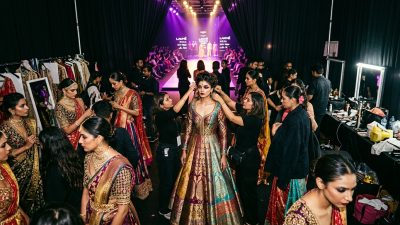
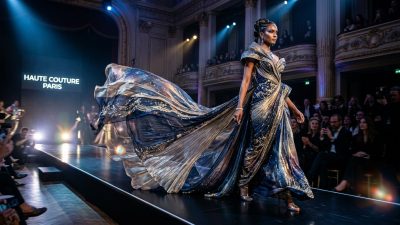
Representation on the runway has also evolved. Indian fashion weeks in 2026 feature more diverse casting — in terms of age, body type, skin tone, and regional representation — than at any previous point. While progress remains uneven and much work remains, the direction of travel is unmistakable: Indian fashion is moving, slowly but perceptibly, towards a more inclusive vision of beauty and style.
As India’s cultural and entertainment sectors continue their dynamic evolution across fields from cricket’s high-profile IPL season to cinema’s box office battles, fashion stands as both a mirror reflecting and a force shaping how a nation of 1.4 billion people presents itself to the world and to its own extraordinary diversity.

- Northeast India Emerges as 2026’s Hottest Travel Destination as Jorhat-Majuli Searches Spike - March 25, 2026
- Mamaearth, boAt, and Noise: How India’s D2C Champions Are Chasing Profitability in 2026 - March 24, 2026
- India’s D2C Brands Bet Big on Offline Expansion as Quick Commerce Reshapes the Playbook - March 24, 2026