India’s Viral Nation: How Social Media Is Reshaping Culture, Politics, and Daily Life in 2026

India in 2026 is the world’s most consequential social media nation. With over 700 million active social media users—more than the combined populations of the United States and Western Europe—the country’s digital public sphere has become the arena in which cultural trends are born, political battles are fought, and commercial fortunes are made.
The Platform Landscape: Where India Scrolls
Instagram leads with an estimated 350 million Indian users for visual culture, lifestyle content, and brand marketing. YouTube has over 500 million users as the default entertainment and education platform. WhatsApp functions as India’s de facto communication infrastructure. X retains outsized influence for political discourse and breaking news. Indian-origin apps focusing on regional-language short-form video have built substantial user bases.
Viral Culture: What Trends and Why
Short-form video has become dominant, with the average user spending over 45 minutes daily consuming Reels and Shorts. Regional-language content is the fastest-growing segment. Meme culture has become a sophisticated form of social commentary, serving as a real-time mirror of public sentiment. These creative developments parallel shifts noted in IPL 2026 Season Preview: Key Transfers, Injuries, and Franchise Strategies.
The Creator Economy: India’s New Middle Class
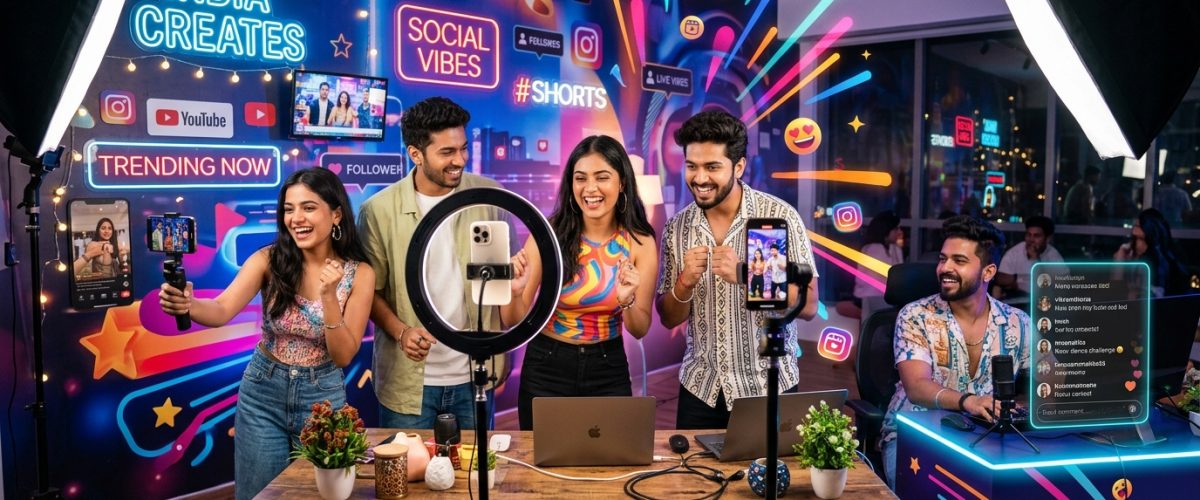
India has an estimated 80 million content creators across platforms. Monetisation models have diversified beyond advertising to brand partnerships, merchandise, subscription content, and live events. Several creators have built personal brands valued at tens of crores. Talent management agencies have professionalised creator-brand relationships, with dynamics connecting to trends in AI Summit 2026: India Showcases Ambitions but Structural Gaps Exposed.
Social Media and Political Discourse
Political parties across the spectrum have invested heavily in social media operations. Concerns about misinformation, coordinated inauthentic behaviour, and communal polarisation have prompted calls for platform accountability. Fact-checking organisations including AltNews and BoomLive play an important but overwhelmed role in countering viral misinformation.
Mental Health and Digital Well-being
Research has documented correlations between heavy social media use and increased anxiety, depression, body image dissatisfaction, and sleep disturbance among young Indians. Proposals for age verification, usage limits, and algorithmic restrictions for minors are under discussion. Platforms have introduced well-being features, though critics argue these remain insufficient.
E-Commerce and Social Commerce
Social commerce revenues in India are estimated to reach ₹70,000 crore in 2026. Live-stream selling has gained significant traction, particularly for fashion, beauty, and electronics. The format combines entertainment, product demonstration, and real-time purchasing in uniquely engaging shopping experiences.
Regulation and the Road Ahead
India’s regulatory approach balances addressing concerns about misinformation and privacy with preserving digital economy dynamism. Social media has become the defining medium through which India’s culture, commerce, and civic life are shaped. Related developments in March 2026 in Bollywood: Anil Kapoor Leads Bold Storytelling illuminate the transformative potential of India’s digital revolution.

- Mamaearth, boAt, and Noise: How India’s D2C Champions Are Chasing Profitability in 2026 - March 24, 2026
- India’s D2C Brands Bet Big on Offline Expansion as Quick Commerce Reshapes the Playbook - March 24, 2026
- Himalayan Trekking in 2026: Top Routes and New Trails for Adventure Seekers in India - March 24, 2026