Ayurvedic Diet Trends 2026: Why Ancient Indian Nutrition Wisdom Is Conquering Modern Wellness

In the global wellness industry’s relentless search for the next transformative dietary framework, an ancient one is quietly asserting its relevance. Ayurvedic nutrition — the 5,000-year-old Indian system of dietary wisdom rooted in the balancing of bodily constitutions, seasonal eating, and the therapeutic properties of food — is experiencing a remarkable resurgence in 2026. From the wellness retreats of Kerala to the superfood shelves of Manhattan health stores, Ayurvedic dietary principles are being embraced by a new generation of health-conscious consumers who are discovering that India’s oldest medical system may hold some of the most sophisticated answers to modern nutritional questions.
The Dosha Framework: Personalised Nutrition Before It Was Trendy
At the heart of Ayurvedic nutrition is the concept of doshas — the three fundamental bio-energies (Vata, Pitta, and Kapha) that, according to Ayurvedic theory, govern physiological and psychological functions in every individual. Each person has a unique doshic constitution (Prakriti), and Ayurvedic dietary recommendations are tailored to balance that constitution. Vata-dominant individuals, for instance, are advised to favour warm, grounding, nourishing foods; Pitta types benefit from cooling, mildly spiced preparations; and Kapha constitutions thrive on light, stimulating, and pungent foods.
This personalised approach — dietary advice customised to an individual’s constitution, season, and current state of health — predates by millennia the modern concept of personalised nutrition that Western science is only now exploring through genetic testing and microbiome analysis. In 2026, as consumers grow sceptical of one-size-fits-all diets, Ayurveda’s inherently personalised framework has found a receptive global audience.
Sattvic Eating: The Ayurvedic Clean Diet
The Ayurvedic classification of foods into three gunas — Sattva (purity), Rajas (activity), and Tamas (inertia) — provides a sophisticated framework for dietary decision-making that extends beyond mere nutritional content. Sattvic foods — including fresh fruits, vegetables, whole grains, legumes, nuts, seeds, milk, ghee, and honey — are considered to promote clarity, calmness, and spiritual wellbeing. Rajasic foods — overly spicy, salty, or stimulating preparations — are associated with restlessness and agitation, while Tamasic foods — processed, stale, or excessively heavy items — are linked to lethargy and dullness.
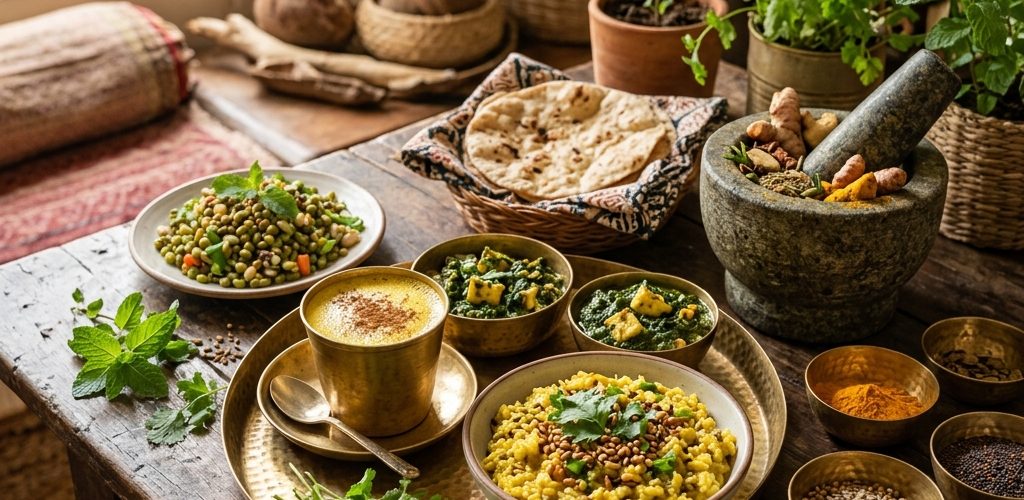
The Sattvic diet, in particular, has gained significant traction in 2026 among wellness-oriented Indians and international health communities. Its emphasis on fresh, minimally processed, whole foods prepared with care and consumed mindfully aligns closely with contemporary nutritional science’s recommendations for plant-forward, whole-food diets. The Sattvic diet’s inclusion of ghee — which modern research has rehabilitated as a source of beneficial fatty acids and fat-soluble vitamins — and its emphasis on digestive spices such as turmeric, cumin, fennel, and ginger resonates with the global functional food movement.
Turmeric, Ashwagandha, and the Global Ayurvedic Superfood Boom
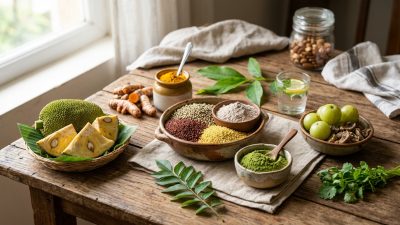
Several Ayurvedic ingredients have achieved global superfood status in 2026. Turmeric — and specifically its active compound curcumin — is now the world’s most researched natural anti-inflammatory agent, with over 15,000 published studies examining its effects on conditions ranging from arthritis and cardiovascular disease to depression and Alzheimer’s. The global turmeric supplement market exceeded USD 1.5 billion in 2025, with India as the primary source and beneficiary.
Ashwagandha (Withania somnifera), classified in Ayurveda as a Rasayana (rejuvenation) herb, has similarly achieved mainstream global acceptance as an adaptogen — a substance that helps the body resist physical and mental stress. Clinical trials published in the Journal of the American Nutraceutical Association in 2025 confirmed ashwagandha’s efficacy in reducing cortisol levels, improving sleep quality, and enhancing athletic performance, validating centuries of Ayurvedic clinical observation.
Triphala (a combination of three fruits: amla, bibhitaki, and haritaki), moringa, brahmi, and shatavari are other Ayurvedic ingredients that have crossed over into global wellness markets, available in supplement form at health stores from London to Los Angeles. This globalisation of Indian wellness wisdom echoes the international interest in Indian knowledge systems being discussed at major forums examining India’s contributions to global innovation.
Ritucharya: The Ayurvedic Case for Seasonal Eating
One of Ayurveda’s most ecologically resonant principles is Ritucharya — the science of seasonal regimens that prescribes dietary adjustments aligned with the six Indian seasons. In summer (Grishma), Ayurveda recommends cooling foods such as buttermilk, cucumber, coconut water, and rice; in winter (Shishira), warming preparations including sesame, ghee, root vegetables, and spiced milk are favoured. The monsoon season (Varsha) calls for easily digestible foods prepared with digestive spices to counteract the dampness that, according to Ayurvedic theory, weakens digestive fire (Agni).
This seasonal approach resonates with the contemporary farm-to-table and locavore movements, which advocate eating foods at their seasonal peak for maximum freshness, flavour, and nutritional density. It also aligns with emerging ecological nutrition science, which recognises that seasonal eating reduces the environmental footprint of food production by minimising transportation, cold storage, and out-of-season cultivation. In 2026, several Indian wellness platforms have launched Ritucharya meal planning apps that provide seasonally appropriate recipes based on the user’s doshic profile and geographic location.
Kerala’s Wellness Tourism: The Ayurvedic Diet in Practice
The most immersive way to experience Ayurvedic nutrition is through Kerala’s world-renowned wellness tourism industry. The state’s Ayurvedic resorts and treatment centres — including Kottakkal Arya Vaidya Sala, Somatheeram, and CGH Earth’s Kalari Kovilakom — offer residential programmes ranging from one week to one month, during which guests receive personalised dietary plans designed by Ayurvedic physicians based on pulse diagnosis and constitutional assessment.
Meals at these centres are prepared in dedicated Ayurvedic kitchens using organic ingredients, traditional cooking methods, and recipes derived from classical Ayurvedic texts such as the Charaka Samhita and Ashtanga Hridaya. The experience is transformative for many visitors, who report improvements in digestion, energy levels, skin quality, and mental clarity within the first week of following an Ayurvedic dietary regimen. Kerala’s combination of Ayurvedic cuisine with its broader sustainable tourism offerings makes it an ideal destination for holistic wellness seekers.
Modern Science Meets Ancient Wisdom
The 2026 Ayurvedic diet trend is supported by a growing body of scientific research that validates many traditional practices. Studies from AIIMS, NIMHANS, and international institutions have confirmed the anti-inflammatory properties of traditional Ayurvedic spice combinations, the prebiotic benefits of Ayurvedic fermented preparations, and the blood sugar-regulating effects of Ayurvedic dietary patterns in diabetic populations. The Indian government’s AYUSH ministry has funded a national research programme examining the clinical efficacy of Ayurvedic dietary interventions for lifestyle diseases, with early results expected in late 2026.
However, experts caution against uncritical acceptance of all Ayurvedic dietary claims. The tradition’s reliance on individual constitutional assessment means that recommendations vary significantly between practitioners, and the absence of standardised dosing protocols for Ayurvedic herbs and supplements creates quality control challenges. The integration of Ayurvedic wisdom with evidence-based nutritional science — rather than the wholesale substitution of one for the other — is the most productive path forward. For those exploring the intersection of Indian food traditions and modern health science, the rising popularity of fermented foods provides another compelling example of ancient practices validated by contemporary research.
The Kitchen as Pharmacy, the Meal as Medicine
Ayurveda’s core insight — that food is the primary medicine, and that a well-composed diet is the foundation of health — has never been more relevant than in 2026. As chronic lifestyle diseases reach epidemic proportions globally, and as the limitations of pharmaceutical-centric healthcare become increasingly apparent, the Ayurvedic dietary framework offers a holistic, preventive, and profoundly sensible alternative. It does not promise miracle cures or dramatic transformations; it promises something more modest and more valuable — a way of eating that is personalised, seasonal, mindful, and deeply attuned to the body’s needs. In a world overwhelmed by dietary confusion and nutritional noise, Ayurveda’s quiet, ancient voice is cutting through with a message that resonates: eat well, eat wisely, and let your food heal you.

- India’s Millet Recipe Revolution Reaches Peak as Government Push Meets Social Media Creativity in 2026 - March 28, 2026
- Regional Indian Cuisine Goes Mainstream: How Forgotten Flavours Are Conquering Urban Menus in 2026 - March 27, 2026
- Street Food Revolution: How India’s Chaat and Momos Vendors Are Going Digital in 2026 - March 26, 2026