Gudi Padwa and Ugadi 2026: Eight Traditional Recipes to Celebrate the Hindu New Year at Home

As India celebrates Gudi Padwa and Ugadi—the traditional Hindu New Year festivals observed in Maharashtra, Karnataka, Andhra Pradesh, and Telangana—kitchens across the country come alive with the aromas of time-honoured recipes passed down through generations. Falling on March 30 in 2026, these festivals mark the beginning of the Hindu lunisolar calendar and are celebrated with a distinctive blend of flavours that symbolise the full spectrum of life’s experiences: sweetness, sourness, bitterness, and spice. Here are eight quintessential recipes that capture the essence of the season and bring the festive spirit into your home.
1. Puran Poli (Maharashtrian Sweet Flatbread)
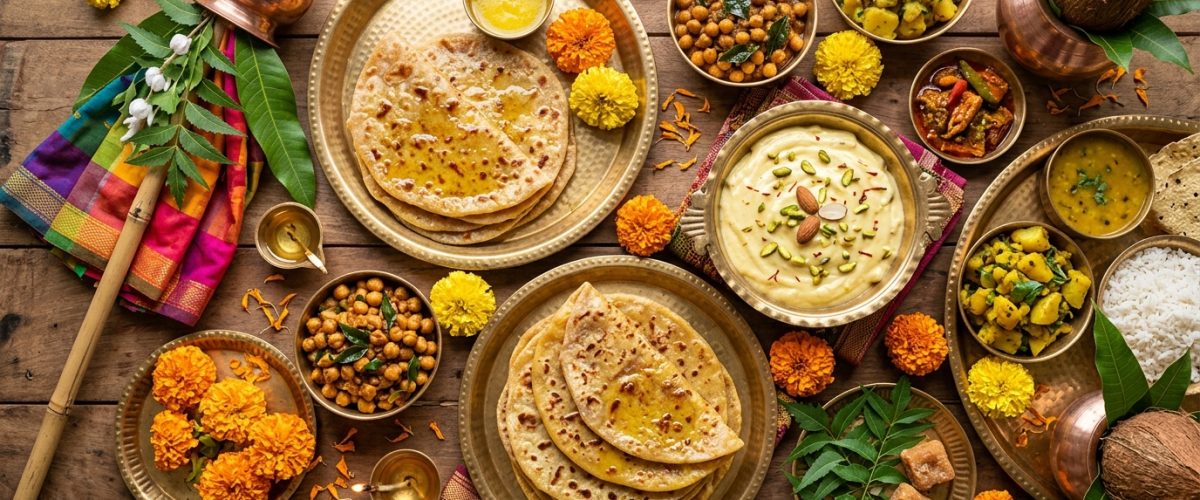
No Gudi Padwa celebration in Maharashtra is complete without Puran Poli, the golden, ghee-soaked flatbread stuffed with a sweet chana dal and jaggery filling. The preparation begins with cooking chana dal until soft, then mashing it with grated jaggery, cardamom powder, and a pinch of nutmeg. The filling (puran) is encased in a soft wheat flour dough, rolled thin, and cooked on a tawa with generous amounts of ghee until golden brown on both sides.
The key to an exceptional Puran Poli lies in the consistency of the filling—it should be smooth and not too wet—and in the rolling technique, which must be gentle enough to keep the dough thin without tearing. Served warm with a dollop of ghee and a side of aamti (a spiced dal), Puran Poli is comfort food at its most celebratory.
Also read: IPL 2026 Season Preview: Key Transfers, Injuries, and Franchise Strategies
Also read: AI Summit 2026: India Showcases Ambitions but Structural Gaps Exposed
2. Holige/Obbattu (Karnataka’s Festival Sweetbread)
The Karnataka counterpart to Puran Poli, Holige or Obbattu is made with a slightly different technique and filling. While the Maharashtrian version typically uses chana dal, Karnataka’s Holige commonly features a coconut and jaggery filling (known as Kayi Holige) alongside the dal version. The dough is made with maida (refined flour) mixed with a touch of turmeric for colour, and the filled flatbreads are cooked on a flat griddle until they develop characteristic brown spots.
In many Karnataka households, the preparation of Holige is a communal activity, with family members gathering to fill, roll, and cook the flatbreads in an assembly-line fashion. The festival quantity typically runs into the dozens, with extras distributed to neighbours and relatives—a practice that reinforces community bonds during the New Year celebrations.
3. Ugadi Pachadi (Andhra New Year Chutney)
Ugadi Pachadi is the most symbolically rich dish of the festival. This unique chutney combines six distinct tastes representing the full range of human emotions and life experiences: raw mango (sourness, representing surprise), neem flowers (bitterness, for sadness), jaggery (sweetness, for happiness), green chilli (spice, for anger), salt (fear), and tamarind (tanginess, for disgust). The combination is prepared fresh on Ugadi morning and consumed before any other food.
Beyond its philosophical significance, Ugadi Pachadi is a lesson in balanced cooking. The art lies in achieving a harmony where no single flavour dominates, mirroring the festival’s message that life’s experiences should be accepted with equanimity. Each household has its own proportions, and the annual preparation of Pachadi is often guided by grandmothers who adjust the ratios by instinct rather than measurement.
4. Shrikhand (Maharashtrian Yogurt Dessert)
Shrikhand, the creamy, saffron-scented yogurt dessert, is a Gudi Padwa staple that showcases the Maharashtra’s mastery of dairy-based sweets. Fresh yogurt is hung overnight in a muslin cloth to drain the whey, producing thick, creamy chakka (strained yogurt). This is then mixed with powdered sugar, saffron strands steeped in warm milk, cardamom powder, and chopped pistachios and almonds.
The result is a dessert of extraordinary richness and elegance. The quality of the yogurt is paramount—homemade yogurt set from full-fat milk produces a vastly superior Shrikhand compared to store-bought variants. Served chilled alongside hot Puran Poli, the combination of warm bread and cold, fragrant yogurt is one of Maharashtrian cuisine’s most beloved pairings.
5. Bobbatlu (Telangana’s Festival Bread)
Telangana’s version of the stuffed sweet flatbread, Bobbatlu, has its own distinct character. The filling is typically made from chana dal cooked with jaggery and flavoured with cardamom and a hint of saffron. What distinguishes Bobbatlu is the dough preparation—maida is combined with turmeric and a little oil to create a pliable, easy-to-roll dough that produces a thinner, crispier result compared to its Maharashtra counterpart.
6. Kosambari (Karnataka’s Festive Lentil Salad)
Kosambari is a refreshing lentil salad that provides a lighter counterpoint to the rich sweets of the festival table. Soaked moong dal or chana dal is combined with finely chopped cucumber, fresh coconut, green chillies, and coriander, dressed with lemon juice and tempered with mustard seeds and curry leaves. The dish is served cold and offers a crunchy, tangy contrast to the sweetness of Holige and Payasam.
7. Sabudana Khichdi (Maharashtra’s Tapioca Pearl Dish)
While traditionally associated with fasting days, Sabudana Khichdi is also prepared during Gudi Padwa in many Maharashtrian households. Soaked sabudana (tapioca pearls) is cooked with roasted peanuts, cumin seeds, green chillies, and boiled potatoes, finished with a squeeze of lemon and fresh coriander. The texture should be light and non-sticky—achieved by soaking the sabudana just right and cooking over medium heat with minimal stirring.
8. Obbattu Saaru (Holige Curry)
Perhaps the most ingenious recipe in the festival repertoire, Obbattu Saaru is a curry made from leftover Holige dough and filling. The trimmings are simmered with tamarind, jaggery, and a spice paste of coconut, cumin, and dried red chillies to create a sweet-tangy curry that is served over rice. It exemplifies the zero-waste philosophy embedded in traditional Indian cooking and offers a savoury-sweet dish that is utterly unique to festival season in Karnataka.
These eight recipes represent more than culinary tradition—they embody the cultural philosophy that the New Year, like the Pachadi, contains all of life’s flavours. Whether you are a seasoned cook recreating your grandmother’s Puran Poli or a first-time celebrant exploring Ugadi Pachadi, these dishes connect you to a living culinary heritage that is as vibrant in 2026 as it has been for centuries.

- Plant-Based Diets Gain Momentum in India as Gen Z Drives the Shift Toward Sustainable Eating - March 24, 2026
- Millets, Moringa, and Jackfruit: Why Desi Superfoods Are Beating Exotic Imports in India’s Wellness Market - March 24, 2026
- The Northeast India Food Renaissance: How Naga, Mizo, and Assamese Cuisines Are Captivating Urban India - March 24, 2026