The Northeast India Food Renaissance: How Naga, Mizo, and Assamese Cuisines Are Captivating Urban India

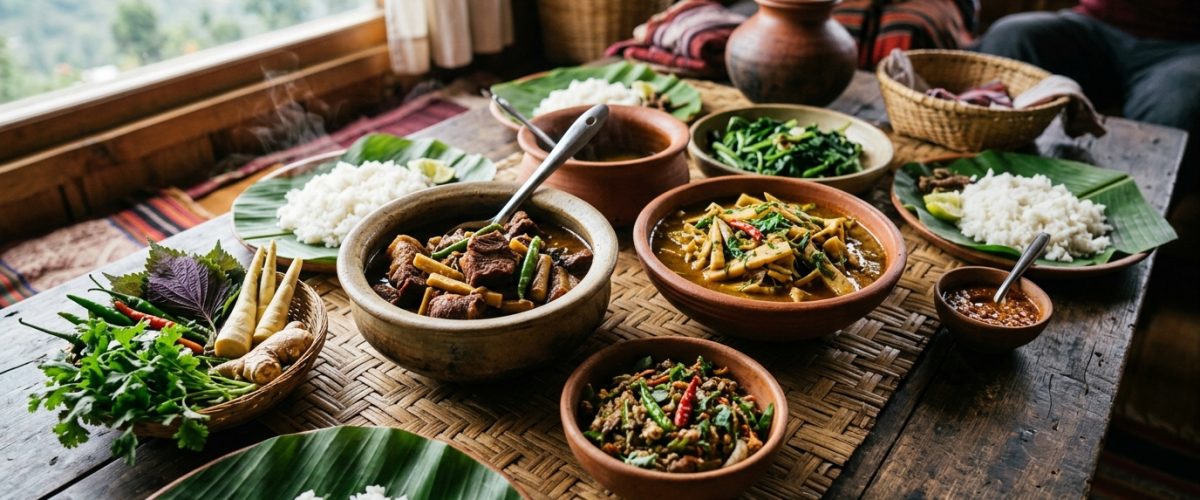
India’s culinary conversation in 2026 is witnessing one of its most significant expansions: the emergence of Northeast Indian cuisines—particularly Naga, Mizo, and Assamese food traditions—from regional obscurity into the urban Indian mainstream. For decades, the food of India’s eight northeastern states was virtually invisible on restaurant menus and in food media outside the region, dismissed as “tribal food” or overshadowed by the dominant North Indian and South Indian culinary narratives. That is changing rapidly, driven by a new generation of Northeast Indian chefs, restaurateurs, and food entrepreneurs who are bringing their culinary heritage to India’s biggest cities with confidence, creativity, and commercial success.
The Northeast Food Movement
The roots of the movement trace back to the early 2020s, when a handful of Northeast Indian restaurants began opening in Delhi’s Hauz Khas and Majnu Ka Tila neighbourhoods, initially serving the capital’s significant Northeast Indian student and working population. These restaurants—small, informal, often family-run—offered dishes that were radically different from anything else available in Delhi: smoked pork with bamboo shoot (a Naga staple), fermented fish chutney (axone), rice beer, and the intensely flavoured chillies that define Northeast cooking.
What began as diaspora comfort food has evolved into a broader cultural moment. By 2026, Northeast Indian restaurants have expanded beyond niche neighbourhoods into mainstream dining areas. Dzükou (named after the famous Nagaland valley), a modern Naga restaurant in Delhi’s Khan Market, was named one of India’s best new restaurants by Condé Nast Traveller India in 2025. In Mumbai, Naga Kitchen in Bandra has a three-week waitlist. And in Bangalore, a city with a large Northeast Indian population, restaurants like Rosang and The Naga Cafe have become established dining destinations.
Also read: IPL 2026 Season Preview: Key Transfers, Injuries, and Franchise Strategies
Also read: AI Summit 2026: India Showcases Ambitions but Structural Gaps Exposed
Naga Cuisine: The Smoky, Fermented Frontier
Among the northeastern cuisines, Naga food has attracted the most attention and curiosity from mainstream Indian diners. The cuisine is built on techniques and flavours that are genuinely alien to most Indian palates: extensive use of fermentation (fish, soybeans, bamboo shoots), smoking (meats are smoked over wood fires for preservation and flavour), and an almost total absence of oil in cooking (many dishes are boiled, steamed, or slow-cooked in bamboo tubes).
The Naga chilli, also known as Bhut Jolokia or Raja Mircha, deserves special mention. One of the hottest chillies in the world, with a Scoville rating exceeding one million, it is used with surprising subtlety in Naga cooking—not to create overwhelming heat but to add depth and complexity to dishes. A well-made Naga pork curry uses the chilli as an aromatic agent, allowing its fruity, smoky character to permeate the dish without rendering it inedible to the uninitiated.
Mizo Food: Simplicity as Philosophy
Mizo cuisine, from the state of Mizoram, is characterised by a minimalist approach that prioritises the natural flavours of ingredients over complex spice blends. The Mizo kitchen relies heavily on steaming, boiling, and the use of local herbs like Mizo sawthing (a fragrant leaf used to wrap rice) and chingal (a root vegetable with a distinctive earthy sweetness). Protein sources are diverse—pork, chicken, freshwater fish, and foraged ingredients like snails and insects—and are prepared with a simplicity that allows the quality of the raw material to shine.
Bai, a mixed vegetable stew cooked with pork or chicken, is perhaps Mizo cuisine’s most representative dish. It is prepared without oil, using only water, salt, and vegetables (mustard greens, pumpkin, beans), and develops a rich, umami-laden broth through slow cooking. For Indian diners accustomed to heavily spiced dishes, Bai’s clean flavours are a revelation—a reminder that Indian cooking encompasses an enormous range of culinary philosophies, not all of which involve turmeric and cumin.
Assamese Cuisine: The Gateway to the Northeast
Assamese food, being the most widely known of the northeastern cuisines, has served as a gateway for many urban Indians exploring the region’s food. The cuisine’s highlights—masor tenga (sour fish curry), khar (an alkaline dish made with raw papaya and banana peel ash), pitha (rice cakes), and duck preparations—are becoming increasingly familiar on Indian restaurant menus.
In 2026, Assamese food has moved beyond restaurants into retail. Brands like Zubaan (which sells packaged Assamese chutneys and spice mixes) and Nagaon Foods (which offers ready-to-cook bamboo shoot and khar preparations) are making Assamese ingredients accessible to home cooks across India. These products are finding shelf space in gourmet stores and quick commerce platforms, introducing Assamese flavours to consumers who might never visit a northeastern restaurant.
Cultural Significance and Identity
The Northeast food movement carries significance that extends beyond the culinary. For decades, Northeast Indians living in mainland India have faced discrimination, stereotyping, and cultural erasure. Food has become a powerful medium for asserting cultural identity and demanding recognition. When a Naga chef opens a restaurant in Khan Market and it becomes one of Delhi’s most celebrated dining destinations, it is not just a business success—it is a statement about the richness and value of a culture that has long been marginalised.
Food writer and Northeast India advocate Hoihnu Hauzel, whose cookbook “The Northeast Table” won the Gourmand World Cookbook Award in 2025, has been an eloquent voice for this perspective: “When you eat Naga smoked pork or Mizo bai, you are not just tasting food—you are encountering a worldview. A relationship with nature, with fermentation, with communal eating that is distinct from any other Indian tradition. Recognising these cuisines is recognising that India’s culinary heritage is much larger than we’ve been taught.”
In 2026, India’s food culture is finally making space for the Northeast on its own terms—not as a curiosity but as a valued and essential chapter of the country’s incomparably diverse culinary story.

- Plant-Based Diets Gain Momentum in India as Gen Z Drives the Shift Toward Sustainable Eating - March 24, 2026
- Millets, Moringa, and Jackfruit: Why Desi Superfoods Are Beating Exotic Imports in India’s Wellness Market - March 24, 2026
- The Northeast India Food Renaissance: How Naga, Mizo, and Assamese Cuisines Are Captivating Urban India - March 24, 2026