Cloud Kitchens Dominate India’s Restaurant Scene: How Virtual-Only Brands Are Reshaping 2026 Food Delivery

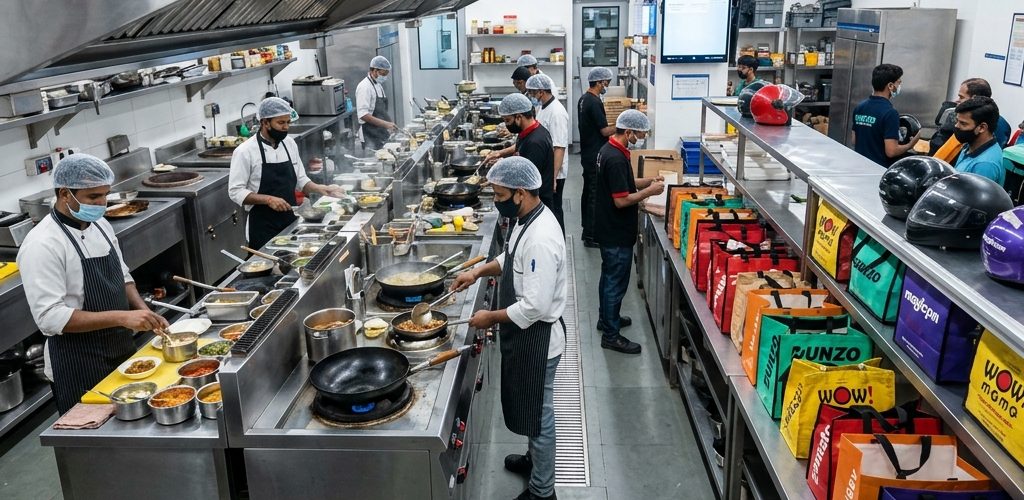
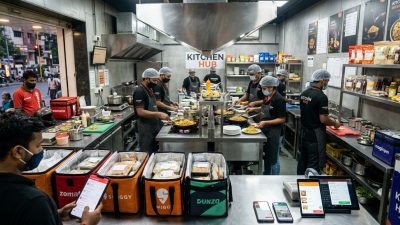
The way India orders, prepares, and consumes restaurant food is being fundamentally reimagined. In 2026, cloud kitchens — commercial cooking facilities that operate exclusively for delivery, with no dine-in component — have emerged as the dominant growth engine of India’s Rs 6 lakh crore food services industry. Virtual-only restaurant brands, born on Zomato and Swiggy and operating from nondescript kitchen spaces in commercial and residential neighbourhoods, are challenging decades-old assumptions about what a restaurant is, how food businesses scale, and what Indian consumers want from their dining experiences.
The Numbers: A Sector That Has Exploded
Industry estimates suggest that India is now home to approximately 75,000 cloud kitchen outlets — a four-fold increase from 2022 — making it the second-largest cloud kitchen market in the world after the United States. The sector is projected to generate revenues exceeding Rs 50,000 crore in 2026, accounting for approximately 35 per cent of all organised food delivery transactions in the country. Bengaluru, Mumbai, Delhi-NCR, Hyderabad, and Pune are the top five markets, though rapid expansion is underway in tier-2 cities including Jaipur, Lucknow, Chandigarh, Kochi, and Indore.
The growth has been propelled by three converging forces: the insatiable appetite of Indian consumers for food delivery convenience, the economics of cloud kitchens that dramatically reduce the capital and operating costs compared to traditional restaurants, and the sophisticated technology platforms of Zomato and Swiggy that provide cloud kitchen operators with real-time demand data, logistics management, and customer acquisition at scale.
Rebel Foods: The Unicorn That Redefined the Model
No discussion of India’s cloud kitchen ecosystem is complete without Rebel Foods, the Mumbai-based company that operates over 450 cloud kitchens across India and is widely regarded as the world’s largest internet restaurant company. Rebel’s portfolio of virtual brands — Faasos (wraps and rolls), Behrouz Biryani (premium biryanis), Oven Story (pizzas), Mandarin Oak (Chinese), The Good Bowl (rice bowls), and Sweet Truth (desserts) — collectively process over one million orders per week, a volume that would be unthinkable for a conventional restaurant chain.
The genius of Rebel’s model lies in its multi-brand kitchen architecture. A single Rebel cloud kitchen, occupying perhaps 500-800 square feet, simultaneously operates four to six virtual brands from a shared cooking line, switching between cuisine types based on demand patterns — heavy on biryani during lunch, pivoting to pizzas and wraps for dinner, and ramping up desserts for late-night orders. This flexibility allows individual kitchens to achieve utilisation rates of 85-90 per cent, compared to the 30-40 per cent typical of conventional restaurants.
The Technology Stack: Data-Driven Cooking
Cloud kitchens in 2026 operate on a technology stack that would be unrecognisable to traditional restaurateurs. Advanced demand forecasting algorithms, powered by machine learning models trained on historical order data, weather patterns, local events, and even social media sentiment, predict order volumes by cuisine type, price point, and delivery zone up to 48 hours in advance. This allows kitchen operators to pre-prepare ingredients, optimise staffing, and reduce food waste with a precision that manual restaurant management cannot match.
Kitchen management systems track every aspect of the cooking process — from ingredient freshness and preparation time to packaging quality and dispatch accuracy — generating real-time dashboards that enable operators to identify and resolve bottlenecks within minutes. Customer feedback loops, aggregated from platform ratings and reviews, inform continuous menu adjustments: underperforming dishes are modified or retired, trending flavour combinations are introduced as limited-time offers, and pricing is dynamically adjusted based on demand elasticity. This data-intensive approach to food reflects the same spirit of technology-driven innovation that is reshaping multiple Indian industries.
Impact on Traditional Restaurants
The cloud kitchen boom has created existential anxiety in segments of the traditional restaurant industry. Standalone eateries and small restaurant chains — particularly those in the mid-market segment that compete directly with cloud kitchen brands on price and convenience — have seen delivery order volumes decline as consumers shift to the wider variety, faster delivery, and aggressive discounting offered by virtual brands. Industry surveys suggest that approximately 15-20 per cent of delivery-dependent small restaurants in major cities have closed or pivoted to cloud kitchen models since 2024.
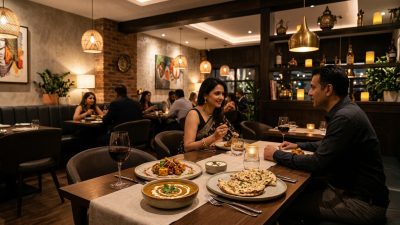
However, the disruption is not uniformly negative. Many established restaurants have adopted hybrid models, operating their dine-in spaces alongside dedicated delivery kitchens that serve an expanded delivery menu under both the parent brand and new virtual brand identities. Others have differentiated by emphasising the experiential elements that cloud kitchens cannot replicate — ambience, service, community, and the theatre of open kitchens — doubling down on the dine-in experience as their competitive moat.
Quality Concerns and the Regulation Debate
The rapid proliferation of cloud kitchens has raised legitimate concerns about food quality and safety. Unlike traditional restaurants, which are subject to regular inspections by municipal health authorities, many cloud kitchens operate from residential or semi-commercial premises that may not meet the hygiene and fire safety standards applicable to licensed food establishments. Consumer complaints about inconsistent food quality, inadequate allergen information, and opaque kitchen conditions have prompted calls for a dedicated regulatory framework.
The Food Safety and Standards Authority of India has responded with a proposal for a Cloud Kitchen Licensing and Compliance Framework, expected to be finalised by mid-2026. Key provisions include mandatory FSSAI registration for all cloud kitchen outlets, standardised hygiene protocols with annual inspection requirements, clear labelling of allergens and nutritional information on all delivery platforms, and a consumer right-to-information clause allowing customers to view kitchen hygiene ratings before ordering. The framework parallels FSSAI’s successful Clean Street Food Hub initiative that is elevating standards across India’s informal food sector.
The Employment Dimension
Cloud kitchens have become significant employers in urban India. The sector directly employs an estimated 300,000 kitchen staff, operations managers, and quality controllers, with an additional 500,000 delivery riders dependent on cloud kitchen order volumes for their livelihoods. The employment profile differs from traditional restaurants: cloud kitchen roles are more standardised, often involve shift-based scheduling, and typically require familiarity with kitchen management technology — creating a workforce that blends culinary skills with digital literacy.
Wages in the cloud kitchen sector are competitive with traditional restaurant employment, though concerns have been raised about working conditions in kitchens that prioritise speed and volume over worker comfort. Labour advocacy groups have called for mandatory rest breaks, temperature regulation in kitchen spaces, and health insurance provisions for cloud kitchen workers — demands that the proposed regulatory framework partially addresses.
The Future: Where Cloud Kitchens Are Headed
Looking ahead, industry analysts identify several trends that will shape India’s cloud kitchen landscape. The expansion into tier-2 and tier-3 cities represents the largest growth opportunity, as food delivery penetration in smaller cities remains significantly below metropolitan levels. Health-focused and premium virtual brands — offering organic, calorie-counted, and dietary-restriction-specific menus — are growing faster than mainstream brands, reflecting evolving consumer preferences. And the integration of AI in menu development, with algorithms generating recipe suggestions based on ingredient availability, local taste preferences, and nutritional targets, is moving from experiment to standard practice.
For consumers, the cloud kitchen revolution means more choice, greater convenience, and increasingly personalised food experiences delivered to their doorsteps. For India’s food industry, it represents a structural transformation as profound as any in its history — one that is rewriting the rules of how a nation of 1.4 billion people eats. Those who appreciate both innovation and tradition in their food journey will find that India’s royal culinary traditions like the Kashmiri Wazwan offer a compelling counterpoint to the speed and convenience of the cloud kitchen era.

- Regional Indian Cuisine Goes Mainstream: How Forgotten Flavours Are Conquering Urban Menus in 2026 - March 27, 2026
- Street Food Revolution: How India’s Chaat and Momos Vendors Are Going Digital in 2026 - March 26, 2026
- Wellness Diets Take Over Indian Kitchens: Seven Viral Food Trends Dominating 2026 - March 25, 2026