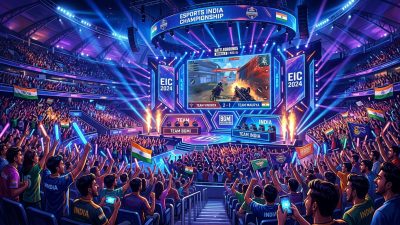
Government’s AVGC Push Gives Indian Esports New Hope but Industry Seeks Dedicated Policy Framework

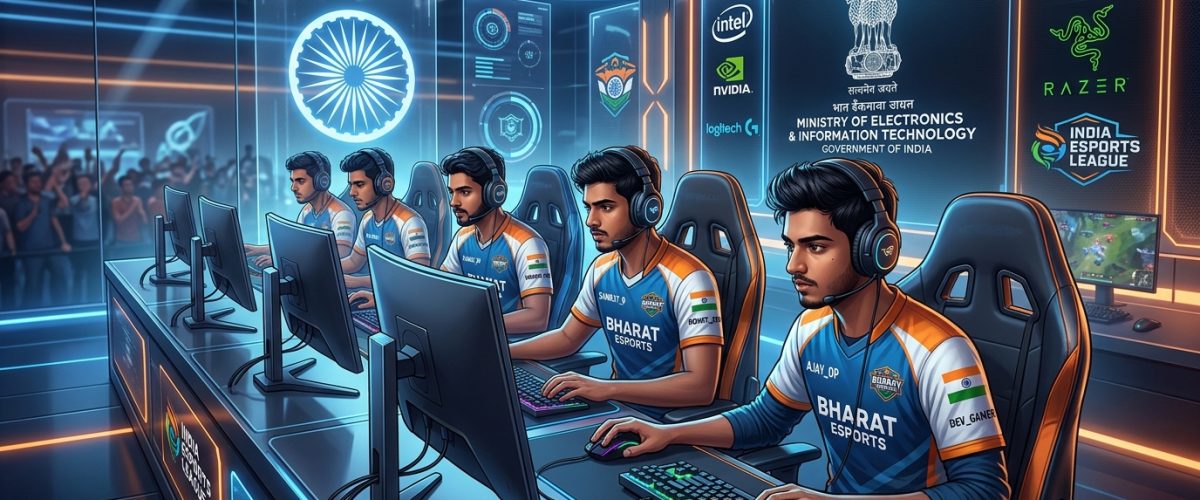
The Indian government’s ambitious push to develop the Animation, Visual Effects, Gaming, and Comics (AVGC) sector has brought a wave of optimism to the country’s esports industry. But while the policy tailwinds are real and welcome, industry stakeholders argue that esports still lacks the dedicated regulatory and institutional framework it needs to fulfil its potential. As India positions itself as a global AVGC hub, the esports community is caught between gratitude for newfound attention and frustration at the slow pace of structural reform.
The AVGC-XR Promotion Task Force: What It Has Delivered
Established in 2023, the AVGC-XR Promotion Task Force—operating under the Ministry of Information and Broadcasting—has been the central policy vehicle for India’s gaming and content creation ambitions. Over the past three years, it has facilitated the creation of dedicated AVGC centres of excellence in Hyderabad, Mumbai, and Thiruvananthapuram, each offering specialised training in game design, animation, and visual effects. The task force has also coordinated with state governments to offer tax incentives and subsidised co-working spaces for gaming studios.
For esports specifically, the task force has helped secure the inclusion of competitive gaming in the Khelo India framework, the government’s flagship grassroots sports programme. This inclusion means that esports athletes can now access government-funded training infrastructure, nutrition support, and coaching programmes—a significant upgrade from the largely self-funded existence that characterised Indian esports until recently.
Also read: IPL 2026 Season Preview: Key Transfers, Injuries, and Franchise Strategies
Also read: AI Summit 2026: India Showcases Ambitions but Structural Gaps Exposed
The Budget Signal: Positive but Vague
The Union Budget for 2026-27 continued the trend of mentioning AVGC as a priority sector, with Finance Minister Nirmala Sitharaman allocating ₹1,200 crore toward the National AVGC Mission. However, industry voices were quick to point out that esports was not explicitly mentioned in the budget speech, and the allocation does not earmark specific funds for esports infrastructure, athlete development, or tournament organisation.
“The AVGC push is welcome, and we benefit from it tangentially,” said Lokesh Suji, Director of the Esports Federation of India (ESFI). “But esports has unique needs—athlete visas, anti-doping protocols, broadcast regulations, prize money taxation—that cannot be addressed by a broad AVGC framework alone. We need a dedicated esports policy, and we need it urgently.”
Recognition Without Infrastructure
One of the persistent challenges facing Indian esports is the gap between recognition and infrastructure. While the government has officially recognised esports as a “multi-sport event” and included it in the Asian Games programme, the on-the-ground infrastructure remains inadequate. India has only two purpose-built esports arenas—one in Mumbai and one in Hyderabad—compared to over 20 in South Korea and 15 in China. Most major Indian esports tournaments still take place in repurposed convention halls or hotel ballrooms.
The lack of dedicated facilities affects not just tournament quality but also player development. Aspiring esports athletes in India typically train at home, often without access to professional-grade equipment or coaching. The contrast with countries like South Korea, where esports training centres are as common as cricket academies are in India, is stark and frequently cited by industry figures.
Taxation and Prize Money Concerns
Another structural issue that the AVGC framework has not addressed is the taxation of esports prize money. Under current Indian tax law, esports winnings are classified under “Income from Other Sources” and taxed at the individual’s applicable slab rate, with Tax Deducted at Source (TDS) applied at 30 per cent for prizes exceeding ₹10,000. This is the same treatment applied to lottery winnings and game show prizes—a classification that esports professionals find both inaccurate and punitive.
Industry bodies have lobbied for esports prize money to be reclassified as “Income from Sports,” which would align it with the tax treatment applied to cricket, football, and other recognised sports. Such a reclassification would also open the door for esports athletes to claim training and equipment expenses as deductions, significantly improving the financial viability of a professional esports career in India.
The Private Sector Fills the Gap
In the absence of comprehensive government policy, the private sector has been the primary engine of India’s esports growth. Companies like Krafton, Riot Games, Garena, and Nodwin Gaming have invested heavily in league structures, broadcast infrastructure, and talent development programmes. Nodwin Gaming, now a publicly listed company on the NSE, has committed over ₹200 crore to building esports venues and content studios across India over the next three years.
Corporate sponsorship of esports has also accelerated, with brands like Red Bull, Coca-Cola India, boAt, and Amazon Pay all investing in tournament naming rights and team sponsorships. The total corporate sponsorship value for Indian esports is estimated to reach ₹800 crore in 2026, up from ₹500 crore in 2024.
The Path Forward
The consensus among industry stakeholders is that the AVGC push has been necessary but insufficient for esports. What the industry seeks now is a dedicated National Esports Policy that addresses athlete recognition, infrastructure funding, visa facilitation for international tournaments, standardised anti-cheat protocols, and a fair taxation framework. The Esports Federation of India has submitted a detailed policy proposal to the Ministry of Youth Affairs and Sports and is awaiting a formal response.
As India’s esports ecosystem matures—with growing prize pools, expanding viewership, and a deepening talent pool—the gap between the industry’s potential and its policy environment becomes increasingly conspicuous. The AVGC framework laid the groundwork. Now it is time for the government to build the house.

- India’s Fantasy Sports Market Marches Toward ₹50,000 Crore Valuation as Regulation Brings Clarity - March 24, 2026
- Dream11 and IPL 2026: Fantasy Cricket Platforms Reinvent Fan Engagement With AI-Powered Features - March 24, 2026
- India’s GPU Market Accelerates in 2026 as Affordable Graphics Cards Finally Reach Mainstream Buyers - March 24, 2026