BGMI and Free Fire Max Dominate India’s Mobile Charts While New Titles Challenge the Duopoly

The battle for India’s mobile gaming throne continues to intensify in 2026, with Battlegrounds Mobile India (BGMI) and Free Fire Max maintaining their firm grip on the top of the download and engagement charts, even as a new wave of challengers tries to disrupt the established order. According to the latest data from Sensor Tower and data.ai, BGMI recorded 48 million monthly active users in February 2026, while Free Fire Max held steady at 39 million—numbers that underscore the enduring appeal of battle royale in the Indian market.
But beneath these headline numbers, a more nuanced story is unfolding. New titles from both global publishers and Indian studios are beginning to carve out significant niches, and the competitive landscape is more diverse than it has been at any point in the last three years.
BGMI’s Continued Dominance
Krafton’s BGMI has benefited enormously from a sustained content pipeline and smart localisation strategies. The March 2026 update introduced “Desi Royale,” a new map inspired by Indian architectural styles, featuring Rajasthani forts, South Indian temples, and Himalayan terrain. The update has been a hit with the player base, driving a 22 per cent increase in daily active users in the week following its release.
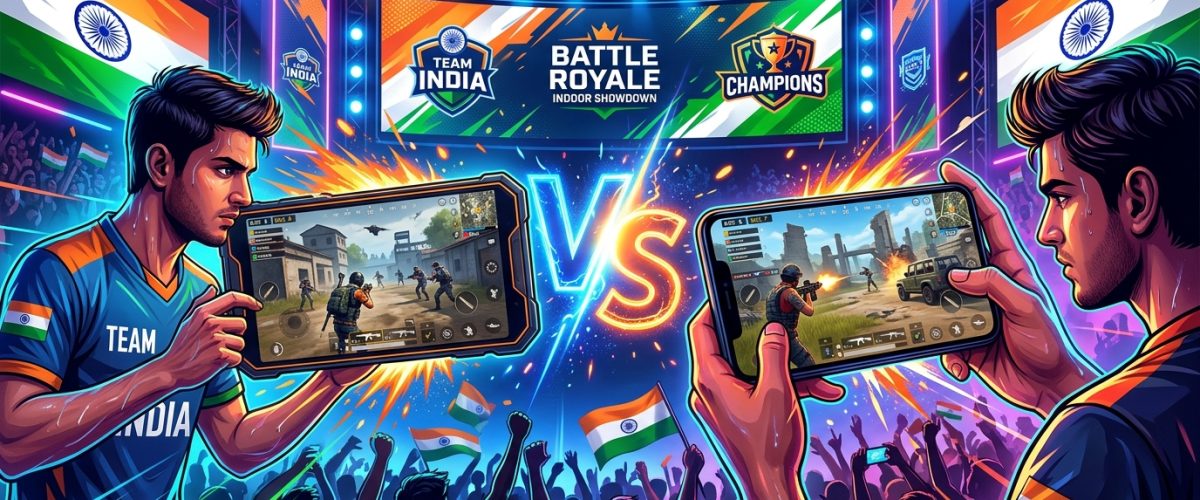
Beyond content, Krafton has deepened its investment in the Indian esports ecosystem. The BGMI Masters Series 2026, with a total prize pool of ₹3 crore, has become one of the most-watched esports events in the country, attracting sponsorships from brands like Coca-Cola India and boAt. This professional layer adds aspirational value to the game and keeps the competitive community engaged.
Also read: IPL 2026 Season Preview: Key Transfers, Injuries, and Franchise Strategies
Also read: AI Summit 2026: India Showcases Ambitions but Structural Gaps Exposed
Free Fire Max Evolves Its Playbook
Garena’s Free Fire Max, meanwhile, is leaning into its strengths as a game optimised for lower-end devices—a critical advantage in a market where a significant portion of gamers use handsets priced under ₹12,000. The game’s lighter system requirements mean it runs smoothly on devices with as little as 2 GB of RAM, making it the default choice for millions of users in Tier 3 and rural India.
Garena has also expanded its collaboration strategy, partnering with Bollywood and cricket properties for in-game events. A recent tie-up with the Indian Premier League (IPL) brought branded cricket-themed game modes and virtual merchandise into Free Fire Max, driving a spike in both downloads and in-game spending. The crossover between cricket fandom and gaming culture in India has proven to be an especially effective engagement lever.
The Challengers: New Titles Making Noise
While BGMI and Free Fire Max dominate, several new entrants are gaining ground. Apex Legends Mobile, relaunched in early 2026 with a completely revamped mobile experience by Electronic Arts, has already crossed 15 million downloads in India within its first two months. Its more strategic, squad-based gameplay appeals to a slightly older demographic that finds traditional battle royale repetitive.
From the Indian studio ecosystem, nCore Games’ Fearless and United: Guards has shown that a Made-in-India shooter can resonate with local audiences. With its storyline rooted in Indian military operations and a visual style that reflects Indian landscapes, the game has built a loyal community of 8 million monthly users and is now expanding into the South Asian market.
Perhaps the most disruptive new entry is MOBA Legends, a mobile Multiplayer Online Battle Arena game from a Bangalore-based studio called SuperGaming. Launched in beta in January 2026, MOBA Legends has attracted 6 million pre-registrations and is positioned as India’s answer to Mobile Legends: Bang Bang, which has a massive following in Southeast Asia. The game’s emphasis on team-based strategy and shorter match durations (averaging 12 minutes) aligns well with Indian commuting and break-time gaming habits.
Monetisation and the In-App Economy
The revenue dynamics of India’s mobile gaming charts also reveal shifting patterns. BGMI continues to lead in in-app purchase revenue, driven by its battle pass and cosmetic skins ecosystem. However, Free Fire Max derives a larger proportion of its revenue from advertising, reflecting its broader and more price-sensitive user base.
Industry analysts note that India’s mobile gaming ARPU has risen modestly to $1.80 per month in 2026, up from $1.45 in 2024. While this still lags far behind markets like the United States and Japan, the trajectory is encouraging. UPI integration and bite-sized purchase options (starting as low as ₹10) are slowly normalising digital spending within games, particularly among Gen Z users who have grown up in a digital-first economy.
What the Competition Means for Gamers
For Indian mobile gamers, the intensifying competition is unequivocally positive. More titles mean greater choice, better localisation, and stronger investment in regional content. The days when a single game could monopolise India’s mobile screens appear to be waning, even if BGMI and Free Fire Max remain the clear market leaders. As Indian studios mature and global publishers invest more aggressively, 2026 is shaping up to be the year India’s mobile gaming market truly diversifies—a development that benefits gamers, developers, and the broader digital economy alike.

- India’s Fantasy Sports Market Marches Toward ₹50,000 Crore Valuation as Regulation Brings Clarity - March 24, 2026
- Dream11 and IPL 2026: Fantasy Cricket Platforms Reinvent Fan Engagement With AI-Powered Features - March 24, 2026
- India’s GPU Market Accelerates in 2026 as Affordable Graphics Cards Finally Reach Mainstream Buyers - March 24, 2026