Plastic Recycling Milestone and Himachal API Plant Controversy Dominate India’s Environmental Agenda

India’s environmental landscape in March 2026 presents a study in contrasts — a nation simultaneously celebrating landmark achievements in plastic waste management while confronting fresh controversies over industrial pollution. The juxtaposition of a major recycling milestone under the Extended Producer Responsibility (EPR) framework with fierce community opposition to the country’s first Active Pharmaceutical Ingredient (API) plant in Himachal Pradesh encapsulates the complex balancing act that defines India’s environmental governance.
20.7 Million Tonnes Recycled: India’s EPR Framework Bears Fruit
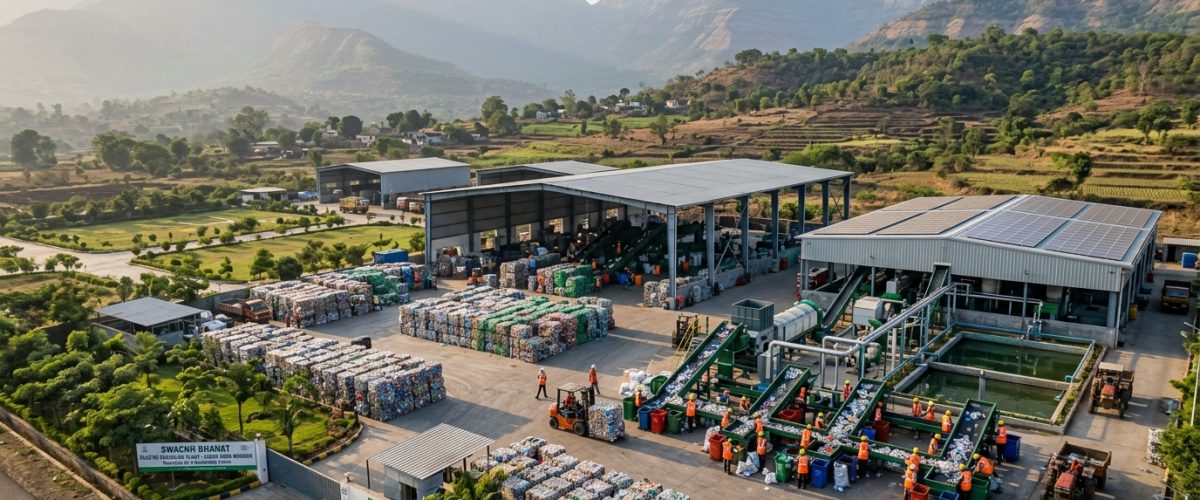
In a statement presented to Parliament on 23 March 2026, the Ministry of Environment, Forest and Climate Change revealed that India has recycled a cumulative 20.7 million tonnes of plastic packaging waste since the introduction of the Extended Producer Responsibility (EPR) guidelines in 2022. The figure represents a significant acceleration in the country’s waste management capabilities and has been hailed by policymakers as evidence that regulatory intervention, when properly designed and enforced, can yield measurable environmental outcomes.
The EPR framework, which mandates that producers, importers, and brand owners take responsibility for the end-of-life management of their plastic packaging, has been gradually tightened since its introduction. The 2024 amendments introduced escalating recycling targets, mandatory registration on a centralised digital portal, and financial penalties for non-compliance — measures that environmental economists credit with driving a significant increase in both formal recycling capacity and corporate investment in sustainable packaging alternatives.
“The 20.7 million tonne figure is a milestone, but it must be placed in context,” cautioned Sunita Narain, director general of the Centre for Science and Environment. “India generates approximately 3.5 million tonnes of plastic waste annually, and while the recycling rate has improved considerably, a substantial portion of this waste — particularly multi-layered and flexible plastics — continues to escape the formal collection system and ends up in landfills, waterways, and the ocean.”
Challenges in the Recycling Ecosystem
Despite the headline figures, experts have identified several structural challenges that continue to limit the effectiveness of India’s plastic waste management regime. Chief among these is the informal sector’s dominant role in waste collection and segregation. An estimated 1.5 million waste pickers operate across India’s cities, handling the majority of recyclable waste, yet their integration into the formal EPR system remains incomplete and inconsistent.
The Central Pollution Control Board (CPCB) has acknowledged that while the number of registered plastic waste processors has increased from approximately 3,400 in 2022 to over 7,200 in 2026, the verification of recycling claims remains an area requiring improvement. Several industry bodies have raised concerns about the reliability of EPR certificates traded on the digital marketplace, noting instances where recycling credits may not correspond to actual material recovery.
Nevertheless, the overall trajectory is positive. India’s circular economy for plastics is gradually professionalising, with investment flowing into advanced recycling technologies including chemical recycling, pyrolysis, and biodegradable alternatives. The government’s Plastic Waste Management Rules, combined with the EPR framework and the ban on single-use plastics implemented in 2022, have created a regulatory architecture that, while imperfect, is driving behavioural change across the value chain.
‘We Can’t Breathe’: Himachal Residents Oppose First API Plant
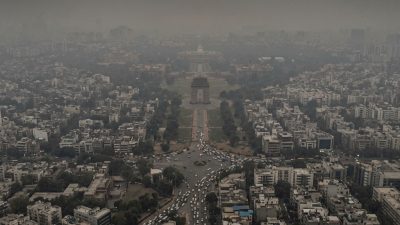
In stark contrast to the recycling progress, a bitter dispute has erupted in Himachal Pradesh over the proposed establishment of India’s first dedicated API manufacturing plant in the state. Residents of the affected area have staged sustained protests under the banner “We Can’t Breathe,” alleging that the facility will cause severe air and water pollution in a region celebrated for its ecological sensitivity and natural beauty.
The API plant, designed to reduce India’s dependence on Chinese imports for critical pharmaceutical raw materials, has received support from both the central government and the pharmaceutical industry, which has long identified the lack of domestic API manufacturing capacity as a strategic vulnerability. The COVID-19 pandemic exposed this dependency in stark terms, with supply chain disruptions threatening India’s position as the “pharmacy of the world.”
However, local communities and environmental activists argue that the environmental impact assessment (EIA) for the project was inadequate, failing to account for the cumulative pollution burden on the region’s air and water resources. Himachal Pradesh, with its river-fed water systems and tourism-dependent economy, presents particular environmental sensitivities that protestors contend have been insufficiently addressed.
“We are not against development or against India’s pharmaceutical self-reliance,” said Rajesh Thakur, a spokesperson for the protest movement. “But we are asking why a state that contributes so much to India’s water security and ecological balance should bear the environmental cost of a facility that could be located in an industrial zone with existing pollution management infrastructure.”
The Broader Environmental Policy Landscape
These two stories — the EPR success and the API controversy — illuminate a broader tension in India’s environmental policy framework. The country has made substantial progress in institutionalising environmental regulation, from the National Clean Air Programme (NCAP) to the updated Forest Conservation Rules and the ambitious renewable energy targets under the National Solar Mission. Yet the implementation of these policies frequently encounters resistance at the local level, where the costs and benefits of development are distributed unevenly.
India’s environmental governance is further complicated by the intersection of ecological imperatives with economic development goals. The nation’s aspiration to become a $10 trillion economy by 2035 will inevitably increase industrial activity, energy consumption, and resource extraction — all with environmental consequences that must be managed proactively rather than remedially.
This balancing act between technological progress and environmental stewardship is not unique to the environmental sector; India’s rapidly expanding AI ecosystem faces similar questions about the energy costs and environmental footprint of large-scale computing infrastructure.
Wildlife Conservation: Positive Signals
On a more encouraging note, India’s wildlife conservation efforts continue to yield results. The latest tiger census data, released in early 2026, confirmed that India’s tiger population remains above 3,600 — the highest figure recorded since systematic counting began. The success of Project Tiger and the expansion of protected corridors between reserves have been credited with sustaining the population’s growth trajectory.
Prime Minister Narendra Modi, speaking on World Wildlife Day on 3 March 2026, reaffirmed India’s commitment to biodiversity conservation, describing the nation’s natural heritage as “not merely a resource to be managed, but a legacy to be cherished and transmitted to future generations.” Union Environment Minister Bhupender Yadav highlighted the role of community-based conservation models, particularly in the Northeast and Western Ghats, where indigenous communities have been empowered to serve as stewards of ecologically sensitive zones.
As India navigates the interplay between development and conservation, the coming months will test the resilience of its environmental institutions and the sincerity of its policy commitments. The outcomes will shape not only India’s ecological future but also its credibility in international climate negotiations, where the nation has positioned itself as a responsible advocate for climate justice and sustainable development.
The growing national conversation around environmental responsibility reflects the same spirit of public engagement visible in India’s vibrant cultural sphere, where Bollywood’s March 2026 releases have increasingly incorporated themes of social consciousness and environmental awareness into mainstream storytelling.

- New Heavy Particle Discovered at CERN in 2026: What It Means for the Future of Physics - March 24, 2026
- Gaganyaan 2026: India’s Human Spaceflight Programme Enters Its Most Critical Phase - March 24, 2026
- India’s Semiconductor and AI Surge: How Research Labs Are Powering a Global Transformation - March 24, 2026