ISRO and AIIMS Sign Space Medicine Research MoU Ahead of Gaganyaan Mission

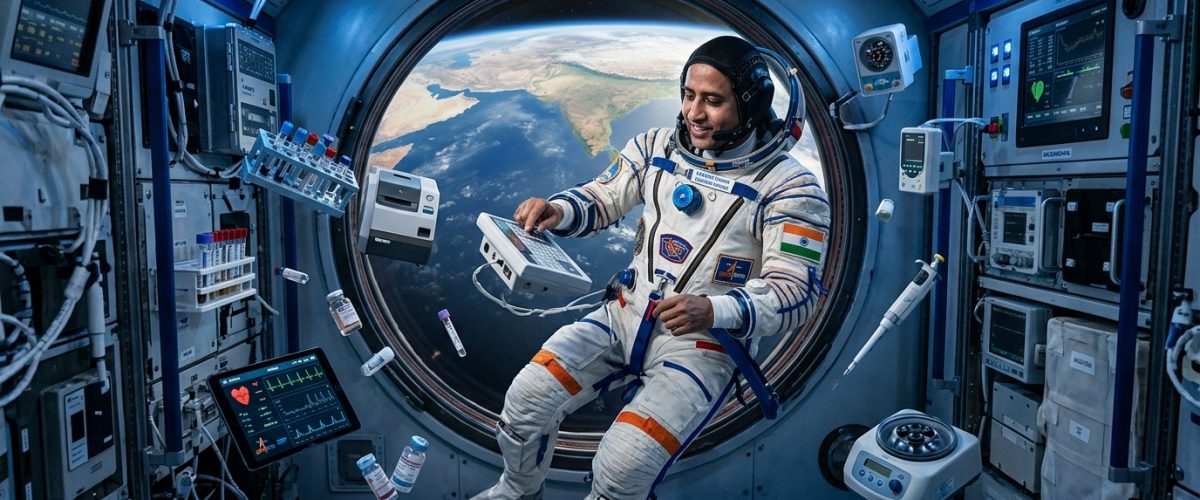
The Indian Space Research Organisation and the All India Institute of Medical Sciences, New Delhi, signed a framework Memorandum of Understanding on 10 March 2026 for cooperation in space medicine and research. The agreement marks a significant step in India’s preparation for long-duration crewed missions, including the Gaganyaan programme and the planned Bharatiya Antariksh Station.
Scope of the Partnership
The MoU was signed by Dinesh Kumar Singh, Director of ISRO’s Human Spaceflight Centre, and Dr Srinivas M, Director of AIIMS, in the presence of Dr V Narayanan, Chairman of ISRO and Secretary of the Department of Space. The agreement establishes a framework for joint research aligned with ISRO’s priority areas, with a shared objective of advancing human health, performance and safety during human space missions.
The collaboration targets ground-based and space-based studies to develop multidisciplinary space medicine expertise, medical devices, procedures and protocols for maintaining human health under extreme conditions. Research areas include the physiological effects of microgravity, radiation exposure management, cardiovascular adaptation, and bone density loss prevention.
Why Space Medicine Matters for India
Long-duration missions such as the Bharatiya Antariksh Station and crewed lunar expeditions present unique medical challenges. The human body undergoes significant changes in microgravity: muscles atrophy without resistance exercise, bones lose density at a rate of roughly 1 to 2 per cent per month, and cardiovascular function adapts to the absence of gravitational loading.
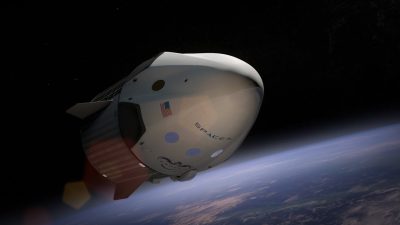
The ISRO space programme has accelerated rapidly in recent years. The Gaganyaan crew module completed its final abort test earlier this year, bringing India closer to its first crewed space flight. AIIMS’s expertise in clinical research and multi-organ studies makes it an ideal partner for addressing the medical unknowns of human spaceflight.
Earth-Based Benefits
Space medicine research frequently yields discoveries that benefit terrestrial healthcare. Technologies developed for monitoring astronaut health can be adapted for remote patient monitoring, telemedicine in rural areas, and rehabilitation medicine. The ISRO-AIIMS partnership specifically includes provisions for translating space research findings into public health applications.
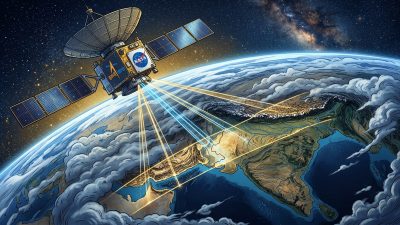
The NISAR satellite mission with NASA has already demonstrated how Indo-international scientific collaborations can deliver world-class results. The space medicine MoU follows a similar model of pairing ISRO’s space engineering expertise with domain-specific institutional knowledge.
Building a Space Medicine Ecosystem
India currently lacks a dedicated space medicine research institute, a gap that the ISRO-AIIMS collaboration aims to begin filling. The MoU includes provisions for training programmes, visiting researcher exchanges, and the development of a space medicine curriculum that could eventually be offered at AIIMS and other premier medical institutions.
The partnership also aligns with broader scientific research priorities in India. With the IMD warning of extended heatwave conditions and climate-related health challenges growing, the medical monitoring technologies developed for astronauts could find application in heat stress management and environmental health surveillance on the ground.