Gaganyaan Vyommitra Mission and SSLV Private Debut Headline ISRO’s Packed 2026 Launch Schedule

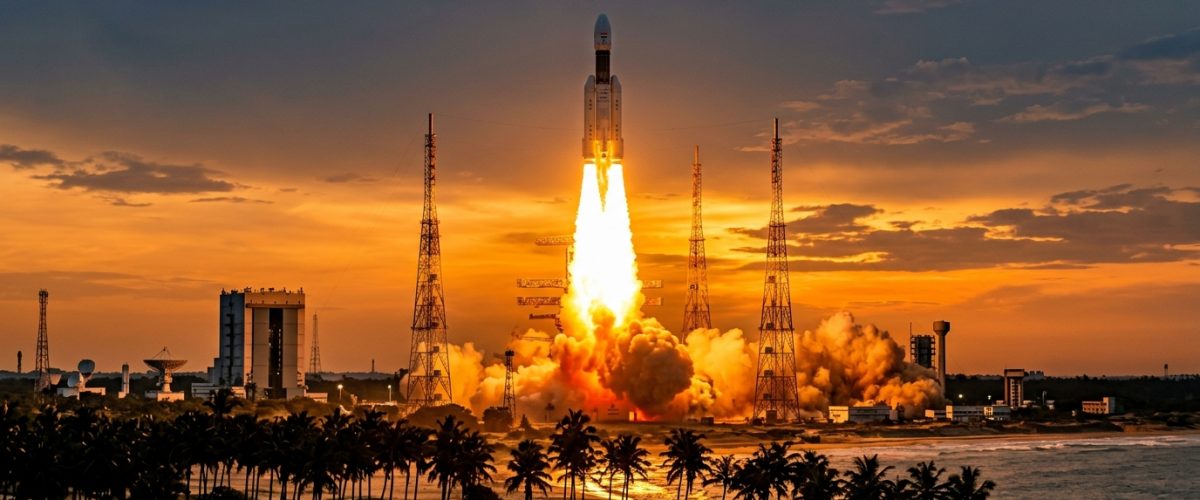
India’s space calendar for 2026 is shaping up to be the most packed and consequential in the Indian Space Research Organisation’s six-decade history. From the highly anticipated Gaganyaan uncrewed mission featuring the Vyommitra humanoid robot to the first-ever private-sector Small Satellite Launch Vehicle (SSLV) flight, the year promises to redefine the boundaries of India’s spacefaring capabilities and its role in the global space economy.
Gaganyaan: India’s Gateway to Human Spaceflight
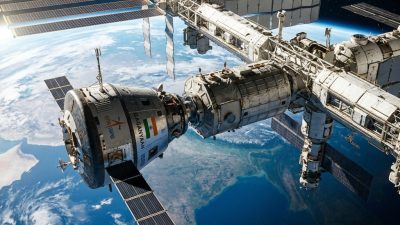
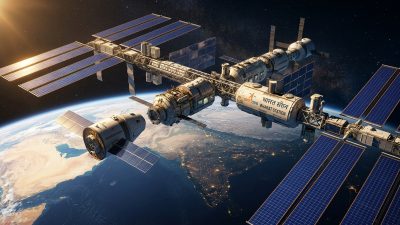
At the centre of ISRO’s 2026 programme stands the Gaganyaan mission — India’s flagship effort to achieve independent human spaceflight capability. The organisation has confirmed that the uncrewed G1 mission, carrying the Vyommitra humanoid robot, is on track for launch in the latter half of 2026. This mission represents a critical dress rehearsal for the crewed flight planned for 2027, which would make India only the fourth country — after Russia, the United States, and China — to send humans to space on a domestically developed spacecraft.
Vyommitra, whose name derives from the Sanskrit words for “space” and “friend,” has been designed to simulate human physiological responses in microgravity conditions. The robot will test the crew module’s life support systems, monitor cabin pressure, temperature, and radiation levels, and execute basic operational procedures that would later be performed by astronaut-designates (gaganauts). The data collected during the G1 mission will inform final modifications to the crew module ahead of the human flight.
“Vyommitra is far more than a technology demonstrator,” explained Dr. Unnikrishnan Nair, director of the Vikram Sarabhai Space Centre. “She represents our assurance to the future crew that every system aboard the spacecraft has been validated in actual orbital conditions. The margin for error in human spaceflight is zero, and Vyommitra helps us achieve that standard.”
SSLV: A New Era of Private Launch Capability
Equally significant is the scheduled maiden commercial flight of the SSLV under private-sector operation — a landmark moment in India’s space liberalisation journey. Following the Government of India’s decision to open the space sector to private enterprise through the Indian National Space Promotion and Authorisation Centre (IN-SPACe), several Indian start-ups have been developing launch capabilities to serve the burgeoning small satellite market.
The SSLV, originally developed by ISRO as a cost-effective vehicle for placing satellites weighing up to 500 kilograms into low Earth orbit, is now being prepared for transfer to a private consortium for commercial operations. The vehicle’s compact design, rapid assembly timeline — under 72 hours compared to several weeks for the PSLV — and low per-launch cost make it an attractive option for satellite operators seeking affordable, on-demand access to space.
Industry analysts project that the global small satellite market will exceed $15 billion by 2030, and India’s ability to offer reliable, low-cost launch services positions it to capture a significant share of this market. The SSLV’s commercialisation is expected to complement the PSLV’s established role in the medium satellite segment, creating a comprehensive Indian launch portfolio that can address a wide range of payload requirements.
NISAR: An Indo-American Triumph
Among the year’s most scientifically significant missions is the launch of the NISAR (NASA-ISRO Synthetic Aperture Radar) satellite aboard the GSLV-F16. This joint mission, which has been in development for over a decade, will deploy the most expensive Earth-observing radar satellite ever built, carrying both L-band and S-band synthetic aperture radar instruments capable of mapping the entire globe every 12 days.
NISAR’s applications span an extraordinary range of Earth science domains, from monitoring glacial melt and sea level rise to tracking deforestation, urban expansion, and tectonic movement. For India, the satellite holds particular significance for agricultural monitoring, groundwater assessment, and disaster preparedness — areas where timely, high-resolution data can have a direct impact on policy outcomes and livelihoods.
The mission also represents a high point in Indo-American space cooperation, building on a relationship that has deepened considerably since the signing of the Artemis Accords by India in 2023. The collaboration extends beyond NISAR to include joint research programmes, astronaut training exchanges, and potential Indian participation in future lunar missions under the Artemis framework.
Navigation and Communication Upgrades
ISRO’s 2026 manifest also includes several launches designed to enhance India’s indigenous navigation and communication satellite constellations. The NVS (NavIC Verification Satellite) series will see additional deployments aimed at bolstering the NavIC regional navigation system, which provides positioning accuracy comparable to GPS across the Indian subcontinent and surrounding regions.
NavIC has gained increasing strategic importance as India seeks to reduce its dependence on foreign navigation systems for both civilian and defence applications. The system is already being integrated into commercial smartphones and vehicle tracking systems, and the additional satellites are expected to improve signal availability and accuracy, particularly in mountainous and densely forested terrain where coverage has historically been inconsistent.
The Private Sector Ecosystem Matures
Beyond ISRO’s own missions, 2026 is expected to be a breakout year for India’s private space companies. Skyroot Aerospace, which successfully launched India’s first privately developed rocket — Vikram-S — in 2022, is preparing for orbital-class launches with its Vikram-I vehicle. Similarly, Agnikul Cosmos continues development of its 3D-printed semi-cryogenic engine, and Bellatrix Aerospace is advancing its electric propulsion systems for in-space manoeuvring.
The ecosystem’s maturation is reflected in funding trends: Indian space start-ups attracted over $400 million in venture capital in 2025, a threefold increase from 2022. This investment surge has been catalysed by supportive government policy, growing demand for space-based services, and the demonstrated viability of India’s low-cost approach to space technology.
India’s technology sector continues to demonstrate this kind of convergence between public ambition and private enterprise, a dynamic also visible in the country’s expanding artificial intelligence ecosystem where government initiatives and start-up innovation are increasingly intertwined.
International Dimensions
ISRO’s 2026 agenda also features several international commitments, including the launch of satellites for developing nations under India’s space diplomacy framework. This programme, which has previously benefited countries in South Asia, Africa, and Southeast Asia, positions India as a provider of space-based public goods — from weather monitoring to telemedicine connectivity — and reinforces its credentials as a responsible spacefaring nation.
As the year unfolds, the cumulative impact of ISRO’s launch schedule, the private sector’s coming of age, and the deepening of international partnerships will likely mark 2026 as a defining chapter in India’s space narrative. The progress stands as a testament to decades of sustained investment, institutional capability building, and the vision of a nation that has consistently punched above its weight in the cosmos.
Much like how the strategic planning visible in IPL 2026 franchise strategies demonstrates India’s capacity for sophisticated long-term thinking, ISRO’s meticulously choreographed launch calendar reflects a nation that understands the value of preparation and ambition in equal measure.

- India’s AI Impact Summit 2026 Signals a Shift From Prototypes to Real-World Deployment - March 25, 2026
- New Heavy Particle Discovered at CERN in 2026: What It Means for the Future of Physics - March 24, 2026
- Gaganyaan 2026: India’s Human Spaceflight Programme Enters Its Most Critical Phase - March 24, 2026