India’s Quantum Computing Mission: From National Policy to Laboratory Breakthroughs in the Race for Quantum Advantage


India’s National Quantum Mission (NQM), approved with an outlay of approximately Rs 6,003 crore over an eight-year period, has entered its most consequential phase in 2026. The mission, which aims to develop quantum computing, quantum communication, quantum sensing, and quantum materials capabilities across Indian research institutions and industry, represents the country’s most ambitious investment in frontier physics since the establishment of its nuclear and space programmes. With research groups at institutions including the Indian Institute of Science, IIT Madras, the Raman Research Institute, and the Tata Institute of Fundamental Research pushing the boundaries of qubit fabrication and quantum algorithm development, India is positioning itself as a serious contender in the global quantum technology competition—a race whose outcomes will reshape computing, communications, cryptography, and materials science.
The National Quantum Mission Architecture
The NQM is structured around four technology verticals, each targeting specific capability milestones. The quantum computing vertical aims to develop quantum processors with 50 to 1,000 qubits over the mission’s timeline—a range that, if achieved with sufficient error rates, would enable computations of practical significance in chemistry simulation, optimisation problems, and machine learning applications. The quantum communication vertical focuses on establishing secure quantum key distribution networks, with an intermediate target of deploying a 2,000-kilometre quantum-secured communication backbone connecting major Indian cities.
Quantum sensing and quantum materials constitute the mission’s remaining verticals, targeting high-precision sensors for applications in navigation, geological survey, and medical imaging, and the development of novel quantum materials with applications across electronics, energy, and defence sectors. This four-vertical structure ensures that India’s quantum investment addresses both near-term applications—particularly in communications security—and long-term transformative capabilities in computing and sensing.
The mission’s institutional architecture distributes research and development across multiple centres of excellence, avoiding the single-point-of-failure risk inherent in centralised programmes while creating coordination challenges that the mission management must actively navigate. The designation of thematic hubs—IISc Bangalore for quantum computing hardware, IIT Madras for quantum communication, and others for specific technology domains—creates focus while enabling collaboration across institutional boundaries. As India’s broader science and technology ecosystem advances—from India’s AI Summit 2026 and the structural gaps it revealed to space exploration—quantum technology represents the frontier where India’s research capability will be most decisively tested.
Superconducting Qubits: India’s Primary Computing Platform
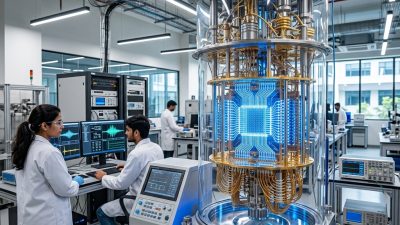
India’s quantum computing research has converged primarily on superconducting qubit technology—the same platform underlying the most advanced quantum processors from Google, IBM, and the Chinese Academy of Sciences. Superconducting qubits, fabricated from Josephson junction circuits cooled to temperatures colder than outer space (approximately 15 millikelvin), offer the advantage of leveraging semiconductor fabrication techniques and scalable architectures, making them the most mature pathway to large-scale quantum processors.
Research groups at IISc Bangalore and IIT Bombay have demonstrated superconducting qubit fabrication using India’s own clean room facilities, achieving coherence times—the duration for which a qubit maintains its quantum state before environmental noise destroys the information—that, while still behind international leaders, demonstrate a credible domestic capability. The improvement trajectory has been encouraging, with each successive qubit generation showing measurable gains in coherence, gate fidelity, and connectivity.
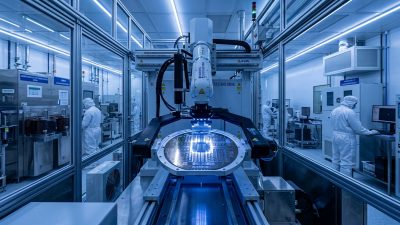
The fabrication infrastructure challenge is significant. Superconducting qubit manufacturing requires clean room environments comparable to advanced semiconductor fabrication, along with specialised equipment for Josephson junction deposition and characterisation. India’s existing clean room infrastructure, while adequate for current research-scale fabrication, will require substantial upgrades to support the larger-scale processor development targeted by the NQM. The synergies between India’s quantum fabrication needs and its semiconductor manufacturing ambitions create opportunities for shared infrastructure investment that serves both domains.
Quantum Communication: The Security Imperative
India’s quantum communication programme is driven by a strategic security imperative that gives it urgency beyond the academic interest of quantum computing research. The advent of large-scale quantum computers threatens to render current public key cryptographic systems—which secure everything from financial transactions to military communications—vulnerable to attack. Quantum key distribution (QKD), which uses the fundamental principles of quantum mechanics to create theoretically unbreakable encryption keys, offers a pathway to communication security that is provably immune to both classical and quantum computational attacks.
India’s existing QKD demonstrations have achieved secure key distribution over fibre optic networks spanning several hundred kilometres, with plans to extend this capability to the 2,000-kilometre backbone network envisioned by the NQM. The technical challenges of long-distance quantum communication—photon loss in optical fibre, the need for quantum repeaters to extend range, and the integration of quantum and classical communication networks—are active areas of research at multiple Indian institutions.
The defence and intelligence implications of quantum communication capability have ensured sustained government interest and funding. India’s Defence Research and Development Organisation (DRDO) has its own quantum technology programmes that complement the NQM’s civilian research, creating a dual-use technology development pathway that serves both national security and economic interests. The convergence of quantum communication with India’s expanding digital infrastructure—including the secure communications needs of India’s UPI revolution and digital payments surge and other critical digital systems—underscores the practical relevance of this research beyond its academic significance.
India’s Quantum Talent Pipeline
The most critical constraint on India’s quantum technology ambitions is not funding or infrastructure but human capital. Quantum technology research requires expertise at the intersection of physics, engineering, computer science, and materials science—a combination that India’s existing educational system produces in insufficient quantities. The NQM includes dedicated provisions for human resource development, including new graduate programmes, postdoctoral fellowships, and industry-academia exchange schemes designed to build the quantum workforce India needs.
Indian universities are responding to this demand with new curriculum offerings. IIT Madras, IISc Bangalore, and several other premier institutions have launched dedicated quantum technology courses at both undergraduate and postgraduate levels. The challenge extends beyond formal education to retaining trained talent within India—the global demand for quantum researchers has created a competitive talent market where Indian-trained physicists and engineers receive attractive offers from technology companies and research institutions in the United States, Europe, and East Asia.
The NQM’s strategy for addressing the talent challenge combines domestic capacity building with diaspora engagement. Indian quantum researchers working abroad represent a significant knowledge resource that can be leveraged through visiting researcher programmes, collaborative projects, and—for some—attractive repatriation packages. The success of similar diaspora engagement strategies in India’s IT and pharmaceutical sectors provides a template, though the quantum talent pool is considerably smaller and more specialised.
Industry Engagement and the Commercialisation Pathway
India’s quantum technology commercialisation ecosystem is in its early stages but growing rapidly. Several Indian startups have emerged in the quantum computing space, focusing on quantum software development, quantum-as-a-service platforms, and quantum-enhanced optimisation solutions for industrial applications. These companies, while small compared to their international counterparts, represent the beginnings of an industry ecosystem that the NQM is designed to nurture.
Major Indian IT companies including TCS, Infosys, and Wipro have established quantum computing research groups that explore applications in finance, logistics, pharmaceutical discovery, and artificial intelligence. Their involvement brings engineering discipline, commercial orientation, and client relationships that academic research groups typically lack—creating a technology transfer pathway from laboratory breakthroughs to practical applications.
The NQM’s technology development centres are designed to serve as bridges between academic research and industry application, providing shared infrastructure, prototype development capabilities, and testing environments where industry partners can evaluate quantum technologies under realistic conditions. This industry-academia collaboration model, while not unique to India, is essential for ensuring that the NQM’s scientific achievements translate into economic value and strategic capability. The commercial dynamics of India’s quantum sector mirror the broader technology commercialisation patterns visible across sectors from March 2026 smartphone wars in India to deep technology research, where government investment creates the foundation upon which private sector innovation builds.
India’s quantum computing journey in 2026 is characterised by measured progress, strategic investment, and the recognition that quantum technology represents a domain where sustained commitment today will determine competitive positioning for decades to come. The race for quantum advantage is global, and India—through the NQM and its expanding research ecosystem—has declared its intention to be among the leaders rather than the followers.

- ISRO and AIIMS Sign Landmark MoU for Space Medicine Research Ahead of Gaganyaan Mission - March 25, 2026
- Rising Temperatures Reshape Wildlife Behaviour Across India as Scientists Sound Climate Alarm - March 25, 2026
- UPI Crosses 800 Million Daily Transactions as CRED Gets Payment Aggregator Licence From RBI - March 25, 2026