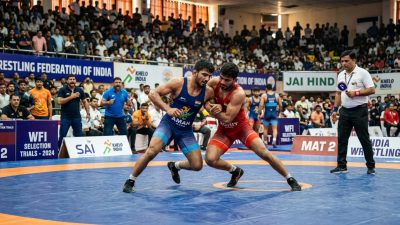
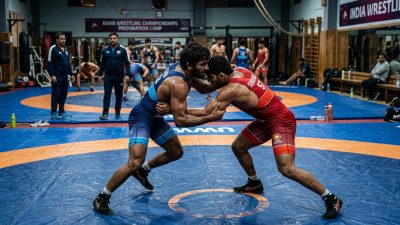
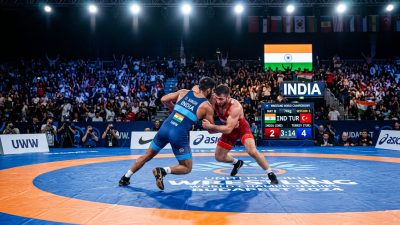
Indian Wrestling Rebuilds Under New WFI Leadership as Young Grapplers Eye 2026 Asian Games and 2028 Olympics Glory

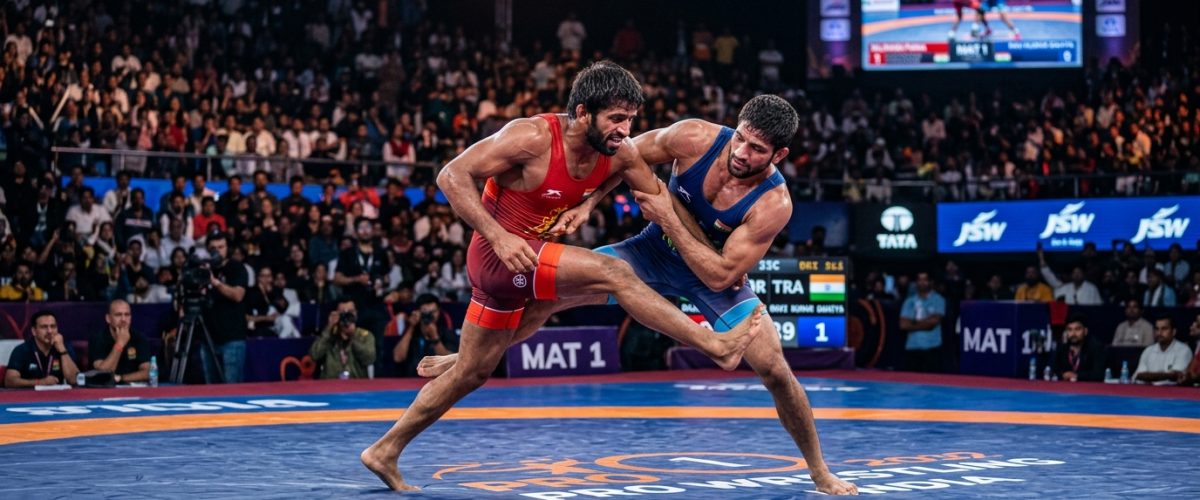
Indian wrestling is entering a crucial rebuilding phase in 2026 as a new generation of grapplers prepares for the Asian Games in Nagoya and the 2028 Los Angeles Olympics under a reformed Wrestling Federation of India. After two years of administrative turmoil that saw the federation suspended and reinstated by the Indian Olympic Association, the sport is finally regaining stability — and the results on the mat are encouraging.
The WFI, now led by a new executive committee elected in January 2026 after court-mandated reforms, has announced a comprehensive development plan titled “Wrestling 2028” that aims to secure at least four Olympic medals in Los Angeles. The plan includes foreign coaching hires, overseas training camps and a centralised talent identification programme targeting wrestlers from rural India.
New WFI Leadership Brings Stability and Transparency
The election of former international referee Pradeep Sharma as WFI president marked a turning point for Indian wrestling. Sharma, who served as a United World Wrestling official for 15 years, has implemented a transparent selection policy that uses ranking tournaments rather than ad hoc trials to determine national team representation.
Under the new system, wrestlers must compete in a minimum of three national ranking events per year. Points accumulated across these events determine Asian Games and World Championship squad selection. The policy, modelled on the US Wrestling system, has been broadly welcomed by athletes who previously faced allegations of favouritism in team selection.
The WFI has also established an athlete welfare committee chaired by Olympic bronze medallist Sakshi Malik, who was at the forefront of the 2023 protests against the former federation leadership. The committee addresses grievances related to coaching, facilities and financial support, providing a formal channel that did not previously exist in the Indian sports news and updates.
Antim Panghal Leads the Women’s Wrestling Charge
The most exciting talent in Indian wrestling is 21-year-old Antim Panghal from Haryana, who became India’s first woman to win a World Wrestling Championships medal in the 53 kg category in 2023. In 2026, Panghal has already won gold at the Asian Championships in Bishkek and the Dan Kolov ranking tournament in Bulgaria.
Panghal’s technical wrestling style, which combines explosive takedowns with a grinding top position, has drawn comparisons with Japanese great Kaori Icho. Her coach, former national champion Bhagat Singh, has introduced elements of Mongolian wrestling technique that have diversified her attack patterns. At the Nagoya Asian Games, Panghal is the clear favourite in her weight class.
Other women’s wrestlers showing promise include Nisha Dahiya (68 kg), who won bronze at the 2025 World Championships, and Sonam Malik (62 kg), a former junior world champion who has transitioned successfully to the senior circuit. India’s women’s wrestling depth is now comparable to traditional powers like Japan and China, a transformation that parallels how Indian badminton stars dominating BWF World Tour events have risen to prominence across individual sports.
Men’s Freestyle: Rebuilding After the Bajrang-Ravi Era
Indian men’s freestyle wrestling faces a generational transition. Bajrang Punia, the 2020 Tokyo Olympic bronze medallist who led protests against the former WFI leadership, has shifted to a mentoring role, with persistent knee injuries limiting his competitive career. Ravi Kumar Dahiya, the 2020 Olympic silver medallist, is targeting one final Games appearance in Los Angeles but faces stiff competition from younger wrestlers.
The new wave is led by Aman Sehrawat, who won bronze in the 57 kg category at the Paris 2024 Olympics at just 20 years of age. Sehrawat’s explosive leg attacks and counter-wrestling ability make him a genuine medal threat at every international tournament. His training camp in Vladikavkaz, Russia, alongside Olympic medallists, has added technical depth to his already impressive physical attributes.
Deepak Punia (86 kg) and Naveen Malik (74 kg) are also expected to contribute medals at the Asian Games. Punia, a former junior world champion, has refined his par terre defence after identifying it as a weakness at the Paris Olympics. Malik, a product of the Chhatrasal Stadium akhara system in Delhi, brings old-school Indian wrestling grit to the international mat.
Greco-Roman Wrestling: India’s Forgotten Discipline
While freestyle receives most attention, Indian Greco-Roman wrestling has quietly produced competitive athletes. Sunil Kumar, who won gold at the 2020 Asian Championships in the 87 kg category, remains India’s best hope in the discipline. His upper-body strength and gut wrench technique are among the best in Asia.
The WFI’s Wrestling 2028 plan allocates specific resources to Greco-Roman development, including the hiring of a Georgian coaching team that has arrived at the SAI centre in Lucknow. Georgian wrestling methodology, which emphasises clinch fighting and throw combinations, is expected to complement Indian wrestlers’ natural upper-body strength.
In the broader landscape of Indian boxing’s Olympic qualification journey, the investment in wrestling infrastructure mirrors similar efforts across combat sports. Just as Pro Kabaddi League breaking viewership records in 2026 demonstrates the commercial potential of contact sports in India, wrestling’s grassroots popularity in Haryana, Maharashtra and Uttar Pradesh provides a deep talent pool that no other country in Asia can match.
The Road to Los Angeles 2028: A Four-Year Plan
The WFI’s four-year plan for the 2028 Olympics centres on four pillars: foreign exposure, sports science, mental conditioning and financial stability. Each national team wrestler now has access to a sports psychologist, a nutritionist and a strength and conditioning coach — a support structure that was absent just three years ago.
Foreign training camps have been scheduled in Russia, Iran, Turkey, Georgia and the United States for every quarter through 2028. The federation has also entered a partnership with United World Wrestling for technology-assisted coaching, using AI-powered video analysis to break down opponents’ tendencies and develop match-specific strategies.
Financial stability for athletes has been addressed through the establishment of the Wrestling Development Fund, backed by Rs 50 crore from the government and Rs 30 crore from corporate sponsors including Tata Steel and JSW Sports. The fund provides a monthly stipend of Rs 75,000 to the top 30 ranked Indian wrestlers across all styles and weight categories.
Indian wrestling’s darkest chapter appears to be closing. The sport that has produced more Olympic medals for India than any other individual discipline is reclaiming its position — and the young wrestlers carrying the flag in 2026 may well become household names by the time Los Angeles 2028 arrives. Much like IPL 2026’s record-breaking commercial success story, the combination of commercial investment and grassroots passion is creating conditions for sustained sporting success.

- Indian Wrestling Rebuilds Under New WFI Leadership as Young Grapplers Eye 2026 Asian Games and 2028 Olympics Glory - March 29, 2026
- India Targets Record Medal Haul at 2026 Asian Games as Neeraj Chopra Returns and New Sprint Stars Emerge - March 29, 2026
- Pro Kabaddi League Season 12 Breaks Viewership Records as International Expansion Picks Up Pace in 2026 - March 28, 2026